As long-range missiles, Arctic brigades, and partners abound, a question is looming big. May the show of strength lead Europe to abandon its nascent common defence drive?
Denmark has decided to say out loud what its armed forces are for. It has announced the purchase of two types of long-range precision missile, with the stated aim of strengthening national and collective deterrence. Defence Minister Jeppe Bruus called the buys a significant step towards making Denmark better able to defend itself.
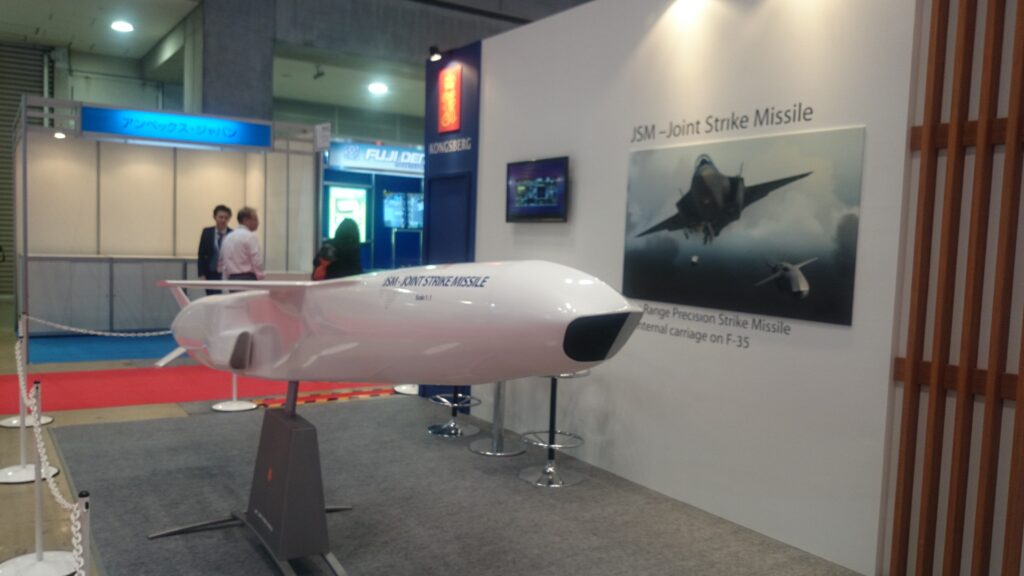
The first is the Joint Strike Missile, made by Norway’s Kongsberg for the F-35A. The jet can carry it internally, which protects its stealth profile. Denmark is on track to operate 43 F-35s, after pledging to acquire 16 more last year. The second is the ground-launched Anthem cruise missile, made by US firm Covenant.
The reason we are building the Finnmark Brigade is the Russian threat; it is our response to that threat. — Trond Nilsen, acting chief of the Norwegian Army
Anthem is brand new. Covenant unveiled it only recently. Its co-founder and chief executive, Michael Kaufman, said it is “a deep precision strike system meant to fill the biggest gap in the arsenal of the West”. Mr Kaufman said the firm had flown the weapon more than 200 times since its first flight in August 2025.
Copenhagen did not disclose the cost or quantities of either order. Kongsberg said negotiations with the customer will determine the scope and value of its package. Asked whether weapons able to strike inside Russia could make Denmark more of a target, Mr Bruus said an increased threat meant Denmark must be able to respond.
Copenhagen shows its teeth
Moscow noticed. The Russian embassy said Denmark’s political direction was aimed at a possible conflict with Russia, according to local outlet DR News. Denmark’s intelligence service has its own warning. It expects Russia to carry out hybrid attacks against NATO members more often in the near term, and sees a growing risk of a limited military attack.
Norway is arming on a similar logic, with its eyes on the Arctic. It will start receiving 16 South Korean-made Chunmoo rocket artillery systems in 2028. Acting Chief of the Norwegian Army Trond Nilsen said: “Initial capability is expected by 2029 and the operators will be trained in Norway.”
The systems will be based in Bardufoss, in northern Norway. Their manufacturer, Hanwha, values the purchase at $2bn. It is part of a long-range Arctic missile programme announced in January. Promotional material gives the Chunmoo a range of about 500 kilometres (310.7 miles). Mr Nilsen said: “The big advantage is that (Chunmoo) will provide us with the ability to strike the enemy at long range.”
Norwegian Defence Minister Tore O. Sandvik has pointed to the purchase’s strategic weight. The Independent Barents Observer reported him as saying the missiles might have sufficient range to hit the Pechenga Valley. Two of Russia’s most potent land forces are based there: the 71st Guards Motorised Rifle Division and the 61st Naval Infantry Brigade.
The short border
The other pillar is the Finnmark Brigade, formally established in August 2025. It defends and patrols Norway’s short but strategic 195-kilometre border with Russia from the far north-eastern corner of the country, just above Finland (giving the region its name, a trifle confusing to those not versed in the minutiae of Scandinavia’s quirky geography). Mr Nilsen was not coy about the goals: “The reason we are building the Finnmark Brigade is the Russian threat; it is our response to that threat.”
The initial ambition was a brigade of about 4,000 personnel, fully operational by 2036. That date has moved forward to 2032–2033. “I am happy with how it is going, and according to plan, we are doing this as fast as possible,” the Norwegian officer said. The main challenge, he added, is building the infrastructure and accommodation to host so many troops and so much equipment.
If you imagine where we are geographically in the world, you can also imagine that our defence industry has to be pretty strong. — Arto Haapea, Finland’s ambassador to Canberra
Ukraine is shaping the army’s thinking. Inspired by the success of drones there against Russia, Norway is running a pilot project on drone swarms, combining intelligence-gathering and autonomous drones. Mr Nilsen described how it began: “The first thing we did was to launch drone strategies within the land forces and have some units develop their own — now almost all units in the army have some kind of drones.”
Land forces are still testing the drones. According to Oslo, some operational units of the Finnmark Brigade should begin using them within about a year. The eventual goal is to field the swarm to the brigade.
Finland looks outward
Finland is arming in a different way, through industry and partnerships. Finnish Ambassador Arto Haapea said his country wants to bring its defence and dual-use industry to Australia. Earlier this month Australian Deputy Prime Minister and Defence Minister Richard Marles met Finnish Defence Minister Antti Häkkänen. They signed a joint statement affirming defence cooperation, accelerating capability partnership, supporting Ukraine, and advancing industry ties.
Mr Haapea tied the industry to the map. “If you imagine where we are geographically in the world, you can also imagine that our defence industry has to be pretty strong,” he said. He added: “So, we have about 300 to 400 defence companies in Finland, many of which are top-notch in global comparisons, and they are very interested in the Australian market.”
Finland’s interests include satellites, uncrewed vehicles, and undersea cables. The ambassador cited ICEYE—the Finnish firm with the largest fleet of synthetic aperture radar satellites in the world—which may even manufacture in Australia. Finland’s underwater infrastructure in the Baltic Sea is very vulnerable. “We’ve been having some incidents in the past years where that cable infrastructure has been attacked by foreign vessels, so there’s a lot that we can work on together,” Mr Haapea said.
Ukraine is the other common cause. Finland’s defence and economic affairs ministers stressed to their Australian counterparts how important it is that Australia is committed to supporting Ukraine. Mr Haapea said: “It’s a signal to our adversaries and countries that are supporting Russia in its illegal attack on Ukraine that we will work together.” He added that the two countries’ armed forces already work together in training Ukrainian soldiers.
A double-edged sword
All this has a flip side. The more capable the Nordic states become, the less pressure the rest of Europe may feel to build a common defence of its own. A strong northern flank is reassuring; yet it can also become an excuse to delay harder choices elsewhere.
The Scandinavians have shown that deep defence integration can come quickly, and outside the EU’s cumbersome machinery. They share a geography, a view of the threat, and high-tech defence economies. The result is a potent regional bloc — which suits EU sceptics. They argue that coalitions of the willing are more agile than a (hypothetical) 27-member European Defence Union would be. It is difficult to defend Estonia when you have to get the Maltese on board first.
(The Anthem is) a deep precision strike system meant to fill the biggest gap in the arsenal of the West. — Michael Kaufman, CEO of Covenant
NATO offers a second argument. With Sweden and Finland now members, all of Scandinavia is anchored in the Alliance. Nordic rearmament strengthens the Alliance’s northern flank. This reinforces a view that predominates in Eastern and Northern Europe: that NATO is the only credible mechanism for territorial defence.
Thus, the drive may as well weaken the case for duplicating command structures. The EU’s military apparatus currently lacks the operational command capabilities that heavy territorial defence requires. NATO does; unfortunately, it is in the hands of Europe’s adversary.
Fragmentation, again
The rest of Europe looks very different. Its response to rearmament remains highly fragmented, with national spending mostly plugging domestic gaps. The Nordic countries cooperate closely on supply chains and industrial technology. The wider continent does not.
The inefficiency is severe. As critics like to point out, Europe operates 178 different weapon systems, against just 30 in the United States. Proponents of common defence draw the opposite lesson from the sceptics. The Nordic model is not a reason to abandon integration. It is proof that pooled procurement and integrated markets sharply lower unit costs. Without EU-wide frameworks to scale up such cooperation, they argue, Europe will keep wasting billions on redundant national projects.
This angle must not be overplayed. Denmark, Norway, and Finland are acting out of necessity, and they are acting fast. Their message to Moscow is plain. How the rest of Europe hears it is another matter; it may become a beacon, or a Scandi noir—truly noir—scenario.