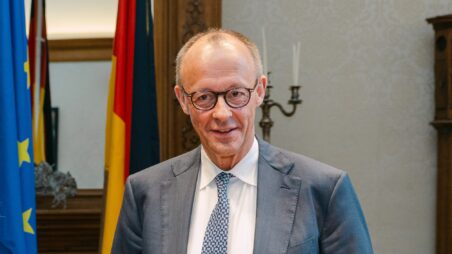
Europeans are still too slow in paying the price of peace. The price of war would be higher, Defence Commissioner Andrius Kubilius said on Wednesday.
Russia will spend about as much on its military next year as all EU member states combined, according to EU Defence Commissioner Andrius Kubilius. He made the claim at the European Business Summit in Brussels on 18 November 2026. For Mr Kubilius, the conclusion is stark. Europe is not yet deterring Moscow, and that must change.
The numbers are large. Russia plans to allocate €180bn to its military next year, a 33 per cent increase on this year. In purchasing power parity terms, that matches or slightly exceeds the €500–550bn that all member states will spend together. Mr Kubilius said Russia’s war economy remains able to expand production and to innovate.
Mr Kubilius said Russia was not being deterred. It was escalating attacks on Ukraine and waging a hybrid war against Europe. “We need first of all to outspend Russia in defence and to outproduce Russia in defence.” The question, he said, is whether the EU is doing enough at every level.
You might be interested
The drone race offered the starkest illustration. Ukrainian Defence Minister Yevhenii Khmara, whom Mr Kubilius met the previous day, expects Russia to use 10 million drones this year and 20 million next year. “Ukrainians need to match those numbers, and we need to help Ukraine to do that.” The numbers, he said, show why Europe must act quickly.
Ukraine first
Europe’s first priority, Mr Kubilius said, is to step up and speed up support for Ukraine. The Ukraine support loan includes €60bn for defence across 2026 and 2027. Of that, €28.3bn will be disbursed this year, with the rest following next year. The money will fund drones, missile defence, ammunition, and electronic warfare.
The bigger worry is delivery. European companies, especially those making air defence and counter-drone systems, cannot yet supply Ukraine fast enough. Some could deliver only in 2028 or 2029, he warned. “We need deliveries, of course, in 2027.” Mr Kubilius called on industry to speed up and scale up its output for Ukraine.
We need first of all to outspend Russia in defence and to outproduce Russia in defence. — Andrius Kubilius, EU defence commissioner
To speed up supply, the Commission has launched a second call under Security Action for Europe (SAFE) 2.0 worth €21.3bn. A proposed EU–Ukraine Defence Industrial Pact could unlock another €1bn for joint production. Of the €45bn the Commission has proposed to cover Ukraine’s €70bn funding gap in 2027, €25bn would go to defence.
Mr Kubilius admitted he could not remember the instrument’s name. (“I promise I will learn,” he said.) Noting that finance for Ukrainian defence is rising, he returned to his customary grave tone. He hopes defence industries and national governments will match this ambitious goal. Output, he stressed, must rise as fast as the money. That is the test.
A hard reading
Mr Kubilius then turned to a European Defence Agency report on defence readiness. The document is not public, he said, but he could quote Reuters on its contents. It shows many achievements and many failures. Reuters, he said, reported that the EU is not rearming quickly or effectively enough.
“That is a clear message.” For Mr Kubilius, it demands big changes in what the bloc does. His answer is to pool money and projects. European Defence Projects of Common Interest, known as EDPCIs, aim to help industries and member states ramp up production. The Council approved the first five last month, covering drones, space, and maritime defence.
“This is our chance for real breakthrough in ramping up our very much needed production.” The projects could also loosen what he called the slow, national approach to defence industry. He said more would be proposed. Such projects, he argued, can build strong links between governments and industry.
Mr Kubilius said Ukraine will take part in all five EDPCIs, especially those linked to drone defence. Existing tools, including the European Defence Fund and the Drone Alliance, can help. He called for deeper integration between EU and Ukrainian defence industries. Such integration, he said, is very much needed.
The scale problem
Modern defence readiness, Mr Kubilius said, is impossible without space. A secure satellite communication system should start operations in 2029, with around 330 satellites. Europe is also making good progress on an Earth observation service, its eyes in the skies. From 2027, Galileo’s Public Regulated Service (PRS) will make it impossible to jam or spoof navigation signals.
The biggest gap, however, is launch capacity. To address this, Mr Kubilius has toured Sweden and Italy. In Italy, rocket maker Avio agreed to establish a common company that could bring considerable development to Europe’s space community. He said the visits had inspired him.
We must pay the price for peace to avoid the cost of war. — Andrius Kubilius
European industry, Mr Kubilius said, excels at haute couture production. It is advanced, costly, and difficult to ramp up. The lesson from Ukraine is different. “We need to reach mass with production that is less advanced, cheaper, easier to scale, and good enough to hit the targets.” Russia, he said, is learning the same lesson.
Russia and Ukraine are each producing around 10 million drones this year, and both are preparing for 20 million next year. The EU makes about 1.5 million a year. Yet piling up drones in warehouses would not help much. Kamikaze and first-person view (FPV) drones can become obsolete within two months, as the Russians learn to jam them. Rather than build stockpiles, Mr Kubilius said, Europe should keep its production lines warm, ready to scale up quickly in wartime.
Dependence on China
Europe must also end its reliance on China, the commissioner said. “We cannot stay dependent on Chinese components in our defence industry. That is very clear.” He cited nitrocellulose, rare-earth magnets for drone motors, and 3D printers. China, he said, dominates global 3D printer production with state subsidies. The first European Defence Industry Programme (EDIP) call put €165m into China-free energetic components.
The stakes are financial too. Some member states are pushing for cuts to the fivefold increase proposed for defence and space in the next long-term EU budget. “Weakness in our European budget for defence will also mean weakness in our collective European defence.” Mr Kubilius concluded: “We must pay the price for peace to avoid the cost of war.”