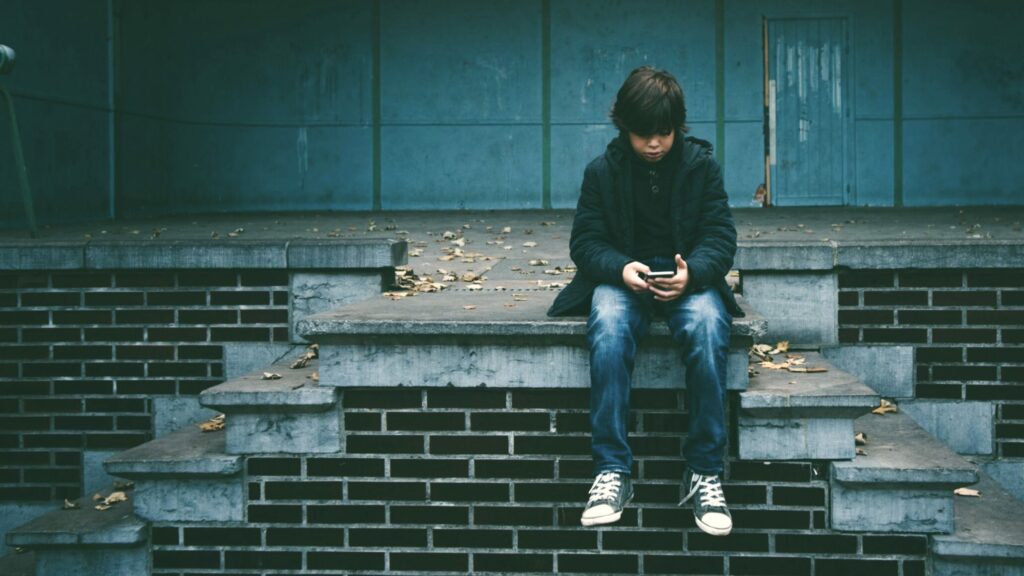
Nearly one in three European teenagers say social media leaves them feeling stressed, sad or excluded — a figure that is now forcing EU policymakers to reconsider how far platforms should be allowed to shape children’s lives. Brussels is once again facing a familiar question: keep children off social media, or make social media itself safer?
Teenagers across the EU report spending an average of 4.5 hours on screens during school days and 6.1 hours at weekends. Against these numbers, the European Parliament debated this Wednesday in Strasbourg the urgency of protecting children’s safety and mental health from the risks posed by social media.
Lawmakers compared platforms to gambling, tobacco, and other products whose dangers prompted past public interventions.
Even refreshing a page works exactly like a gambling machine. Social media companies use every single weakness in our brain chemistry to keep us hooked. — MEP Kim van Sparrentak (Greens/NLD)
“Even refreshing a page, so swiping down and waiting for new information, works exactly like a gambling machine,” said MEP Kim van Sparrentak (Greens/NLD). “Social media companies use every single weakness in our brain chemistry to keep us hooked.”
The debate came in parallel with the UK’s announcement that it would ban teenagers and children from social media.
Younger kids get more addicted
The new Eurobarometer survey also indicates a relationship between the age at which children begin using social media and their screen habits. Adolescents who started using social media before turning ten reported higher screen time.
More concerning is the fact that nearly one in three adolescents said social media had made them feel stressed, sad, or socially excluded. Forty-five per cent said they compare themselves with others while using social media, while 41 per cent experience FOMO — fear of missing out.
“When one in three young people say it leaves them feeling stressed, sad or excluded, we cannot ignore the impact on their mental health and wellbeing. When a quarter of our young people are confronted with problematic content online—from hate speech, to body pressure, to unexpected violence—it is a clear signal that it is time for change,” stated Commission President Ursula von der Leyen.
Age limits return to the centre of the debate
Calls for age limits dominated much of the parliamentary debate. Supporters defended a common European minimum age instead of fragmented national settings. Parliament has previously backed a default minimum age of 16, and 13 with parental consent.
Earlier, in April, the Commission launched an age-verification app. Presenting the tool, von der Leyen said there could be “no more excuses” for failing to enforce age restrictions for online platforms and argued that “children’s rights in the European Union come before commercial interest”.
The app is modelled on the technology of the COVID certificate system. Users can install it on a device and create an age credential using a passport or national identity card. According to the Commission, platforms would receive only confirmation that a user is above a required age, rather than their identity or exact date of birth. However, in two hours, hackers bypassed the app’s protections.
A social media ban for minors means everyone needs to ID themselves on social media all the time. Age verification is the end of anonymity and the free internet as we know it. — MEP Svenja Hahn (Renew/DEU)
The fact that all internet users would need to check their age also raises privacy concerns. MEP Svenja Hahn (Renew/DEU) warned against it. “A social media ban for minors means everyone needs to ID themselves on social media all the time. Age verification is the end of anonymity and the free internet as we know it.”
At the same time, she pointed to the failures in Australia, the first country to impose online age limits. “Sixty per cent of children in Australia circumvent the ban. The evidence for a social media ban is not there. Experts and academics all over the world say it: make the internet safer for kids; don’t ban them from it. But too few politicians are willing to do the hard things to fix it. Hold platforms accountable.”
What’s next?
During her last State of the Union speech, Ursula von der Leyen announced the creation of a Special Panel on Child Safety Online. The panel was asked to examine how the EU could better protect and empower children online, including the possibility of a harmonised European minimum age for social media.
The initiative will now become an important part of the debate, as its co-chairs Maria Melchior and Jörg M. Fegert are due to present their recommendations on 13 July.