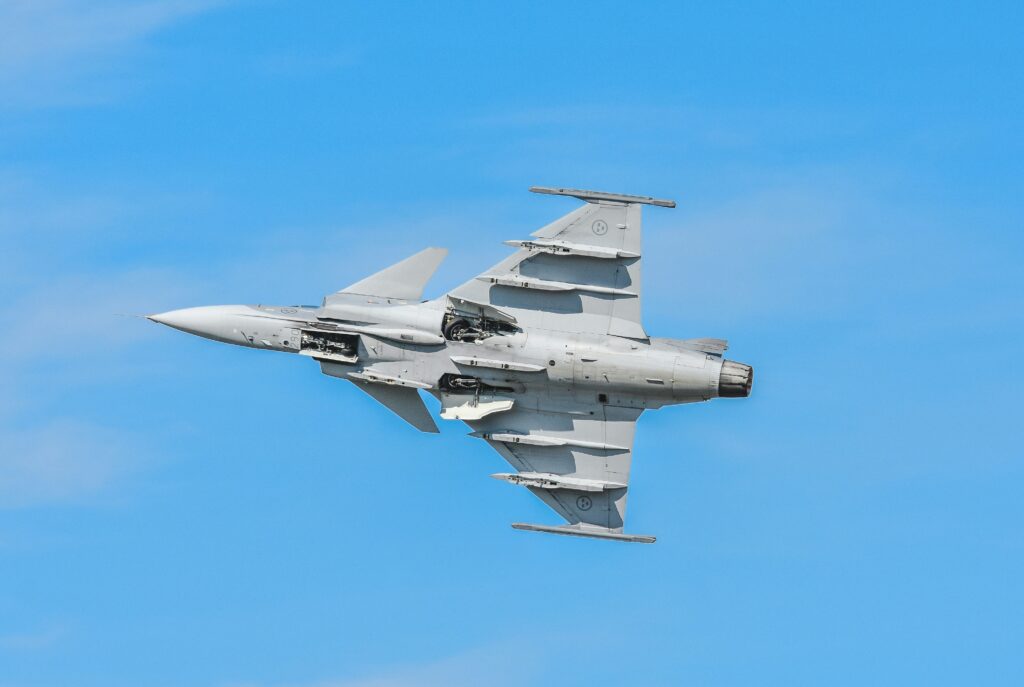
Russian missiles killed civilians in Ukrainian cities again overnight, while further south Moscow’s forces keep targeting grain ships crossing the Black Sea. Brussels answered today with €3.47bn, most of it earmarked for the Gripen fighter jets Kyiv has been chasing for months. The money is meant to keep Ukraine’s skies, and its exports, moving.
Overnight strikes across Ukraine left more people dead. It’s part of a pattern that has intensified through July, as Russia targets energy infrastructure and residential blocks alike. Ukraine’s air defence has rarely felt this stretched. How fast it recovers now depends on how quickly new hardware reaches the front.
The Commission released today’s disbursement under the defence window of the EU’s €90bn Ukraine Support Loan. It builds on an earlier drone procurement schedule and adds fresh funding for long-range, jet-powered drones and missiles. The headline item, though, is the Gripens. Kyiv has been trying to secure 16 of the Swedish-made jets, worth roughly €2.5bn. Officials say this payment covers the “vast majority” of that bill, though not quite all of it.
A war fought on two fronts
The strikes on Ukrainian cities are only half the picture. Russia has also stepped up attacks on civilian shipping and grain terminals in the Black Sea. EU officials call it a deliberate attempt to weaponise food security and spread fear far beyond Ukraine’s borders. The tactic threatens not just Ukraine’s economy but food supplies as far afield as Africa, Asia and the Middle East.
Today’s tranche is the third payment under the loan’s defence window since June. The Commission paid €3.9bn on 30 June, €1.1bn on 15 July, and now €3.47bn today. That pushes total defence funding released this year to around €8.5bn. A separate €3.2bn instalment on 25 June covered budget support rather than weapons.
The bigger picture is larger still. In April, the Council of the EU signed off on up to €45bn for Ukraine this year alone. It split the sum into €28.3bn for defence procurement and €16.7bn to keep the state running. Brussels says it should allocate the remaining defence money, close to €20bn, by September, as further procurement schedules for missiles and ammunition clear the pipeline.
The €90bn loan differs from earlier support rounds in one key way: where the money comes from. It draws on headroom in the EU’s own budget, not fresh guarantees from individual member states. That lets Brussels move at wartime speed. Two thirds of the loan flows to defence procurement, the rest to budget support. Disbursements can follow battlefield needs almost in real time.
Industry, not just cheques
President Ursula von der Leyen tied today’s payment to what she called a “Drone Deal”, pairing European industrial capacity with Ukrainian battlefield expertise. She framed the disbursement as part of a broader message to Moscow about the EU’s resolve.
Every Russian strike strengthens Ukraine’s determination to be free, and our determination to stand with Ukraine, for as long as it takes.
— Ursula von der Leyen, President of the European Commission
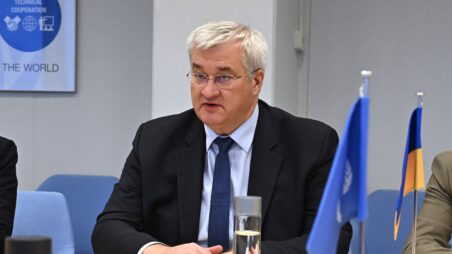
“Every Russian strike strengthens Ukraine’s determination to be free, and our determination to stand with Ukraine, for as long as it takes,” she said. Defence Commissioner Andrius Kubilius struck a similar note. “Every new disbursement shows that the EU’s support for Ukraine translates into concrete action,” he said. He argued that European industry can now meet a growing share of Ukraine’s needs directly, rather than Brussels simply writing cheques.
Brussels has promised more disbursements “in the coming weeks” for drones, ammunition and further air-defence equipment. It hasn’t fixed a date for the next tranche. For a country heading into another winter under fire, the total on the invoice may matter less than one thing: how fast the promise turns into hardware on the ground.