Brussels broadly supports Ukraine. But it is not ready to say anything remotely specific on issues that could make the support matter.
Process won Wednesday’s early afternoon in the Berlaymont. The European Commission held its midday press briefing in Brussels. Journalists asked pointed questions on two urgent matters: Patriot missiles for Ukraine, and Ukrainian agricultural exports disrupted by the war. The spokespeople answered at length.
Yet the session illustrated a pattern that has become familiar in Brussels. The Commission speaks fluently about priorities. It speaks far less fluently about timelines, decisions, or money.
Grain without a deadline
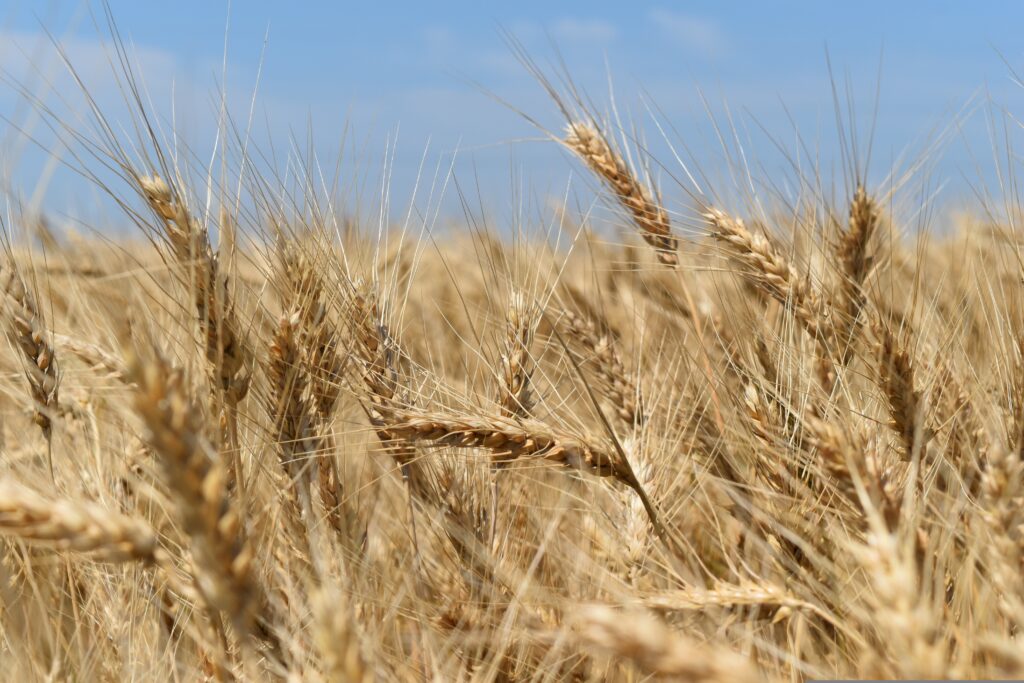
A correspondent opened with a three-part question on Ukrainian agriculture. Ukraine has requested €220m in emergency support for farmers hit by disruptions to Black Sea export routes. The journalist also asked whether the Commission would consider increasing EU quotas for Ukrainian agricultural products, including wheat, and whether it planned to expand the solidarity lanes established after Russia’s full-scale invasion began.
Spokesperson Louise Bogey began with a statement of principle. “It is important to re-establish that the EU is fully committed to continue supporting Ukraine’s access to international markets,” she said. She added that Ukraine needs to maintain its agri-food export capacity, which she described as “crucial for Ukraine’s economy as well as global food security”.
Ms Bogey then laid out what the Commission still needs to know before it can act. “A number of factors must be taken into account for the Commission to have a clear overview of the market impact and possible next steps in terms of support for Ukraine,” she said.
Those factors were three: how the Ukrainian harvest progresses in the coming months, how that aligns with storage availability, and a clear overview of export logistics, including Black Sea routes and the current functionality of the solidarity lanes.
A framework, not a decision
On the trade side, Ms Bogey pointed to the revised EU-Ukraine Deep and Comprehensive Free Trade Area. She said it “continues to offer a stable and reciprocal trade regime which provides predictability for both EU and Ukrainian farmers.” She added that “trade data so far proves the fair and balanced nature of the updated agreement.”
On the €220m grant request itself, Ms Bogey confirmed that the Commission had received it. “We can confirm reception of the request,” she said, without offering anything further.
I can’t tell you a specific timeline yet but indeed we still need to analyse and then we will come up with the concrete solutions. — Guillaume Mercier, European Commission spokesperson
Ms Bogey’s colleague Guillaume Mercier then fielded questions whether, given that the Commission had spoken of assessments taking months, anything was expected in the coming weeks. “I can confirm that we do need to further analyse according to the different points, the harvest progress, have a clear overview of the logistics,” the spokesman confirmed the delay. He then added, “I can’t tell you a specific timeline yet but indeed we still need to analyse and then we will come up with the concrete solutions.” That was the sum of it. The Commission received the request, listed what it still needs to know, and declined to say when it might decide.
Missiles, and more of the same
The exchange on Patriot missiles was no more forthcoming. A journalist noted that Ukraine claims a shortage of Patriots and asked what the EU can do to press member states to provide them, as well as for an update on the latest developments.
Spokesperson Anitta Hipper opened with a restatement of urgency. “Ukraine urgently needs more air defence, and this remains a priority,” she said. She added that the High Representative has called on all member states that hold stocks “to make them available to Ukraine”.
Ms Hipper then moved to figures. She said the EU provides over €220bn in overall support, including €88.7bn for strengthening military and defence capabilities. She said the EU is also “speeding up joint procurement via SAF where Ukraine can join.” She added that the High Representative remains in regular contact with member states to increase their ammunition pledges and deliveries.
The art of saying little
What Ms Hipper did not say was equally telling. She named no member state. She set no deadline. She announced no new measure. She did not say whether any country had agreed to release Patriot stocks, or whether any was being pressured to do so.
Taken together, the two exchanges painted a consistent picture. The Commission acknowledged the problems, restated the principles, and deferred the decisions. On agriculture, it is waiting for the harvest, the storage data, and a logistics overview. None of this has a deadline attached. On Patriots, it is relying on a procurement mechanism that offers no guarantee of speed.
As the smoke cleared, nobody in the room was any the wiser for the briefing.