Around 40 of the EU’s biggest cross-border banks are about to lose their current watchdog. From 2028, one EU authority takes over, with the power to fine them up to 10 per cent of annual turnover. It is Brussels’s answer to scandals that saw hundreds of billions in suspicious money flow through banks for years.
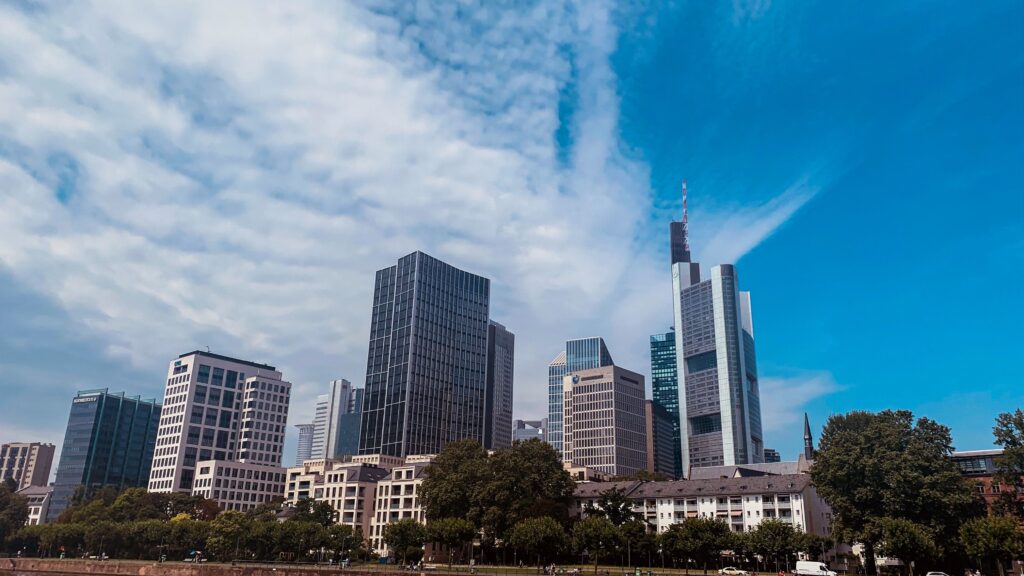
These are lenders that operate in Vienna one day and Nicosia the next, the kind national regulators have historically struggled hardest to watch closely. Brussels has just finalised the rules for taking that job away from them. A single authority in Frankfurt takes over instead.
Until now, each EU country checked its own banks for money laundering, on its own schedule, with its own staff. From 2028, the Anti-Money Laundering Authority (AMLA) takes over the riskiest ones directly. National supervisors are already gathering data on eligible firms. The first list of around 40 institutions is due in 2027, a year before AMLA takes over. Once AMLA picks a bank, it keeps its full supervisory history as responsibility moves from a national regulator to Frankfurt, so nothing falls through the cracks in the handover.
The Danske Bank lesson
The urgency traces back to one of Europe’s worst banking scandals, and to one employee nobody listened to. Howard Wilkinson, a British banker running Danske Bank’s Baltic trading desk, flagged the scheme to his bosses in Copenhagen in 2013. His bosses ignored him. He resigned the following year. It took until 2018, four years later, for the scale of what he had reported to become public. More than €200bn in suspicious payments had moved through Danske Bank’s Estonian branch between 2007 and 2015, most of it from Russia, Azerbaijan and Moldova. The bank’s share price collapsed and its top executives left.
Danske Bank was not the only one. Latvia’s ABLV Bank collapsed after Washington cut it off from correspondent banking. Amsterdam’s ABN Amro paid a €480m fine in 2021 for similar failures.
Each EU country policed its own banks, and criminals learned to exploit the gaps between national systems. Wilkinson’s own warnings sat inside a single bank’s Copenhagen office for years before anyone outside it knew. The EU estimates that more than €100bn in criminal proceeds still moves through its financial system every year. Authorities recover only a small fraction of it.
AMLA exists to fix exactly that patchwork. Instead of 27 national approaches to anti-money-laundering oversight, the riskiest firms will answer directly to one supervisor. They will follow a common EU rulebook, and face fines of up to 10 per cent of annual turnover.
Closer to home
The same gaps show up in an unexpected place too: the property market. AMLA’s chair, Bruna Szego, points to research linking money laundering directly to rising house prices. Illicit cash buying flats and offices adds extra demand, and that pushes prices up.
The mechanism is simple. A flat bought with dirty money looks like an ordinary investment, especially once the buyer splits the purchase between several companies or countries. Buy it, rent it out, sell it on, and the money can emerge looking legitimate. AMLA is not planning to question ordinary buyers. Its focus is on high-risk deals and opaque ownership structures. It also targets the professionals who are supposed to check where the money comes from: notaries, estate agents, lawyers, and accountants.
The selection process is already under way — this is not a project for the future. — Rikke-Louise Petersen, Executive Board Member, AMLA
AMLA is already sizing up institutions. “The selection process is already under way — this is not a project for the future,” Rikke-Louise Petersen, an AMLA executive board member, told a conference in Frankfurt in June. AMLA is growing fast to match its new job, from 160 staff today to 432 by the end of 2027.
Not everyone in the industry is dreading the change. “What you want is a single point of contact, consistent requests for information, and transparent, mature dialogue,” said Brian McKenzie, head of AML for Europe at Citibank in Ireland, at the same conference. He added that welcoming direct EU oversight was not a case of “turkeys voting for Christmas”. Which 40 names end up on Brussels’s first list remains, for now, one of its best kept secrets.