As an apparent surge of populist intolerance grips the continent, analysts urge Brussels to act on economics, migration, and disinformation.
When right is wrong, is left right? Two elections in as many Sundays rocked Europe without providing a clear answer. First, the state election in Saxony-Anhalt on 6 September delivered an expected, yet ominous result: the radical-right Alternative für Deutschland (AfD) emerged as the dominant force in the eastern Bundesland.
Then, this past Sunday the Swedish Democrats, an anti-immigrant party with neo-Nazi history, came close to securing a historic first direct participation in a Stockholm government. Despite the right-wing bloc utlimately losing by just two seats, the Swedish Democrats secured 20,5 per cent of votes. They lost the kingmaker’s mantle only due to a weaker showing of the centre-right (who were ready to give the Sverigedemokraterna ministerial seats, had the election gone the other way).
In Saxony-Anhalt, the AfD captured 43.8 per cent of the vote. This represented a massive gain of 23 percentage points. Meanwhile, the ruling Christian Democratic Union (CDU) saw its support more than halve to 17.2 per cent. Another blow could come from Sunday’s regional elections in Mecklenburg-Western Pomerania. The result is a political establishment in the state of deep shock.
Sebastian U. Bukow of the Heinrich Böll Stiftung provided a blunt assessment of the outcome. “The result amounts to a political earthquake, the shockwaves of which extend far beyond the state’s borders,” he wrote. Grégoire Roos of Chatham House highlighted the historical significance of the victory. “Since 1945 no party labelled extreme right has secured such a win in a state election,” he said. The result marks a turning point for German democracy.
Similar but different
The similarity of the results (both elections landed the far-right parties within reach of government offices) obscures the differences between the two stories. The German AfD started out as an intellectual opposition to federalist tendencies within the European Union in 2013, and only took a pronounced anti-immigrant stance after a leadership change in 2015. It was last year that the German intelligence branded the party a “confirmed right-wing extremist organisation”.
The Sverigedemokraterna originated in 1988 as a white supremacist outlet, with open Nazi sympathisers at its core. It has since transformed into a solid but mainstream conservative party. Per Jimmie Åkesson, leader since 2005, has successfully pushed the party towards the centre, purging extremists and apologising for the past.
Today, the Swedish Democrats reject the far-right label entirely. “There is a group of voters that may like many of our policies but emotionally have a hard time accepting us,” Richard Jomshof, a Sweden Democrat lawmaker, admitted to Reuters after the election.
Attitudes towards immigration, national identity and political elites explain support for the AfD far better than individual economic deprivation.
— João Ferreira Dias, European Centre for Populism Studies
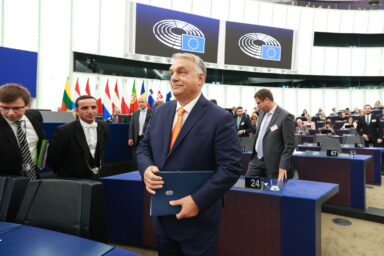
In its turn to mainstream politics, the Sverigedemokraterna echo many a politician’s course. Italy’s Prime Minister Giorgia Meloni earned her political spurs as a Mussolini apologist, yet governs with a respectably pragmatic centre-right bent. Viktor Orbán, the freshly deposed Hungarian strongman, went the other way: from a liberal-minded reformist to a Putin collaborator and a fellow proponent of ‘illiberal democracy’.
No longer a protest vote
This shows that, in the words of David Cameron, once the shining star of Europe’s modern conservatism, “what matters is not where you come from, but where you are going”. Slapping the extremist label on all people who think that lax immigration rules went a tad too far may not be very effective — or fair, for that matter.
It is no coincidence that Germany and Sweden, whose liberal systems are creaking under their own citizens’ anti-immigration backlash, were the most welcoming during the 2015 influx (Germany accepted the largest number of immigrants, Sweden accepted one of the highest numbers per capita).
At the same time, a paradox exists regarding migration. Saxony-Anhalt has a low foreign-national share of 7.9 per cent, yet the issue consistently tops voter concerns. The AfD presents migration as a factor contributing to anxieties about public services, security, and industrial decline.
João Ferreira Dias of the European Centre for Populism Studies argues the German result is not just a protest. “It is no longer enough to speak of a ‘protest vote’,” he said, “it has become a movement.” The party has become a socially rooted force.
The fear of falling
Poverty is not necessarily the primary driver of this shift. Instead, analysts point to a pervasive ‘fear of falling’ among the electorate. This involves a perceived loss of status, population, and control over the future. Many voters feel that their social world has lost its value.
Mr Ferreira notes that such cultural factors outweigh simple economic deprivation in explaining the AfD’s rise. “The available research shows that attitudes towards immigration, national identity and political elites explain support for the AfD far better than individual economic deprivation does,” he said.
There is a group of voters that may like many of our policies but emotionally have a hard time accepting us.
— Richard Jomshof, Sverigedemokraterna MP
History plays a significant role in this political alienation. The economic transformation after 1990 left deep scars. The disappearance of companies and professional hierarchies created a lasting sense of status demotion. This experience has become a potent political memory for many in the east.
Depopulation has further hollowed out the region. Saxony-Anhalt has lost roughly a quarter of its inhabitants since reunification. Research shows a robust relationship between long-term population decline (leading to school closures and failing services) and support for the radical right.
This phenomenon is described as the revenge of the places that do not matter. These regions feel that the future has withdrawn from them. Aggregate national prosperity does not reach these particular communities. Inequality now exists between places rather than just between individuals.
Crisis in the triangle
Economic anxiety is currently amplified by industrial restructuring. The ‘Chemical Triangle’ in the south of the state faces a deep crisis. High energy costs and weak demand have pressured the sector. Corporate insolvency filings in the state rose by 23.9 per cent in 2025.
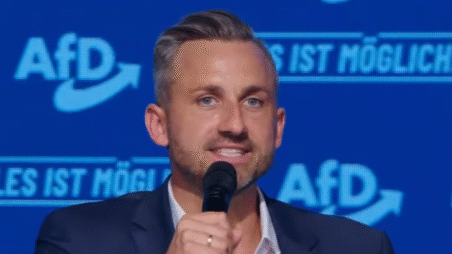
Mr Roos observed a change in how voters view the party. “The electorate’s motivation has clearly shifted from punishing the CDU to granting the AfD power,” he said. The campaign adopted an upbeat style with the slogan “Everything is possible”.
Disinformation campaigns also influenced the outcome. Hybrid attacks and campaigns from abroad sought to undermine democracy. The party (which now holds 39 seats) used social media to reach disengaged voters. These tactics have now found their way into the German federal system.
Brussels must act
The victory piles pressure on the federal government in Berlin. A weakened Germany risks paralysis on contentious European Union trade files. This could affect dossiers on China and critical raw materials. The EU needs a holistic response — one that addresses both economics and culture.
Analysts recommend prioritising structurally weak regions in European Union funding. This includes the Just Transition Fund and RePowerEU top-ups. Targeted green-tech and semiconductor state-aid derogations—which could restart industrial investment—are also necessary. Such measures aim to reduce the socio-economic breeding ground of populism.
The electorate’s motivation has clearly shifted from punishing the CDU to granting the AfD power.
— Grégoire Roos, Chatham House
The Union should also strengthen its rule-of-law safeguards. Chatham House’s Mr Roos noted that challenges would mostly arise through Saxony-Anhalt’s constitutional court. The Rule-of-Law Conditionality Regulation should be applied uniformly to regional authorities. This would target those that violate fundamental-rights spending rules.
Migration, communication, economy
Migration policy requires a fundamental reframing. The European Union should accelerate the implementation of the New Pact on Migration and Asylum. Legal labour-migration pathways could also help deactivate nativist narratives. Framing migration solely as a security threat gifts rhetorical ground to the AfD.
Improving communication in disenfranchised areas is vital. The Union could institutionalise citizens’ panels at the regional level, the European Centre for Populism Studies suggests. Linking these results to European Semester recommendations would increase participation.
Finally, the single market must respond to geo-economic shocks. Fast-tracking the Net-Zero Industry Act could offer visible benefits to industrial regions. A credible industrial policy would keep Germany invested in a common line. This, in the best of scenarios, could prevent a retreat into mercantilism that could fracture the Union.