A farmer forced to sell wheat for less than it cost to grow it. A supermarket price that barely moves when harvests fail. Brussels is now rewriting the rules meant to stop both, and lawmakers, back from their summer break, are fighting over how far Europe should go to shield farmers from the next price crash.
European lawmakers returned from their summer break to a heated debate on the future of the Common Agricultural Policy (CAP), with thousands of amendments tabled to one of the mandate’s most important agriculture files. The debate then moved to the Common Market Organisation (CMO) regulation, the CAP’s market pillar. Rapporteur Éric Sargiacomo is now steering a file that has drawn 1,598 amendments.
That number alone signals the dossier’s political weight. The CMO regulation is no longer a technical footnote. It will test whether the next CAP can still shield farmers from price swings, supply shocks and crises that move faster than Brussels can respond.
CAP under pressure
The wider CAP debate revealed a shared worry: that EU farm policy must stay common, properly funded and able to carry farmers through climate and market shocks. Several lawmakers warned against folding agricultural funding into broader national plans, insisting CAP money must remain predictable and ring-fenced for farming and rural Europe.
This isn’t just a budget for farmers, it’s a budget for rural Europe.
— Luke Ming Flanagan, MEP (The Left/IRL)
Another fault line was the definition of an “active farmer”. Part-time, double-income and retirement-age farmers would lose entitlement to payments, even though they were still actively farming. For Flanagan, the funding question and this definition were two sides of the same debate: “This isn’t just a budget for farmers, it’s a budget for rural Europe.” His argument on eligibility was simple: “If you farm the land you own, you are a farmer.”
CMO regulation becomes the crisis file
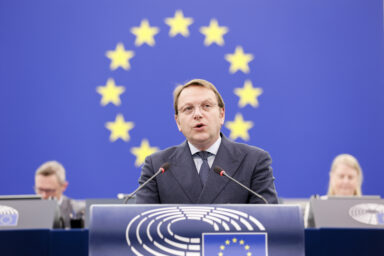
Of those 1,598 amendments, only 187 came from Sargiacomo himself. The rest, 1,411, were tabled by fellow lawmakers, a sign of how contested the file has become even before it reaches committee vote. “When our farmers are asking for fairer and more stable income, we see that geopolitical problems and our food security cannot be considered to be something that we can take for granted,” Éric Sargiacomo, Member of the European Parliament (S&D/FRA), said.
For the rapporteur, agricultural markets cannot be treated as ordinary markets. Prices swing more sharply and less predictably than elsewhere in the economy, and farmers absorb the shock first. He said the reform should build stronger tools to limit excessive price falls and rises, with clearer definitions that let crisis measures trigger when needed.
Selling below cost, the red line
One issue stands out. Should farmers be protected from selling below production costs? Sargiacomo recalled that the Commission president had promised no farmer should be forced to sell below cost. The CMO reform, he argued, could turn that pledge into practical tools.
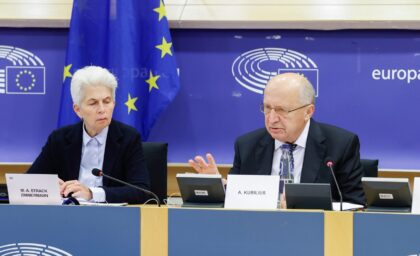
Daniel Buda, vice chair of the AGRI committee, said the CMO file was central to the wider CAP. There cannot be an effective CAP, he argued, without a proper debate on market organisation. He called for early warning systems and a food chain observatory to collect and analyse data before crises hit farmers. Other lawmakers pushed for stronger intervention prices, tied more directly to production costs.
But the Commission warned against turning safety nets into permanent market steering. Brigitte Misonne, speaking for the Commission’s agriculture department, said market management instruments do have a role in stabilising agricultural markets. They “must remain safety nets for truly exceptional circumstances,” she said. Automatic triggers or permanent public intervention could backfire, she warned. Thresholds tied too closely to production costs risk becoming price floors the market has to follow, not just a safety net.
A fight over what’s on the label
Lawmakers also discussed the EU school scheme, sectoral interventions and food labelling. Sargiacomo noted many amendments aimed at protecting ring-fenced funding for the school scheme. Several also sought priority for European products. Buda suggested member states could get more flexibility on hot school meals. The programme, he said, is closely tied to children’s nutrition and farmers’ income.
The Commission said that while sectoral approaches would strengthen the position of producer organisations and farmers in the supply chain, this would not apply to files already agreed, such as the wine package.
Lawmakers also revisited politically charged debates on food labelling, meat names and consumer transparency. Some lawmakers defended stronger protection for traditional meat denominations. It is a red line for meat producers, they said. Others warned against reopening the “veggie burger” debate. Farmers growing protein crops need support too, they argued, and consumers already get clear information on labels.
There were also calls for mandatory country of origin labelling on all agricultural products. Consumers need to know what is on their plates, Sargiacomo said, and where it comes from. He called it an essential element of trust between European agriculture and citizens.
A mandate farmers are watching
On the wider CAP, lawmakers disagree on several fronts. The budget’s protection, its ceiling, social conditionality, active farmer provisions and environmental spending are all contested. On the CMO regulation, the key questions are narrower but no less political: how far market intervention should go, and which crisis tools should become permanent.
The main focus should be on the farmers, not the distributor or processor. — Éric Sargiacomo, Member of the European Parliament (S&D/FRA)
For Sargiacomo, the file must keep farmers at the centre. In a similar market crisis, he said, the main focus should be “on the farmers, not the distributor or processor”.
That is the political line now running through the CAP debate. Brussels wants resilience, competitiveness and sustainability. Lawmakers want farmers protected from the next shock. The open question is how much market intervention Europe is willing to bring back to make that happen.