Cardiovascular disease kills around 1.7 million people in the EU every year. The European Commission now wants regular checks to catch the risks earlier. And Oliver Várhelyi is leading by example.
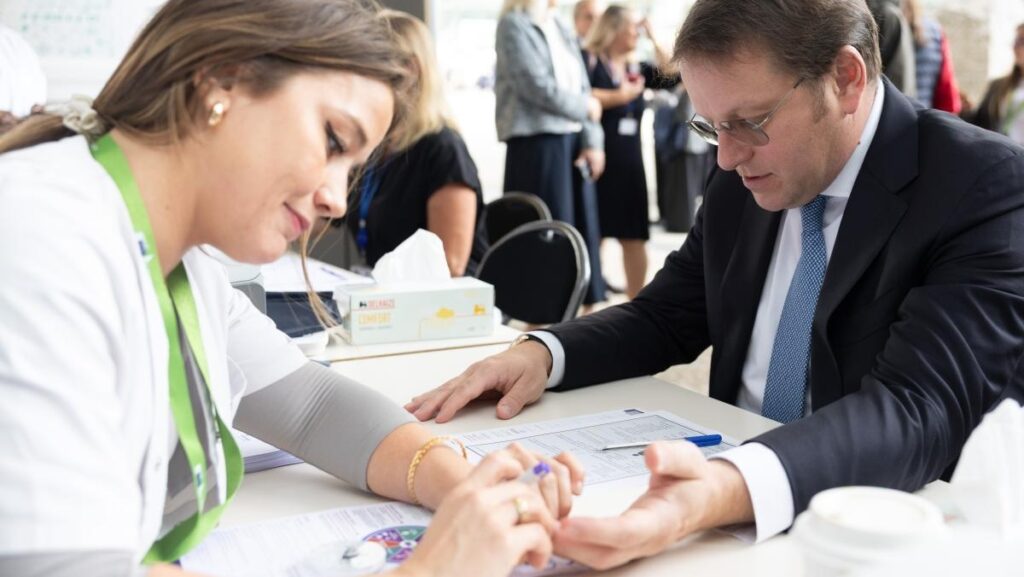
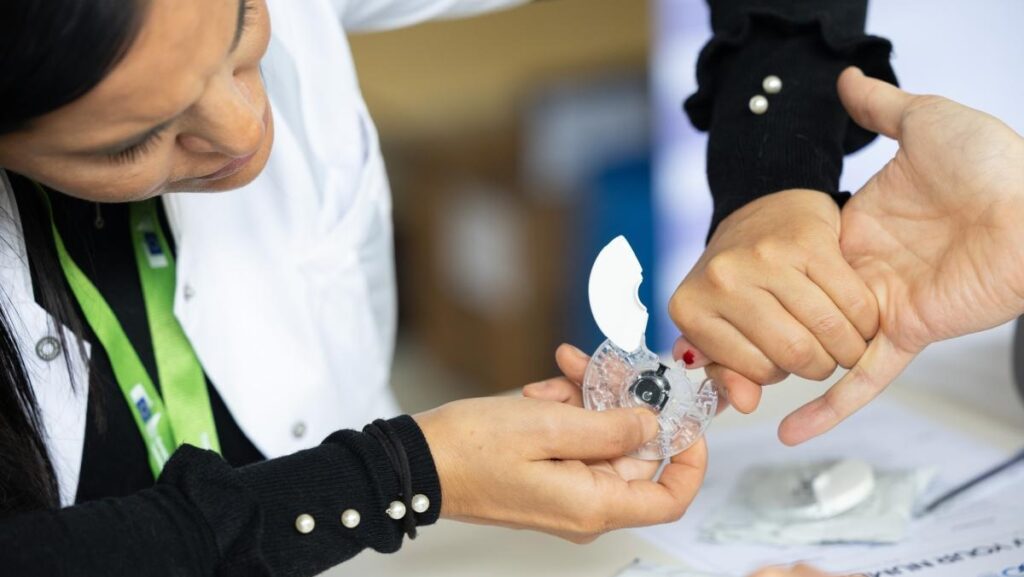
The health commissioner started Monday with a heart check at the Commission’s headquarters. He now wants every adult in the EU to get checked at regular intervals.
To accomplish that he proposed a Council Recommendation on cardiovascular health checks. It recommends EU governments to set up regular heart checks for their citizens. He also launched the first EU Screening Week, which runs until 4 October.
Cardiovascular diseases kill 1.7m people in the EU every year and affect around 62m, according to the proposal. They cost the EU economy more than €282bn a year.
A first step towards a prevention system
The recommendation grows out of the Safe Hearts Plan, the EU’s cardiovascular health plan. The Commission adopted it in December 2025. The plan aims to cut premature deaths from cardiovascular disease by 25 per cent by 2035.
To support that goal, the plan announced a “flagship initiative on early detection and screening for cardiovascular diseases”. The health checks recommendation is that initiative. The Commission calls it “a significant step” towards the 25-per-cent goal.
Today you have seen the first very important step by our proposal for a council recommendation creating the same standards and protocols when it comes to health checks. — Olivér Várhelyi, Commissioner for Health
The starting point varies widely. Fewer than half of EU countries offer cardiovascular health checks, according to the proposal. Some run dedicated national programmes. Others assess heart risk through family doctors and community services.
Greece, for example, runs a national screening programme called Prolamvano. It offers cardiovascular health checks to 5.5m people aged 30 to 70, with money from the EU’s recovery fund.
Many people are not checked at all. In 2019, 34 per cent of adults aged 25 to 64 had not had their blood pressure measured in the previous year. Among people aged 65 and over, the figure was 14 per cent.
Weak data make it harder to follow. Health data across the EU are fragmented, which limits the ability to monitor risk factors and health checks, the proposal says. Mr Várhelyi wants to close these gaps with common rules, he told the European Parliament’s public health committee (SANT) on Monday.
“Today you have seen the first very important step by our proposal for a Council recommendation creating the same standards and protocols when it comes to health checks,” he told MEPs. “We do not have that currently in Europe. This is the first step to do it.”
Mr Várhelyi said further Council recommendations would follow each year to implement the Safe Hearts Plan and build a prevention system across Europe with a high and equal level of protection against cardiovascular disease.
The recommendation is not mandatory. It “does not impose any binding commitments on member states,” the proposal says. Countries are asked to report on progress, within three years of adoption and then every four years.
Who should get checked
The checks aim to catch problems before people fall ill. “The objective is very simple, identify risks before they become a disease,” Mr Várhelyi said.
The proposal asks governments to offer checks by age:
- People under 35 should have at least one health check, including blood pressure, blood sugar and cholesterol. Those with a family history of premature cardiovascular disease or sudden cardiac death should get more individualised screening.
- Adults aged 35 to 64 should have systematic checks at least every five years, and possibly more often depending on their risk factors. Their check covers a wider range of tests. It also looks at lifestyle, lung function, reproductive health, mental health, kidney health, body mass index, waist size, and medical and family history.
- People aged 65 and over should get checked every three to five years. The check may include extra heart tests, such as an electrocardiogram (ECG) and pulse checks for heart rate and rhythm.
The checks should also reach people who rarely see a doctor. The proposal suggests pharmacies, community centres, markets and shopping centres. Governments should focus on vulnerable groups, such as migrants, people on low incomes and rural residents.
These settings can help reach underserved communities “because prevention cannot become a privilege”, Mr Várhelyi told journalists.
The recommendation also aims to support governments in reaching key objectives. By 2035, at least 75 per cent of people aged 25 to 64 should have their blood pressure measured once a year. For people aged 65 and over, the target is 90 per cent.
For cholesterol and blood sugar, the targets are 65 per cent and 80 per cent.
What the EU pays for
The recommendation brings no new EU money. It has “no financial implications for the Union budget,” the proposal says. The Commission will support countries as they pilot-test the recommendation and roll it out gradually. The focus is on “identifying people at risk before symptoms develop.”
As part of this, the Commission will launch a new Joint Action on Lifelong Prevention, funded by the EU4Health programme. It will develop guidance and help countries build the capacity to implement the Safe Hearts Plan.
The Organisation for Economic Co-operation and Development (OECD) and the World Health Organization (WHO) will also give countries technical support. Two new EU-funded projects, worth €2m each, will pay for this.
A project called LENSES is due to start by the end of 2027. Stakeholders will lead it, with €1.6m from EU4Health. It will help countries raise awareness and improve health literacy among their populations.
The Commission’s own spending on Screening Week was small. It spent “under 30,000 euros,” Várhelyi told journalists, calling it “a very low budget operation.”
Who pays for the checks
MEPs wanted to know if more would follow. Mr Várhelyi’s answer started with national budgets. On average, EU countries spend 80 per cent of their health budgets on care and “roughly on average three per cent only to prevention”, he told MEPs.
“Every euro spent on prevention saves at least seven euros,” he said. The 2035 target should “create an incentive in the member states to invest into prevention more”.
Existing EU funds should help too. More than €40bn from the EU’s recovery fund has already gone into health infrastructure, Mr Várhelyi said. “But it needs to continue. It needs to continue from the cohesion funds, it needs to continue from the structural funds,” he added.
On the next long-term EU budget, he made no promise. “This house is part of the discussion, so I have high hopes that you will help us,” he told MEPs.
He did say the programmes will last. The Safe Hearts Plan, Screening Week and Know Your Numbers campaign “are not for only this mandate. They are here to stay”, he added.
800 free check points this week
In the meantime, Screening Week brings checks to citizens. It offers “around 800 health check points free of charge” across the EU, Mr Várhelyi said. The events take place “across all member states throughout this week in communities, workplaces, pharmacies, clinics and also online”, he told MEPs. In Brussels, people can get checked at “the health check stations outside, for example, the parliament.”
The week relies on partners, including health professionals, pharmacies, hospitals, clinics, patient and public health organisations. It kicks off the Know Your Numbers campaign, which starts on World Heart Day, 29 September.
What comes next
EU governments still have to adopt the recommendation in the Council. The Commission has not given a date.
A recommendation on vaccination and heart disease will follow same time next year, according to Mr Várhelyi. A revision of EU tobacco rules is due “still this year.”
His message to citizens, he said, is very simple: “Take a few minutes, get to know your numbers, understand your risks and act early.”