Kaja Kallas proposes to tighten the leash on Russian diplomats-cum-spies as parliamentary report demands Europe stop waiting to be hit and start hitting back.
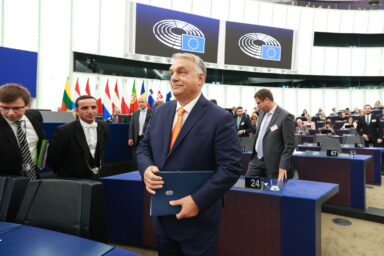
Russia is not hiding. In the 48 hours before the European Parliament debated hybrid warfare in Strasbourg on 15 September 2026, a Russian warship fired flares at a Danish military helicopter in the Baltic Sea, NATO jets shot down a drone over Lithuania, Russia struck a passenger train near the Polish-Ukrainian border, and Poland recovered a drone from its territorial waters. These were not accidents.
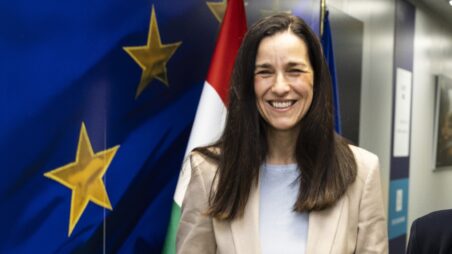
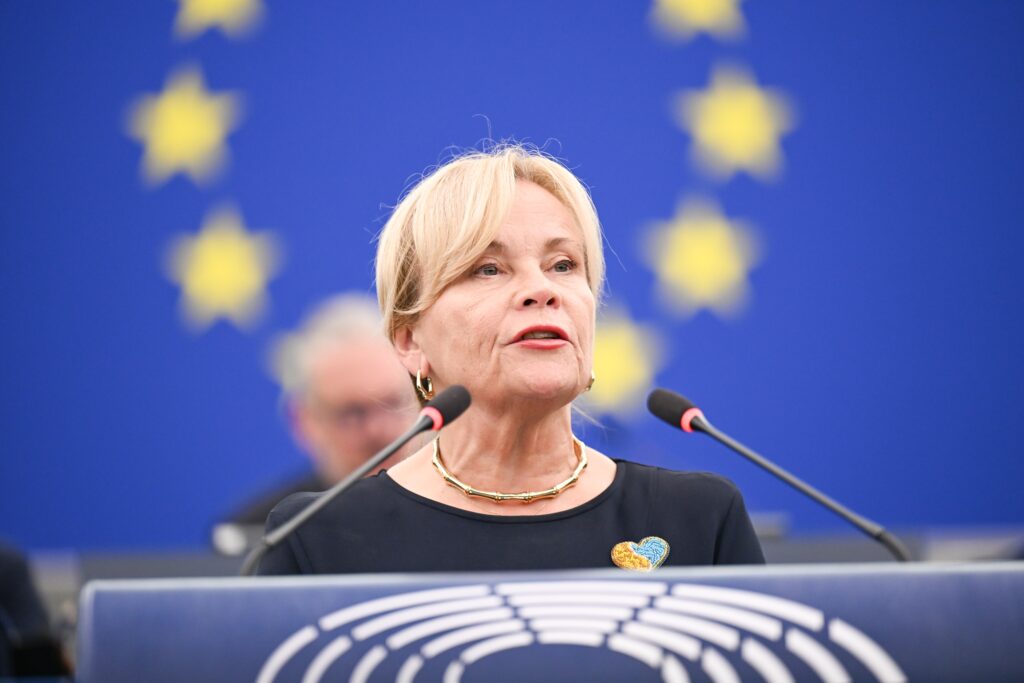
That was the unambiguous message from EU foreign policy chief Kaja Kallas, who opened the debate with a bluntness that set the tone for what followed. “Those are not accidents,” she told lawmakers. “They are calculated attempts by Russia to weaken our resolve, test our unity and play with fears of escalation.”
The session centred on a Parliament report drawn up by rapporteur Rasa Juknevičienė (EPP/LTU) of the Security and Defence Committee (SEDE). The report, put to a vote on 16 September, is non-binding. Its political weight, however, is considerable.
From resilience to deterrence
Ms Kallas’s fellow hawkish Balt, Ms Juknevičienė did not mince words, either. Europe, she argued, has been too slow, too reactive, and too comfortable with euphemism. “Fear of escalation has not prevented Russian escalation,” she told the chamber. “It has encouraged Russia to test the next boundary.”
Her report calls for a fundamental shift from resilience to deterrence. It treats critical infrastructure (cables, pipelines, ports, airports, satellites) as strategically equivalent to military installations. It demands faster implementation of eastern-flank border surveillance, operationalisation of the EU’s mutual-defence clause under Article 42.7 of the Treaty on European Union, and dedicated funding for vulnerable eastern regions. Societal resilience, the report insists, is not a secondary concern. Citizens are the first line of defence.
Two attacks in 2022. Thirty-four in 2024. By this September, the tally in Europe has passed 189 attacks.
— MEP Rihards Kols (ECR/LVA)
Ms Kallas outlined five concrete lines of action the Commission is already pursuing. First, systematic public attribution of attacks. She cited Germany’s handling of the Leipzig airport bomb plot and the collective exposure of Russia’s FSB for cyber aggression in July as models. Second, targeted sanctions: nine individuals and four entities were sanctioned most recently, with more listings imminent.
Words matter. So does unity
Third, cutting Russia’s revenue: EU sanctions have, she said, deprived the Russian economy of €1tn, and the “Commission is finalising the largest number of listings yet.” Fourth, reducing Russia’s intelligence footprint: the Russian mission to the EU has been capped at 40 staff, and Ms Kallas called for tighter controls on Russian diplomats’ movement within Schengen, a ban on visas for Russian ex-intelligence personnel, and a review of tourist visas.
Fifth, protecting the information space through AI-powered detection of FIMI, staff training, and dismantling Russian recruitment networks. “We are doing the right things,” the High Representative said. “We are not doing them fast enough and we are not realising fast enough.”
Several lawmakers argued that the very language of “hybrid warfare” has become part of the problem. MEP Sergey Lagodinsky (Greens-EFA/DEU) was emphatic: “Let us call an attack an attack. Russia is preparing for possible military aggression against EU and NATO countries.” MEP Nathalie Loiseau (Renew/FRA) was equally impatient: “’Hybrid threats’ are one of the best examples—or worst—of not calling things by their name.” She dismissed the EU as having “become the world champion of moaning”.
In phase three
MEP Rihards Kols (ECR/LVA) offered a sobering statistical frame. “Two attacks in 2022. Thirty-four in 2024. By this September, the tally in Europe has passed 189 attacks.” He listed them with deliberate specificity: rockets fired at a power substation outside Berlin, a weapons factory in Bulgaria set ablaze, an ammunition plant near Rome blown up, a drone factory in Tallinn torched, explosives on the runway at Leipzig. “Hybrid has become a security blanket,” he said. “A word we hide behind so we don’t have to take any measures.”
MEP Pekka Toveri (EPP/FIN) placed the current moment within Russian military doctrine, arguing that Europe is already in “phase three” of a Russian warfare model heading towards “phase four: aggressive military exercises and activities”. Sanctions announced months after an attack, he warned, give the impression that “we are weak and don’t dare to defend ourselves.”
We are doing the right things. We are not doing them fast enough.
— Kaja Kallas, EU foreign policy chief
MEP Thijs Reuten (S&D/NLD) pressed the same point from a different angle. “Out of fear of escalation, we enabled escalation,” he told the chamber. He called for a predictable response posture: one in which the certainty of a response is fixed, even if its form remains unpredictable.
Sharp fringes
The debate was not without sharp disagreement and, as looming international conflicts are prone to do, provoked an intra-Spain clash. MEP Nicolás Pascual de la Parte (EPP/ESP) drew a parallel between Russian hybrid attacks and what he described as Morocco’s “invasion” of Ceuta by more than 80,000 people. His fellow Spaniard, MEP José Cepeda (S&D) pushed back, accusing de la Parte of “talking about domestic issues” rather than addressing the Kremlin threat.
MEP Jorge Buxadé Villalba (ECR/ESP) went further still, alleging jihadist cells and Moroccan intelligence agents operating in Ceuta. Mr Lagodinsky challenged him on procedural grounds, noting that the Ceuta situation had already occupied half the day’s agenda.
The fiercest exchanges came from the chamber’s fringes. MEPs Milan Uhrík and Ľuboš Blaha (both ESN/SVK) accused Ms Kallas of lying about Ukraine’s prospects, demanded an end to financial support for “this black hole of Ukraine”, and compared Ms Kallas’s rhetoric to that used by “the Nazis”, with a trademark Félvidék sense of understatement.
Assymetric response wanted
The report, however, elicited mostly favourable reactions. MEP Marie-Agnes Strack-Zimmermann (Renew/DEU), chair of the SEDE committee, was direct: “Putin is a murderer, a criminal, and he wants to make us afraid.” She called for clarity and speed, warning that words without action erode public trust. When challenged by a blue-card question about Germany’s Nord Stream record, she did not deflect: she acknowledged past mistakes, arguing that the failure to act after Russia’s annexation of Crimea had emboldened Putin and helped trigger the 2022 war.
Fear of escalation has not prevented Russian escalation. It has encouraged Russia to test the next boundary.
— MEP Rasa Juknevičienė (EPP/LTU)
MEP Robert Biedroń (S&D/POL) called for a doctrine of asymmetric response. “Every attack must deepen our support for Ukraine urgently,” he said. He listed Skyshield, deep-strike capabilities, and air defence as priorities.
Ms Juknevičienė used her closing remarks to raise a pointed question. Many Russian cultural centres, which she described as “Russian spy centres operating against the EU and orchestrating FIMI operations”, remain open. She named Austria, Belgium, Bulgaria, France, Greece, Hungary, Italy, Luxembourg, Malta, Cyprus, Spain, and Slovakia. The one in Berlin was closed only after the Leipzig attack. “When these institutions are closed,” she said, “then I will believe that those countries are seriously determined to defeat Putin’s Russia.”
What happens after the vote
Ms Kallas closed with a rebuttal aimed squarely at those calling for territorial concessions to end the war. “Nobody wants peace more than Ukrainians,” she said. “But if aggression pays off, then we will see more of it.”
The Parliament’s vote on 16 September is recommendatory, not binding. It creates no new law. Adoption would, however, send a strong political signal to the Commission and Council, raise the likelihood of legislative follow-up on cyber, critical infrastructure, investment screening, and sanctions, and increase pressure on EU agencies (including ENISA, the EEAS, and the European Defence Agency) to act faster and at greater scale.
’Hybrid threats’ are one of the best examples—or worst—of not calling things by their name.
— MEP Nathalie Loiseau (Renew/FRA)
To most lawmakers, the war is not no longer a remote concept. That may please those opposing Russian aggression. The question the Parliament left unanswered on 15 September (and that the vote on 16 September will not resolve) is whether European institutions can match the speed of the threat they are finally, and loudly, naming.