France’s failed attempt to keep under-15s off social media has not stopped Emmanuel Macron. Instead, he is taking the fight to Brussels, pushing for a ban across the bloc as the European Commission weighs its own restrictions. Governments and researchers disagree over whether a blanket ban would make children safer.
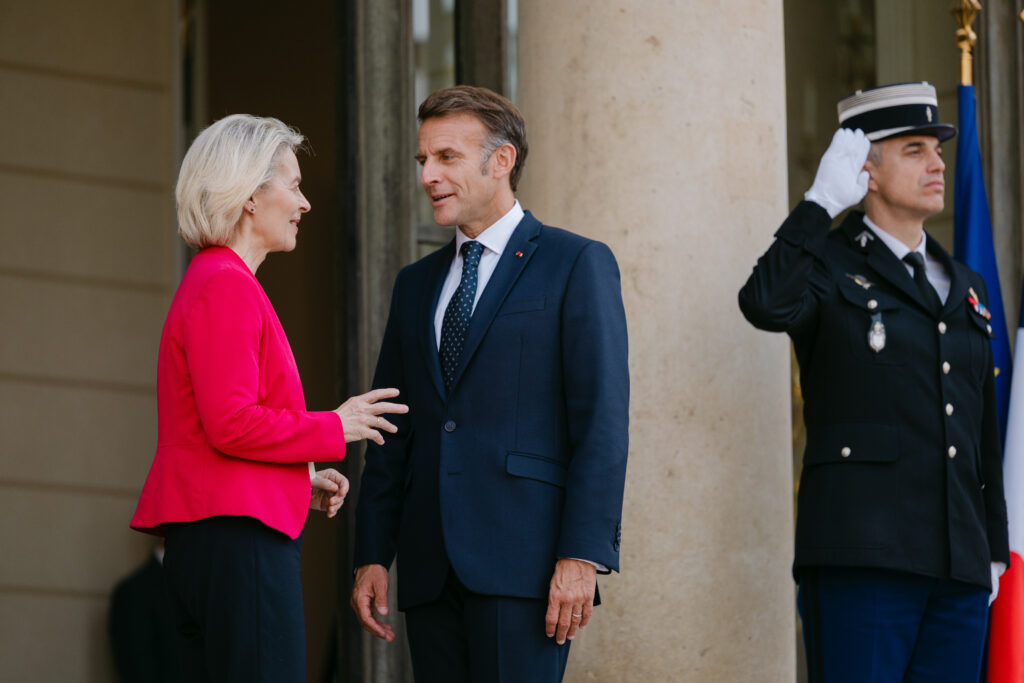
The French president asked Ursula von der Leyen to propose EU legislation banning children under 15 from social media. “I believe it has now become essential to go further and, through a new European legislative text, harmonise a ban on access to social media platforms for children under the age of 15,” Mr Macron wrote. He said the measure was needed “to protect all children across the Union”.
Mr Macron’s appeal follows a legal setback at home. France’s Constitutional Council struck down the central part of the country’s under-15 ban in August, finding that its broad restrictions disproportionately limited freedom of expression and communication.
I believe it has now become essential to go further and, through a new European legislative text, harmonise a ban on access to social media platforms for children under the age of 15. — Emmanuel Macron, French president
The law would have prevented children under 15 from opening social-media accounts and required platforms to close existing ones. Mr Macron has promised a revised national proposal that complies with French constitutional and EU law, but he is now also seeking a common European approach.
Brussels prepares its own restrictions
Mr Macron’s request comes as the Commission develops EU-wide restrictions on children’s access to social media. Ms von der Leyen is expected to present the next steps this month after an expert panel recommended different levels of access according to age.
France, Denmark and Greece favour a minimum age of 15, while Spain has considered restrictions for children under 16. The European Parliament supports a minimum age of 16 for independent access. Teenagers aged 13 to 15 could join with parental consent. Estonia has opposed a blanket EU ban.
Any restriction would require platforms to establish whether their users meet the relevant age threshold. The Commission has developed an age-verification system that allows people to prove they are above a specified age without disclosing their identity or exact date of birth. It will eventually connect with European digital-identity wallets.
However, the technology has generated separate privacy concerns. As EU Perspectives reported, a European citizens’ initiative is seeking one million signatures against mandatory online identification. Its organisers argue that protecting children should not create an identity-checking system for all internet users.
Researchers warn exclusion does not equal protection
Mr Macron’s proposal has also faced criticism from academics and children’s-rights organisations. In a statement opposing blanket bans, EU Kids Online warned that excluding children from social media did not automatically make them safer. Restrictions could instead push them towards less regulated online spaces with fewer safeguards.
The network also argued that bans could limit children’s access to information, learning, self-expression and contact with their peers. It called for children to be consulted about policies affecting them. It also urged policymakers to address the causes of online harm, including cyberbullying, social isolation and manipulative algorithms.
A recent study, based on responses from 29,169 children across 19 European countries, found that restrictions could reduce some risks but would also remove valuable opportunities. The researchers concluded that bans would be insufficient on their own. They recommended safer platform design, stronger corporate accountability, digital literacy and targeted support.
The debate now centres on whether the EU should exclude children from social media or force platforms to make their services safer. France’s failed law shows that Brussels will also have to reconcile either approach with privacy and freedom of expression.