Volkswagen could shut down four German factories within a decade. The same company is now asking Brussels to reward European carmakers with public money.
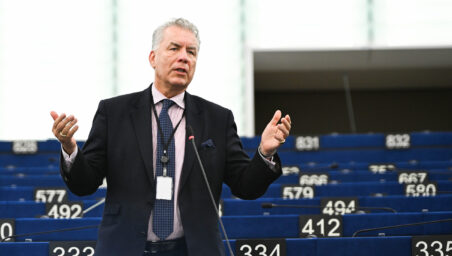
The case surfaced at a European Parliament hearing on Wednesday. Anna Cavazzini, the lawmaker steering Parliament’s work on the Industrial Accelerator Act, said Europe had “sleepwalked into the situation of the China shock”. She argued the legislation could reverse the decline. That depends on genuinely building strategic products and their key components in Europe.
The Commission proposed the act in March. It would introduce European-content and low-carbon requirements for selected public contracts and subsidies. These cover energy-intensive industries, clean technologies and automotive manufacturing. It would also accelerate permits and impose conditions on some large foreign investments in strategic sectors.
“If the EU is going to do European preference, do it right or don’t do it at all,” said Sander Tordoir, chief economist at the Centre for European Reform. He warned that weak origin requirements and excessive exemptions could leave the proposal without meaningful effect. China’s industrial expansion is already placing growing pressure on European manufacturers.
Volkswagen’s plan amid looming closures
Volkswagen representative Sebastian Schaffer backed linking public assistance to European employment. “Any company that accepts European taxpayers’ money should also do something to save European taxpayers’ jobs,” he said.
His remarks reflected a joint proposal from Volkswagen and Stellantis. It would give European-made electric vehicles advantages through purchase subsidies, public procurement and EU carbon-dioxide rules. Their definition would consider where companies assemble and develop a vehicle. It would also weigh the origin of its battery cells, electric powertrain and important electronic components.
At the same time, Volkswagen management reportedly wants to end production at four German plants between 2031 and 2034. The proposal covers Emden, Zwickau, Hanover and Audi’s Neckarsulm factory, according to WirtschaftsWoche reporting cited by Reuters. The supervisory board has yet to approve the plan, while Volkswagen declined to comment.
The timing sharpened a central question surrounding European preference: whether public assistance would preserve factories and employment or provide additional support to companies already reducing their European workforces.
No return for lost supplier jobs
Manufacturers would have to assemble in the EU any electric vehicle receiving covered forms of public assistance. It would also have to contain at least 70 per cent EU-produced components by value, excluding the battery. Separate requirements would apply to battery cells and other strategically important systems.
“This is not an embargo; it is an incentive,” said Benjamin Krieger of the European Association of Automotive Suppliers. Vehicles that failed to qualify could still sell in the EU, but they would not receive the relevant subsidies or preferential treatment.
Any company that accepts European taxpayers’ money should also do something to save European taxpayers’ jobs. — Sebastian Schaffer, Sebastian Schaffer, Head of EU Group Representation, Volkswagen Group
Mr Krieger said European suppliers could manufacture most components required for electric and hybrid vehicles, but faced costs between 15 per cent and 35 per cent higher than competitors elsewhere. Their industry association recorded more than 100,000 potential job cuts announced during 2024 and 2025 and estimates that up to 350,000 positions could be at risk by 2030. “Once these jobs are gone, this development is impossible to reverse,” Mr Krieger warned.
Workers’ conditions for public money
Rudi Kennes (NI/BEL) brought personal experience to the debate. He worked at Opel’s Antwerp factory for more than three decades before losing his job when General Motors closed the plant in 2010. Mr Kennes accused carmakers of moving production to lower-cost countries before returning to Brussels for taxpayers’ assistance after dismissing European workers.
Judith Kirton-Darling, general secretary of industriAll Europe, similarly warned against subsidising “managed industrial decline”, in which profitable companies continued closing factories and rewarding shareholders. “The question therefore is not whether money exists to invest in Europe,” she said. “The question is where companies choose to invest it.”
IndustriAll supports European preference but wants assistance tied to investment, employment and environmental conditions. Lawmakers also questioned whether recipients should be required to maintain production, consult workers and invest in skills.
Definition could weaken plan
Lawmakers warned that “Made in Europe” could become meaningless if companies imported valuable components and completed only the final production stages inside the EU. They questioned whether origin should be calculated for an entire vehicle or separately for strategic components such as batteries and electric powertrains.
The geographical scope presents another difficulty. Excluding the UK, Norway, Türkiye and EU candidate countries could disrupt established supply chains, while including too many partners could weaken incentives to invest within the bloc.
In a year, we will probably meet again and talk about the fact that we did not manage to salvage European industry. — Anna Zalewska, Member of European Parliament (ECR Group)
Anna Zalewska (PiS/POL) questioned whether the requirements would be practical enough for companies to implement. “In a year, we will probably meet again and talk about the fact that we did not manage to salvage European industry,” she warned.
Parliament and the Council must now decide what qualifies as European and what companies must provide in return for public support. Their choices will determine whether the act protects production and employment or becomes another initiative that fails to halt Europe’s industrial decline.