This June, waters off Corsica and Sardinia were up to 8°C warmer than normal. Such heat can fuel violent storms, and spotting them in time depends on thousands of ocean robots, many backed by US funding that is now drying up. The EU and Canada are rallying almost €220m to keep them at sea.
Every weather forecast that reaches a Spanish farmer, a Greek ferry captain, or a Polish family planning a weekend starts partly at sea. Around 8,000 buoys, floats, and other platforms run by 64 countries feed the Global Ocean Observing System. Together they deliver about 120,000 measurements a day. When researchers at the European Centre for Medium-Range Weather Forecasts removed ocean data from their models, their forecasts for up to four weeks ahead became less accurate, above all for the ocean itself. Missing Argo floats accounted for most of that loss.
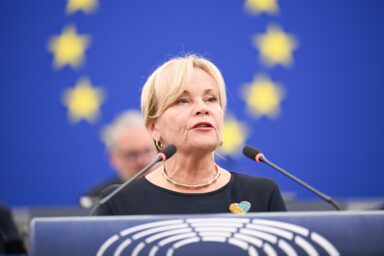
On 23 September, European Commission President Ursula von der Leyen and Canadian Prime Minister Mark Carney launched the OceanEye International Alliance at the UN General Assembly in New York. Its 31 members, the EU and 30 countries, have so far pledged almost €220m. The EU put in €92m from its Horizon Europe research programme, up from €50m announced in March. The event also showed the ever closer partnership between Brussels and Ottawa. Only a week earlier, Ms von der Leyen had floated the idea of Canada becoming the EU’s first “associate member”.
Robots with a funding problem
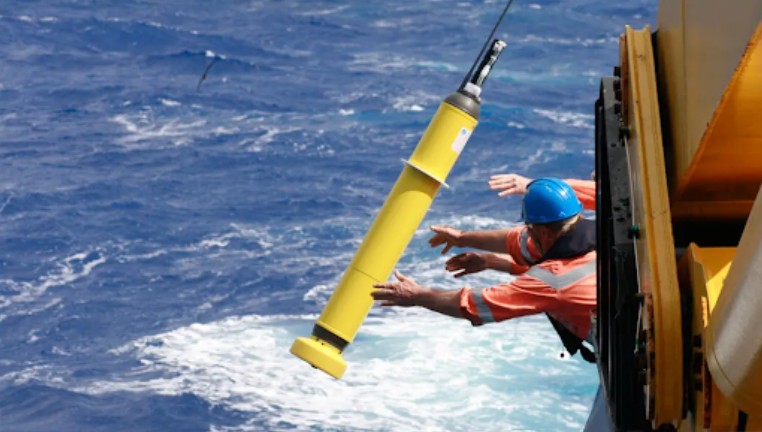
The backbone of the system is Argo, a fleet of several thousand floats. They drift with the currents, dive to 2,000 metres, and send their readings to satellites when they surface. Anyone can use the data for free within a day. Scientists draw on them in hundreds of studies every year.
The trouble is money. The United States has deployed and maintained more than half of the Argo fleet. Now budget cuts in Washington are reaching its ocean research. The National Oceanic and Atmospheric Administration (NOAA) can no longer support the biogeochemical branch of Argo, which measures oxygen, acidity, and nutrients. Without replacement funding, that branch is due to end, according to scientists at the Scripps Institution of Oceanography.
Other programmes have come close to the edge. In May, the National Science Foundation started pulling instruments out of the Ocean Observatories Initiative, a network of some 900 sensors off the US coasts. After protests from scientists and senators, the agency halted further removals in June. Congress also gave NOAA more money than the White House asked for, yet funding for individual programmes remains uncertain.
The United States is not among the alliance’s members. The Commission does not mention Washington. It does warn that the global system depends on a handful of major contributors and remains vulnerable to funding gaps and geopolitical shocks. Without a broader base, it says, blind spots could return and weaken weather forecasts, climate projections, and marine conservation worldwide.
A hotter sea next door
For Europe, the stakes lie close to home. This June was the warmest on record in the Mediterranean, with an average surface temperature of 24.07°C. Later in the summer, the Gulf of Lion off southern France was still around 6°C above average. Marine heatwaves affected roughly 82 per cent of the global ocean in the first half of the year, according to the Copernicus Marine Service. Such heat harms seagrass meadows and fish stocks.
The ocean we share cannot be understood, or protected, by any nation alone.
— Mark Carney, Prime Minister of Canada
Both leaders presented the alliance as a joint effort. “The ocean we share cannot be understood, or protected, by any nation alone. What none of us can do individually, we can achieve together,” Mr Carney said. Ms von der Leyen said ocean observation gives the world “eyes and ears beneath the waves”. Canada pledged C$82m over five years. Other members are contributing research vessels, sensors, drones, and data centres rather than cash.
The EU will spend €50m directly on observation networks, including more equipment on the high seas. Another €30m goes to new ocean technology through a European Innovation Council challenge, and €12m keeps international marine data flowing. The alliance hopes to grow at COP31, the Our Ocean Conference in Halifax, and the UN Ocean Conference in Busan. By 2030, Brussels also wants a fully working digital twin of the ocean for real-time monitoring and forecasting.