Rejected asylum seekers in five EU countries could soon be flown to Rwanda. Rights groups and opposition lawmakers hope the plan never takes off, since British judges have already sunk a similar scheme.
For Rwanda, this is familiar territory. This week in Vienna, Austria, Denmark, Germany, Greece, and the Netherlands unveiled their plan to turn the country into the first return hub outside the EU. A pilot centre for about 100 people should open in 2027, although no deal has been signed yet.
Kigali has already entered into similar arrangements with the US. It also tried to strike such deals with Britain and Israel, but courts stepped in. The British Supreme Court cited the risk of violating the UN Refugee Convention, specifically the ban on refoulement.
Yet as early as 2021, Denmark launched a process to externalise asylum procedures to Rwanda. Its government, led by the Social Democrats, nonetheless takes a hardline stance on migration. The African Union responded sharply at the time: “Such attempts to stem out migration from Africa to Europe is xenophobic and completely unacceptable.” What has changed?
You might be interested
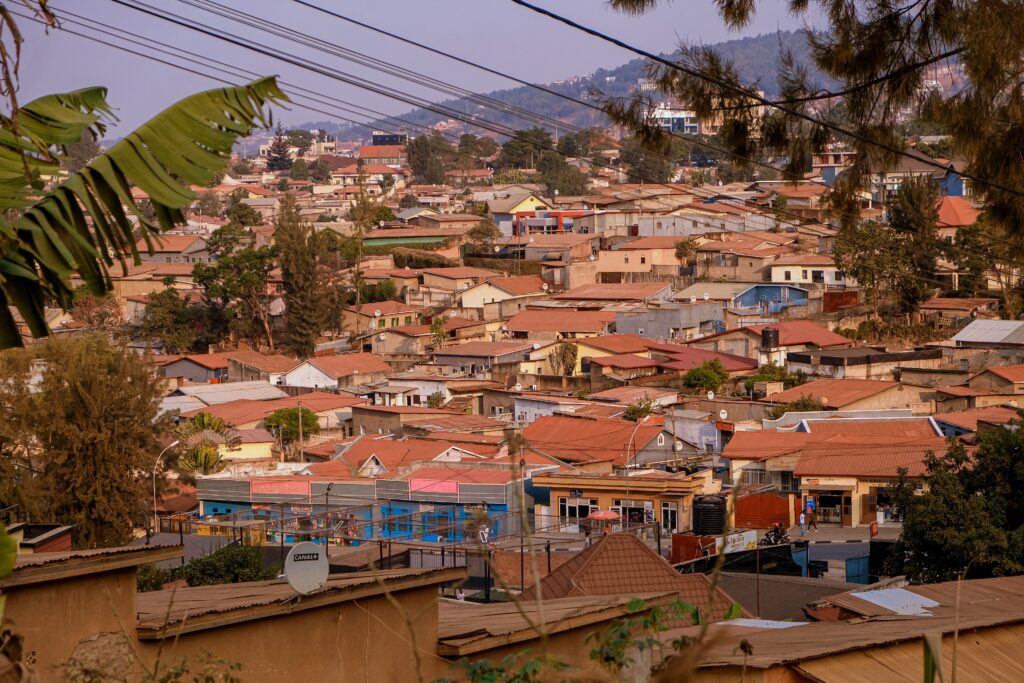
Switzerland of Africa?
Not much, critics say. The Heinrich Böll Foundation, close to the German Greens, calls the plan a symbolic political bluff. Its reasoning is that “deportations to Rwanda rest on shaky legal ground and will have to be contested in court”. It points to the legal history of the UK and other countries that tried to use this model to manage migration.
So far, the only such ‘innovative solution’ in operation is Italy’s deal with Albania, and its future beyond the initial five-year term is uncertain. MEP Mélissa Camara (Greens/EFA/FRA) calls the centre in Gjadër an example of “extreme dehumanisation”. In her view, the Return Regulation, in force since October, “marks a further turning point, by entrusting the management of these centres to countries like Rwanda, where human rights violations are extensively documented”.
Critics of the government in Kigali have felt this first-hand. In 2021, the Italian-British author Michela Wrong published Do Not Disturb, an account of the history of the Rwandan Patriotic Front (RPF) and its less-than-transparent aspects. Paul Kagame led the RPF before becoming Rwanda’s president, a post he has held since 2000.
It looks like the Switzerland of Africa, but it is an extremely repressive and frightening country. — Michela Wrong, author of Do Not Disturb
Mr Kagame denounced Ms Wrong on national television, labelling her a foreign agent. The book also triggered intense reactions across government-controlled social media. “It looks like the Switzerland of Africa, but it is an extremely repressive and frightening country,” Ms Wrong says.
Integration on paper
The five governments present the planned facility as a ‘welcome centre’. Migrants would stay there for a couple of months. Then they would decide whether to settle in Rwanda or return home. The Dutch government says that “the persons in question will be returned to Rwanda, where they will be accommodated in an open, temporary facility”. It adds that “from there they will be able to integrate into society”.
“That also means they will have the right of residence there, as well as access to education, the labour market, healthcare and the legal system. Of course they will still always have the option of returning to their country of origin,” the Dutch statement explains. Rwanda’s Interior Minister Vincent Biruta agrees. His country “is a welcoming country for refugees and migrants, and we are committed to working with European partners to provide a safe, legal and dignified solution for migrants”, he says.
The reality on the ground may be harsher. In April, the UN Special Rapporteur on extreme poverty, Olivier De Schutter, published a report on Rwanda. Despite commitments to create jobs, he found structural problems that undermine worker protection. Rwanda still has no statutory minimum wage, and labour laws lack proper enforcement. Child labour also persists.
Short memory in Brussels
Brussels has clashed with Kigali before. In March 2025, the EU imposed sanctions over Rwanda’s support for the M23 rebels in the eastern Democratic Republic of Congo (DRC). They targeted three Rwandan army commanders, the head of the country’s mining board, and a gold refinery in Kigali, among others. That year, the European Parliament also wanted the World Cycling Championships moved out of Kigali.
Lawmakers also called for suspending the EU’s 2024 memorandum of understanding with Rwanda on critical raw materials. The deal covers tin, tungsten, gold, niobium, and rare earths. The Commission kept it in place and opted for a review instead.
Rwanda-backed M23 is committing horrific human rights abuses, which may amount to war crimes, against artisanal miners in eastern DRC. — Agnès Callamard, Secretary General of Amnesty International
In September, Amnesty International published a report on the mines in eastern DRC. “Rwanda-backed M23 is committing horrific human rights abuses, which may amount to war crimes, against artisanal miners in eastern DRC,” said Secretary General Agnès Callamard. According to her, the abuses aim to punish and intimidate the miners, while the minerals are smuggled across the border into Rwanda. “Rwanda has continued to illegally profit from DRC’s mineral wealth,” she added.
The choice also troubles lawmakers. Marco Tarquinio (S&D/ITA) told EU Perspectives that picking Rwanda as the first hub is “particularly disturbing”. He objects that “the fate of human beings should be entrusted to a country against which there are documented allegations of serious violations of fundamental rights”. He also recalls that the European Parliament “has even called for the suspension of the agreement on critical raw materials, due to its role in the war in the Congo”.
Kigali’s price tag
One question remains open. What has Kigali asked for in return? The five frontrunners on return hubs are already discussing their next steps, and Uganda is seen as a likely candidate.
Some lawmakers reject the whole idea. Estrella Galán (The Left/ESP) does not accept “a Europe that outsources its obligations to make deportations easier”, she says.