The shockwaves from a ruling that could bring Russian teams back into international ice hockey have reached Brussels. The European Commission has little direct say over sports federations, but reminded EU’s commitment to keeping Russian and Belarusian teams out of the game until a just and lasting peace in Ukraine.
The European Commission has reminded member states and international sports federations that EU sanctions apply when deciding whether Russian teams can compete in Europe. Its statement follows an arbitration ruling that has opened the door to Russian hockey teams returning to international tournaments.
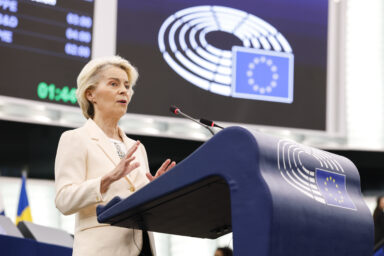
International sports federations enjoy autonomy, the Commission says. They decide how to organise their events and who can take part. “However, both federations and member states should act in line with EU sanctions and restrictive measures,” Commission spokesperson Eva Hrnčířová said.
She also reiterated the Commission’s longstanding position that sport should not become a propaganda tool. It does not support the return of Russian and Belarusian athletes to international competitions while Russia’s war against Ukraine continues.
Both federations and member states should act in line with EU sanctions and restrictive measures. – Eva Hrnčířová, European Commission spokesperson
Hrnčířová pointed to the European Council conclusions adopted in mid-October. Member states agreed that Russia and Belarus should not regain a place at international sporting and cultural events until Ukraine achieves a just and lasting peace. They also rejected Russian and Belarusian flags, symbols and anthems at European sporting events.
Five tournaments at stake
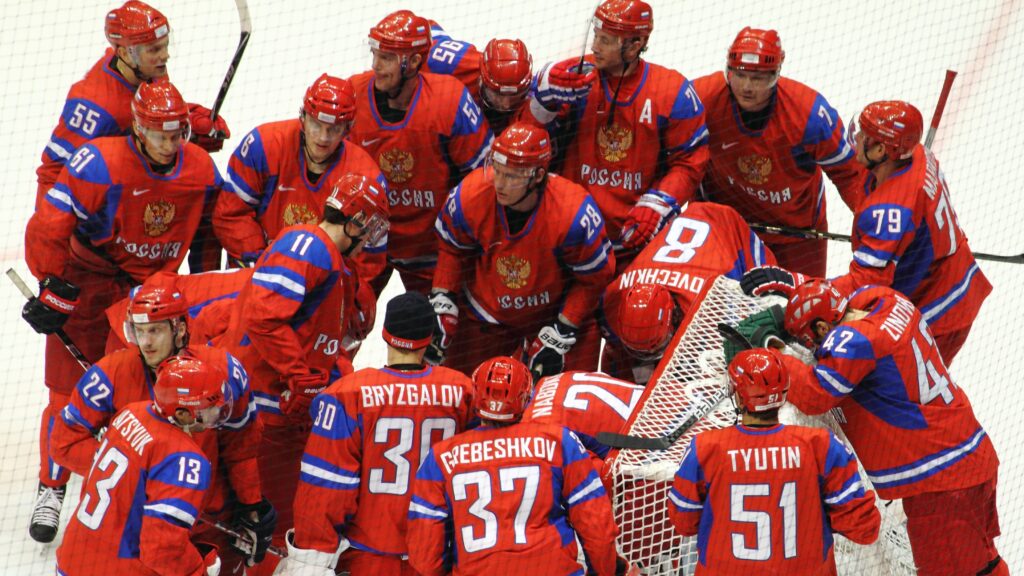
On 30 October, the Court of Arbitration for Sport (CAS) upheld an appeal by the Russian Ice Hockey Federation against the International Ice Hockey Federation (IIHF). It ordered the IIHF to allow Russian teams back into international competitions with immediate effect.
The court found that the IIHF had not provided sufficient evidence for its arguments over security, participant protection and other risks. The arbitration panel said that “only substantiated security concerns could outweigh athletes of a particular nationality to participate in competitions”.
The ruling covers five tournaments: the World Junior Championship in Canada (26 December 2026 to 5 January 2027); the Women’s Under-18 World Championship in Czechia (8–16 January); the Men’s Under-18 World Championship in the US (22 April to 2 May); the Men’s World Championship in Germany (14–30 May); and the Women’s World Championship in Canada in November 2027.
The ruling applies exclusively to ice hockey. In the same statement, CAS recalled that it had dismissed two appeals on 13 October. Russian athletes and the Russian Curling Federation had challenged decisions by World Curling.
Those decisions keep the ban on Russian senior teams in place until the end of 2026. The arbitration court accepted that the restrictions reflected practical problems in organising competitions. These included the possibility of opponents refusing to play Russia and difficulties involving host countries and visas.
The IIHF criticised the CAS ruling but said it would comply. It also warned of the logistical challenges involved in preparing tournaments. A Russian return would require changes to schedules, accommodation, travel arrangements and security measures. The federation is now assessing how to implement the ruling and how long that might take.
What do EU sanctions actually cover?
The Commission’s reminder does not mean the EU imposes a blanket ban on Russian athletes competing in events hosted on its territory. Nor do EU sanctions specifically target Russian sport as a sector. Instead, existing restrictive measures apply to individuals and organisations placed on EU sanctions lists, regardless of their profession or field of activity.
The Panel unanimously concluded that, in the light of the applicable IIHF regulations, only substantiated security concerns could outweigh athletes of a particular nationality to participate in competitions. — Court of Arbitration for Sport
The EU bars individuals subject to sanctions from entering its territory and freezes their assets. Member states must also prevent these individuals from accessing funds or economic resources, either directly or indirectly.
A Russian athlete, coach or official on an EU sanctions list therefore cannot take part in an event within the bloc. A sports federation’s decision cannot override that restriction. Russian citizenship alone, however, does not automatically trigger such restrictions.
Further visa restrictions for Russian citizens
The European Commission has already signalled plans to tighten visa rules further. In January, it presented the EU’s first visa strategy. The strategy envisages targeted restrictions on citizens of countries taking hostile actions against the EU. Russia is among them.
In June, Commission spokesperson Markus Lammert confirmed that the executive would propose a new category of targeted visa restrictions. The measures would address security risks linked to hostile activities by third countries. The Commission plans to present them as part of its 2027 revision of the Visa Code.
The proposal could allow the EU to restrict, suspend or reject applications from certain categories of travellers. The Commission has not yet specified which groups might face the measures. Nor has it explained how they would apply to Russian citizens.
This would not be the first tightening of visa rules. Since November 2025, Russians have generally been unable to obtain multiple-entry Schengen visas. They must now apply separately for each trip to the EU.
Hockey powers refuse to face Russia
The CAS ruling has prompted mixed reactions across Europe. Some countries are actively seeking to prevent Russian teams from returning. Others oppose their participation but have no intention of boycotting entire tournaments.
Latvia faces one of the most complicated situations. Its national law bars national teams in collective sports from playing against Russia and Belarus, even if the athletes compete under a neutral flag. Latvian Ice Hockey Federation secretary general Roberts Pļāvējs confirmed that Latvia would not face either team.
On 2 November, Latvia’s Ministry of Education and Science also strongly condemned the CAS ruling. It announced that public funding would not support competitions involving Russian or Belarusian teams.
Finland has emerged as one of the most vocal opponents of Russia’s return. On 2 November, the Finnish Ice Hockey Association announced that its national teams would refuse to play Russia while the war in Ukraine continues. Helsinki is also seeking support from other countries.
The city of Turku has gone a step further. It has threatened to withdraw as host of the 2028 World Junior Championship if Russia takes part.
Russia is returning to world hockey. This place rightfully belongs to us, and discrimination in hockey has been brought to an end. — Russian Sports Minister Mikhail Degtyarev
On Tuesday, 3 November, Norway, Denmark and Sweden announced the same approach. Their national teams will refuse to play Russia at the Men’s World Championship in Germany in May 2027. However, they intend to play their remaining matches as scheduled. The Czech Ice Hockey Association has freshly joined the growing boycott, announcing that Czech teams will not face Russian opponents.
Canada, which is due to host the World Junior Championship in late December, has also voiced its opposition. Hockey Canada said it was disappointed by the CAS ruling and asked the IIHF to explain its implications.
Canadian Foreign Minister Anita Anand subsequently confirmed that the government strongly opposed Russia’s return. Canada will maintain its own restrictions on Russian athletes at federally funded events hosted in the country. It is also considering further options.
Germany faces uncertainty too. The country is due to host next year’s Men’s World Championship. The German Ice Hockey Federation opposes Russia’s return and has warned of potential security, political and economic consequences.
It said the CAS ruling had fundamentally changed the situation for tournament organisers. The federation is now assessing its next steps with the IIHF.
Washington has yet to weigh in
While European federations are drawing their lines, USA Hockey has yet to make a public statement on the CAS ruling. The United States is due to host next year’s Men’s Under-18 World Championship. Its position therefore remains unclear.
There is no guarantee that the federation will follow the White House’s foreign policy. Under President Donald Trump, Washington has noticeably softened its approach towards Moscow. In October, for example, it suspended new sanctions against Russia and allowed it to resume diesel exports to foreign markets.
Russia, unsurprisingly, welcomed the ruling. “Russia is returning to world hockey. This place rightfully belongs to us, and discrimination in hockey has been brought to an end,” Sports Minister Mikhail Degtyarev declared.
The dispute has already reached commercial partners. Swedish company AJ Products announced it would end its sponsorship of the 2027 Men’s World Championship. Finnish tyre manufacturer Nokian Tyres threatened to follow suit if Russia takes part. Czech betting company Tipsport called the CAS ruling scandalous. It said it would not advertise during matches involving Russian teams.
The EU’s political position is clear: Russian and Belarusian participation in international sport should not return to normal while the war in Ukraine continues. But its ability to enforce that position remains limited. Existing sanctions do not provide a blanket ban on Russian national teams, leaving Brussels with little direct leverage over decisions by international sports federations.