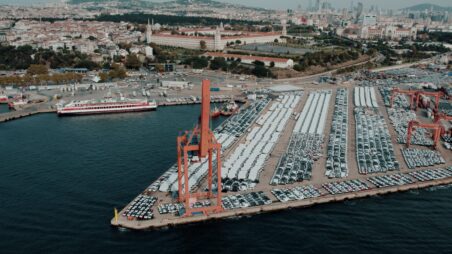
The European Union moved carbon pricing to its frontier. The Carbon Border Adjustment Mechanism (CBAM) entered into force across all Member States on 1 January 2026. What began as a climate policy experiment has now become a live border instrument, fully integrated into customs systems and trade infrastructure.
In its first six days alone, more than 10,000 CBAM import declarations were validated, covering 1.65 million tonnes of goods. Iron and steel accounted for 98 per cent of declared volumes, with the top exporting third countries being Türkiye, China, India, Canada, Taiwan and Vietnam.
In effect, the EU is exporting its carbon price signal. The strategic logic is that third countries either pay Europe’s carbon tax at the border, or introduce credible decarbonisation policies at home.
The mechanism is designed to ensure that European producers are not disadvantaged by stricter climate policy, while preventing production from relocating abroad to avoid carbon costs.
Third countries under pressure
Although the EU-based importer formally pays the levy, typically the importer passes the burden on to exporters through lower realised prices.
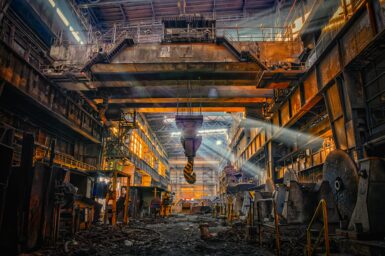
For major exporters of steel, aluminium or fertilisers, CBAM introduces both compliance obligations and a shift in competitive dynamics. Producers with higher emissions become more expensive in the EU market, while cleaner producers gain a price advantage. Exporters that fail to modernise risk losing market share.
The Global Trade Research Initiative (GTRI) estimates that some exporters may need to cut prices by 15–22 per cent to remain competitive.
Although the EU-based importer formally pays the levy, typically the importer passes the burden on to exporters through lower realised prices. GTRI estimates that some exporters may need to cut prices by 15–22 per cent to remain competitive.
Firms must now implement rigorous monitoring, reporting and verification (MRV) systems for embedded emissions. Standard ESG disclosures or sustainability reports are not sufficient. Instead, independent, EU-recognised verification of emissions data is mandatory.
Without verified data, exporters risk being assigned default values by EU authorities – estimates that may be 30–80 per cent higher than actual emissions – leading to significantly higher carbon costs.
GTRI founder Ajay Srivastava warned that this creates particular vulnerability for small enterprises, which face relatively higher reporting costs. “This asymmetry risks penalising MSMEs disproportionately and accelerating their exit from EU supply chains unless corrective mechanisms are introduced,” he told The Times of India.
Uneven national exposure
Those differences are equally visible at the country level. Economies with carbon-intensive production and high export volumes to the EU face greater adjustment pressure. Those with existing or emerging emissions trading systems may be in better position.
Access to the EU’s single market – one of the world’s largest trading blocs – increasingly depends on carbon performance.
Vietnam also finds itself in a vulnerable position, as its steel and aluminium sectors face the highest risk of impact. Steel exports could decline by around 4 per cent, leading to a production decrease of approximately 0.8 per cent. Ms Nguyen Thi Hong Loan, an expert on CBAM’s impact, said that “Vietnamese businesses can only provide emissions information from their production and processing stages, while CBAM requires emissions data for the entire supply chain, including raw materials.”
Such supply-chain transparency requirements represent a structural challenge for many emerging economies.
Strategic adjustment
Brussels has emphasised that the system aims to avoid unnecessary disruption. National authorities report stable processing times, supported by harmonised digital workflows. The EU’s stated objective is to deploy complex climate instruments “without hindering trade”.
As part of the recently agreed EU–India trade deal, an annex on CBAM was included under which the EU will support India in implementing the mechanism successfully while minimising negative effects.
Catalyst for global carbon pricing
Beyond immediate trade effects, CBAM is also intended as a structural incentive for exporting nations to adopt or strengthen domestic carbon pricing systems. If emissions are priced domestically, that cost can be deducted from the CBAM obligation. Revenue remains in the exporting country rather than flowing to the EU budget.
Several key EU trade partners have expanded carbon-pricing schemes in recent years. China strengthened its national emissions trading system. Türkiye launched its ETS after years of preparation. Japan explicitly cited CBAM when advancing its own carbon pricing framework. The United Kingdom and Canada are considering similar border adjustment mechanisms.
CBAM may not be the sole driver of these developments. But given the size of the European market, it has likely sharpened the urgency of the global policy response.