Farmers and millions of people in poorer regions have a lot to lose in the battle over the EU’s next seven-year budget. Sixteen member states have signed a joint declaration defending farm subsidies and cohesion funds. But richer countries refuse to pay more and nobody is budging.
The Commission proposed a 2028–2034 budget with increased spending on defence, competitiveness and security. For a coalition of sixteen southern, eastern and Baltic member states, that shift goes too far. Their message is straightforward: new priorities cannot come at the expense of cohesion policy, agriculture and fisheries.
“Competitiveness and cohesion are not competing against each other,” Italy’s Europe minister Tommaso Foti said during the public debate, calling them “two sides of the same coin”. The so-called Friends of Cohesion, including Italy, Spain, Poland and Romania, are demanding substantially higher allocations under Heading 1 of the budget, which covers regional funding, agriculture and rural development. Together, those policies account for more than half of EU spending.
The frugal pushback
Ministers from Germany, the Netherlands, Sweden, Austria, and others coordinated ahead of the meeting over breakfast. Traditionally the more frugal contributors, they are united in opposition to a larger budget and increasingly vocal about the need to modernise spending.
There is no such thing as free money. — Jessica Rosencrantz, minister for European affairs, Sweden
Dutch Foreign Minister Tom Berendsen called the Commission’s proposal “old-fashioned” and unacceptable in size. Austria warned the EU cannot spend as if “there are no budgetary limits”. Sweden was blunter still. “There is no such thing as free money,” Swedish Minister Jessica Rosencrantz said.
Parliament wants both
What makes the standoff even more complex is that the European Parliament is moving in the opposite direction. Parliament’s position largely backs the Commission’s push for more money for defence, competitiveness and strategic autonomy, but rejects any cuts to traditional spending to get there.
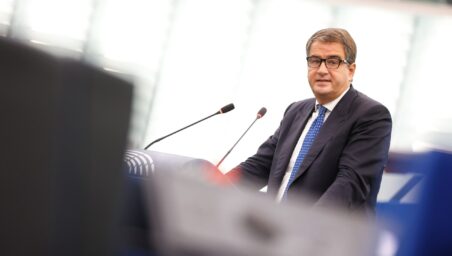
Negotiating on behalf of Parliament, co-rapporteurs Siegfried Mureșan (EPP/ROU) and Carla Tavares (S&D/ESP) argue the EU should not have to choose between new priorities and existing ones. Instead, they want the Union to finance both, placing Parliament closer to the Friends of Cohesion than to the frugal capitals.
The alignment is clearest on agriculture. While the Commission proposed around €386bn for the Common Agricultural Policy, Parliament is backing roughly €433bn. Cohesion funding, too, would be reinforced rather than reduced.
MEPs are also rejecting the Commission’s proposal to finance post-pandemic debt repayments from within the MFF. They argue that doing so would eat directly into programme spending. Their position remains that repayments for NextGenerationEU should sit outside the budget ceilings and be financed through new own resources.
From principles to numbers
Next month, the Cypriot presidency is expected to circulate the first indicative spending figures, the point at which budget talks typically become about hard cash. That is where the pressure will likely intensify.
Budget Commissioner Piotr Serafin sought to reassure ministers that the proposed increase is less dramatic than it appears. Once inflation and debt repayments are stripped out, he argued, the rise is limited. But so far, it does not seem like he has persuaded the frugal states.