What looks like a routine overhaul of EU farm subsidies is turning into a much deeper struggle — one that could decide whether Europe still wants a truly common agricultural policy, or 27 national systems in disguise.
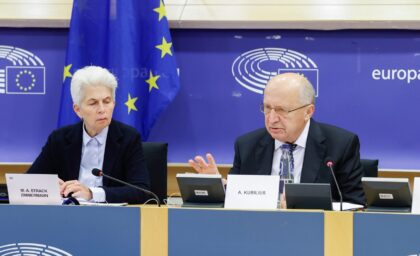
MEPs on the European Parliament agriculture committee held their first proper debate on rapporteur Norbert Lins’ (EPP/DEU) draft report on EU funding for the Common Agricultural Policy (CAP) for 2028–2034. Several of them commending Lins’ aim to abandon the Commission’s initial proposal‚ but warning against ending up with separate national farm policies across the bloc.
One of the key issues was how to finance farmers‚ attract young farmers and protect the environment‚ whilst ensuring that the CAP is maintained as a true European policy, one of the most politically sensitive files to be debated in the next EU budget.
A draft built against the Commission proposal
Agriculture committee chair Daniel Buda recalled the Commission’s proposal was issued almost a year ago‚ at first with a “mixed” reaction.
The proposal is part of a broader redesign of the EU budget that would integrate agricultural funding into national and regional partnership plans, giving member states significantly more responsibility in designing and implementing CAP interventions.
While Brussels argues this “simplified” model would make spending more targeted and efficient, it also explicitly shifts the policy towards greater national flexibility within a common EU framework rather than detailed EU-level rules.
Mr Lins said the Commission’s proposal had been “heavily criticised” and Parliament had spent months trying to reach agreement on working with it‚ seeking meaningful changes. His report is aligned with Parliament’s work on the multiannual financial framework and the national and regional partnership regulation‚ in an attempt to maintain a coherent position throughout the budget negotiations.
However‚ the German MEP said his draft would restore the common structure of the CAP‚ and make it simpler for farmers.
Capping‚ redistribution and young farmers
Lins identified seven main points in his report. On the natural persons’ side‚ the first draft would replace the capping instrument with a new limit of €500‚000‚ and scrap digressivity. Second‚ compulsory redistribution of at least 10 per cent of first pillar money between member states from those with high to low payments‚ as is currently done in the CAP period‚ should take place.
Third‚ generational renewal; 8 per cent of direct payments in the first pillar should be given to young farmers‚ according to Lins. He also opposes the proposed pensionable age rule‚ arguing that the CAP should not pit the interests of younger farmers against the interests of older farmers. “We should help people more and that pushing out older farmers would not fix the succession issue,” Lins said.
Fight over flexibility
The main point of contention was flexibility or rigidity. Dario Nardella (S&D/ITA) said that changing many provisions in the recast from “shall” to “may” was not neutral. Member states would have more discretion but a less uniform implementation of the CAP. He said that‚ while the policy had to be adjusted for the range of farming and climatic conditions in the EU‚ too much flexibility could harm its coherence․
S&D Group reiterated that social conditionality must be a red line. Mr Nardella noted a clearer text on young farmers‚ the recognition of the role of cooperatives‚ and the possibility to support processing of agricultural products. He also argued that the cap could be lowered further and discussion on digressivity could continue․
The ECR group supported parts of the draft that they said restored many of the CAP’s key features such as beneficiaries and types of support and control rules. However‚ it warned that redistribution should not come at the expense of professional farms that innovate and create jobs․
Renationalisation concerns
Other MEPs warned that too much discretion for national governments would mean that the CAP would lose its common character․
Lins himself returned to that point at the end of the debate to say the Commission and the Council were trying to take the policy in a different direction. He added that the Council’s method of working gave member states too much power‚ and that Parliament would have to defend the CAP as a European policy․
“At the end of the day‚ we need to know that in trilogues‚ we will be there as a team‚” he said. “We will need to save this common agricultural policy․”
Buda repeated that the committee could not accept a renationalisation of the CAP or distortions between member states in the implementation of the rules․
The money question
One of the main issues was whether the future CAP would receive adequate funding․ Ciaran Mullooly (Renew/IRL) criticised what he called the “pocket to pocket proposals” that move money between budget headings and present it as new funding․
He pushed for 5 per cent of the CAP to be paid to member states on the condition they match the funds to improve generational renewal: young farmers‚ he said‚ needed assistance‚ not aspirational figures․ Other MEPs have called for ring-fenced funding for young farmers‚ female farmers‚ rural development and the Leader programme․
The Commission also welcomed the 8 per cent reserve for young farmers‚ but requested more detail on how that is to be used alongside other tools to transfer farms to young farmers more effectively․
Long negotiations ahead
The debate revealed broad agreement on rewriting the Commission’s proposal‚ but also major disagreements․ Amendments will focus on capping‚ digressivity‚ environmental conditionality‚ funding young farmers‚ and national flexibility․
On the agriculture committee‚ MEPs have made it clear they are in favour of simplifying and making the rules more workable‚ but they do not want the CAP to become a loose framework subject to different approaches in each member state․