A quarter of a trillion dollars in two years. That is what European allies and Canada have invested in defence and security in 2025 and 2026 combined. NATO’s Deputy Secretary General wants it understood as a floor, not a ceiling.
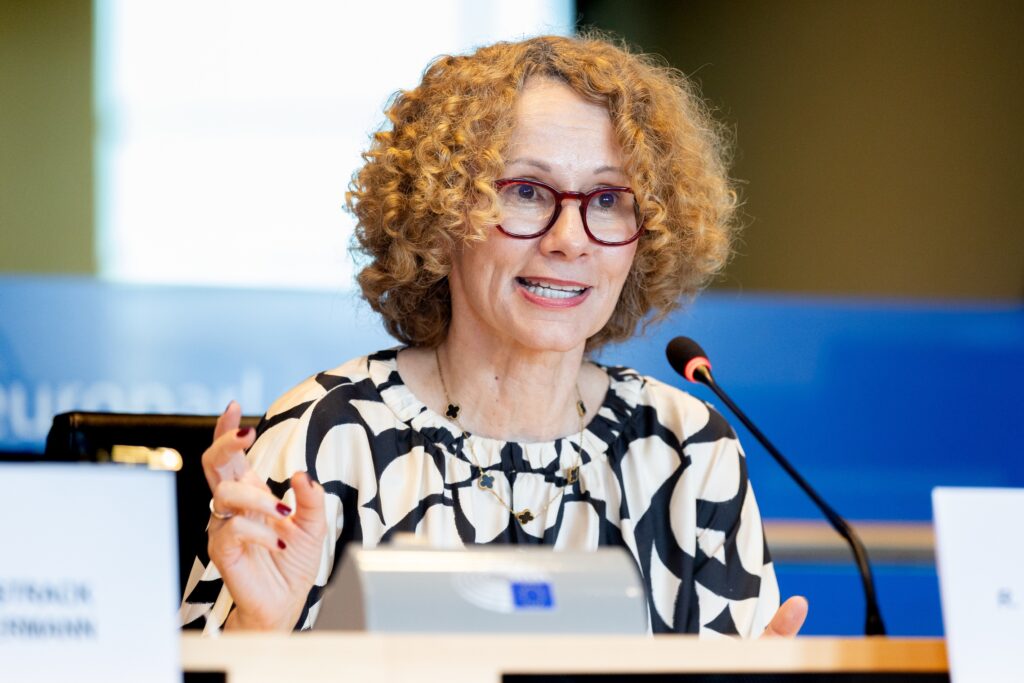
Radmila Šekerinska, NATO Deputy Secretary General, brought that figure to the European Parliament’s Subcommittee on Security and Defence (SEDE) on 15 July. The session dealt with the outcomes of last week’s Ankara NATO summit. European allies and Canada, she told MEPs, are already spending close to four per cent of GDP on defence. That is just one year into the ten-year trajectory agreed at The Hague. The Hague pledge was for five per cent of GDP by 2035. Ankara showed the alliance running well ahead of schedule.
Ms Šekerinska grouped the summit’s achievements under three headings: defence investment, industrial cooperation, and support for Ukraine. On investment, the numbers were the argument. About industry, she pointed to the NATO Defence Industry Forum held alongside the summit. New procurement contracts worth US$50bn were signed there. On Ukraine, allies pledged €70bn in military equipment, training, and assistance. That concerns 2026, and a commitment to at least the same amount for 2027. “It’s a floor, it’s not a ceiling in our commitment,” she said.
A transatlantic industrial revolution
MEP Wouter Beke (EPP/BEL) pressed Ms Šekerinska on what NATO 3.0 means in practice for European industrial capacity. He cited the ESCAF project as a poor model and asked for concrete proposals for a genuinely European defence industry. It should build on a European rather than a member-state perspective.
Ms Šekerinska pointed to the numbers behind the forum’s headline figure. “Allies and industries have invested 37 billion to just upgrade, to increase their defence production capacity,” she said. “Twenty-one billion went to expanding existing facilities. 16 were used to open up completely new production lines.”
She pushed back against any reading of the summit as a victory for industrial nationalism. Supply chains, she argued, already blur the line between European and American. “If you dig deeper into the product, into the project, you will see that they might be nominally American or European, but in essence the supply chains are so interconnected that the cooperation element is already baked in.” The Airbus contracts signed at the forum—covering both air-to-air refuelling and strategic airlift—were, in her telling, a case in point: transatlantic in substance, whatever their nominal nationality.
MEP Petras Auštrevičius (Renew/LTU) asked whether NATO had developed new instruments to work with industry, beyond bringing companies together and facilitating contracts. Ms Šekerinska described two initiatives: first was the NATO Front Door, a single point of access for procurement and innovation. The other was the NATO Engine, a platform allowing industry to search for partners and scale up production using existing but underused industrial capacity. Both, she said, were designed to accelerate output without requiring companies to start from scratch.
Interceptors and the air-defence gap
The most urgent operational question at Ankara concerned interceptors. Russia launched its most massive barrage of drones and missiles on Kyiv the day before the summit opened, killing more than 20 people. Ms Šekerinska said NATO’s focus is now squarely on getting interceptors to Ukraine from allied stockpiles, pressing industry to increase production, and financing the Prioritised Ukraine Requirements List (PURL), which centres on air defence.
“Quite a number of allies have already announced that they will continue financing this arrangement,” she said. “They see that air defence is a game changer, especially when it comes to civilian casualties and critical infrastructure damage in Ukraine.”
They see that air defence is a game changer. — Radmila Šekerinska, NATO Deputy Secretary General
MEP Sven Mikser (S&D/EST) pressed for detail on one of the summit’s most striking announcements: US President Donald Trump’s offer to licence Ukraine to manufacture Patriot missiles. He also raised the summit’s more troubling backdrop, the resumption of full-scale fighting in the Strait of Hormuz during the summit itself, and the unresolved question of Greenland. Ms Šekerinska confirmed the atmosphere surrounding the bilateral meetings was cordial.
On political unity more broadly, Ms Šekerinska acknowledged that not every issue produces consensus. But on the core questions (the nature of the threat, Article 5, support for Ukraine, and industrial cooperation) all 32 allies aligned. “We shouldn’t be ashamed to showcase this unity,” she said, adding that adversaries “always count on us not being united”.
NATO 3.0: transformation or rupture?
The sharpest exchange came from MEP Pierre-Romain Thionnet (PfE/FRA), who challenged Ms Šekerinska’s framing of NATO 3.0 as a shared project. Mr Thionnet argued it was an American imposition: Washington, in his reading, no longer views Russia as a primary US threat, treats it as a regional European problem, and is pivoting to China.
The French Patriot also took issue with her praise for transatlantic industrial integration, noting that the European Parliament has been moving in the opposite direction. It shows a European preference that excludes US companies or US-owned entities in Europe. “It’s a rupture for Europe,” he said. “Washington is saying that they no longer have the same geopolitical objectives.”
Ms Šekerinska did not accept the premise. The Ankara declaration, she said, reaffirmed Russia as “the main threat to Euro-Atlantic stability”. She acknowledged that the United States has broader global responsibilities and must plan for multiple theatres, but framed burden-sharing as neither new nor surprising. “It has been there since the beginning of the alliance,” she said.
‘A total illusion’
“It was a very clear position from President Eisenhower, through every single American administration, that European countries can invest and bear the burden of our joint security more.” On industry, she was equally direct: “We see the benefits of a stronger industry on both sides of the Atlantic because the industrial production capacity is not satisfactory neither in Europe, nor in the US or in Canada.”
MEP Hans Neuhoff (ESN/DEU) pressed harder, citing a Financial Times analysis showing European defence imports from the United States rising to 64 per cent of the total over the next four to five years. With European governments buying F-35s and Aegis systems, he asked whether strategic autonomy was “just a total illusion”.
We shouldn’t be ashamed to showcase unity. (Adversaries) always count on us not being united. — Radmila Šekerinska
Ms Šekerinska restated the Ankara formula without conceding the point: a stronger Europe within a stronger alliance, with European allies and Canada stepping up both spending and support for Ukraine. “It’s mutual, it’s mutually beneficial,” she said, “and it makes our joint security concerns answered in the best possible way.”
Decision-making and difficult allies
MEP Pekka Toveri (EPP/SUO) raised the operational question of decision-making speed. Russia, he noted, exploits moments of hesitation, and NATO’s committee-based structure is slow. Had the authority of the Supreme Allied Commander Europe to act without waiting for political consensus been discussed, he asked.
Ms Šekerinska said the alliance had addressed this directly. Defence plans have undergone revisions for proactive deterrence. The Supreme Allied Commander already has the authority to activate them rapidly. She pointed to February 2022 as proof: “SACEUR was able to activate defence plans on the morning of the invasion.” The alliance, she said, is showing strength: “This is the only way we can continue to deter Russia.”
MEP Alexandr Vondra (ECR/CZE), who had watched the summit from southern Africa, asked for a candid read of Mr Trump’s mood as he left Ankara. Ms Šekerinska was happy to oblige. “If you want a quote from the US president, I think he said there was a lot of love and unity in that room,” she said, adding that the final atmospherics of a summit “also tell the story”.
No small feat
Consensus was reached on all strategic questions: the main threat, a unified response, Article 5 solidarity, support for Ukraine, and industrial cooperation. “I know that many of you know how difficult it is to get through a consensus, especially on important issues,” she said.
In essence the supply chains are so interconnected that the (EU–US) cooperation element is already baked in. — Radmila Šekerinska
The session’s final exchanges were the most pointed. A Cypriot MEP asked Ms Šekerinska (without naming Turkey) whether she could identify a NATO member that occupies EU territory, occupies part of Syria, threatens war against a fellow ally, and, according to a recent European Parliament report, functions as an authoritarian Islamic regime rather than a democracy. MEP Kostas Papadakis (NI/GRE) asked whether NATO’s silence on such matters risked making war more, not less, likely.
Ms Šekerinska’s response to both was consistent and short. NATO does not comment on bilateral disputes between member states. The alliance’s purpose, she said, is collective security in an increasingly dangerous world. “And this is where I will finish,” the deputy secretary general concluded. The chamber, apart from its very fringes, seemed inclined to accept the notion; not a small feat in and of itself.