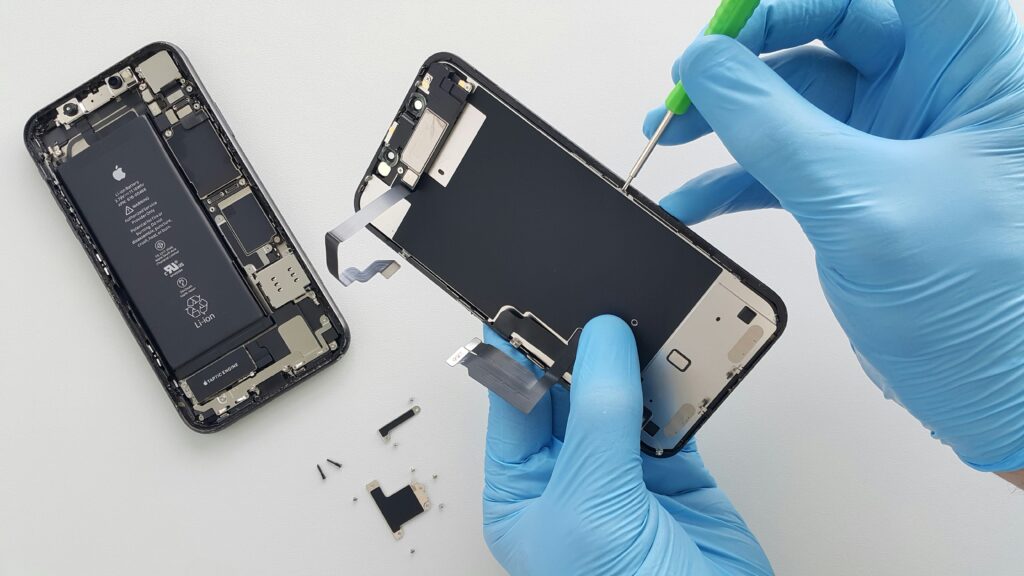
A cracked phone screen or a broken washing machine used to mean one thing: buy a new one. Now, thanks to new EU rules, asking for a repair instead has become a real option. This applies even once the guarantee has run out. For many households, that could mean real savings and fewer trips to the tip.
Anyone whose washing machine broke down, or whose phone screen cracked, faced the same dilemma. Repair could be slow, pricey or simply unavailable. Many people chose to replace rather than fix. That calculation now looks different. As of 31 July, manufacturers of a defined list of products must repair those goods. This applies where repair is technically possible and the product falls within the rules’ scope. Consumers can now ask for a repair instead of a replacement.
The change applies to household staples such as washing machines, dishwashers, refrigerators, mobile phones, and tablets. It only covers products for which EU law already sets reparability requirements. Even once the legal guarantee has expired, consumers can ask the manufacturer to fix the item rather than replace it.
What changes for consumers
Manufacturers must carry out repairs within a reasonable time. Unless the service is free, they must also charge a reasonable price. The idea is simple: make repair the more attractive choice, both for the wallet and for convenience.
Choosing a repair over a replacement brings another benefit too. If this happens within the legal guarantee period, that guarantee is extended by at least 12 months. It gives extra peace of mind on top of the fix itself.
Manufacturers must also publish clear information about their repair services. This includes indicative prices for common jobs. They must offer spare parts at a reasonable cost too. They may no longer block independent repairers through contractual clauses or software locks. They also cannot stop repairers from using compatible, second hand or 3D printed parts.
The European Commission expects the changes to bring real savings for households. It also expects less waste and a boost for Europe’s repair sector. Cheap, hard-to-repair imports have been part of the problem the Commission is trying to solve. The Commission’s own estimate puts the potential gain at €4.8bn in growth and investment across the bloc.
A patchy start
The obligation has applied everywhere in the EU since the start of August. Not every country is equally ready to enforce it, though. Only a handful of member states have formally told the Commission they have finished transposing the rules into national law. How protected consumers feel may still depend heavily on where they live.
Choosing to repair a product rather than replace it means choosing affordability, circularity, and competitiveness.
— Michael McGrath, Commissioner for Democracy, Justice, the Rule of Law and Consumer Protection
Commissioner for Democracy, Justice, the Rule of Law and Consumer Protection Michael McGrath frames the change as a straightforward win for households. “Choosing to repair a product rather than replace it means choosing affordability, circularity, and competitiveness,” he said. He added that the rules “will make a real difference for consumers, the environment, and small businesses” as they take hold across the bloc.
A promised European Repair Platform will help people find repairers, refurbished goods, and community repair schemes near them. It will not appear overnight, though. The Commission must build the common EU interface by 31 July 2027. The platform is expected to become fully operational only in 2028. Until then, one thing matters more than Brussels: how quickly a reader’s own country puts the law into practice.