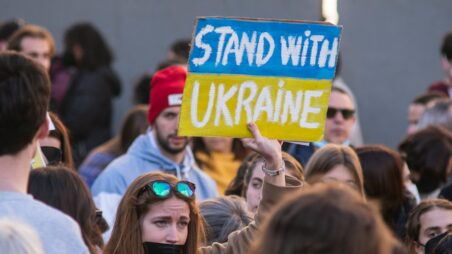
A Ukrainian pharmacist fleeing the war should have nothing to prove at an EU border. New rules aimed at draft-dodging men are catching some women in medical professions too. Brussels says nothing has changed for them.
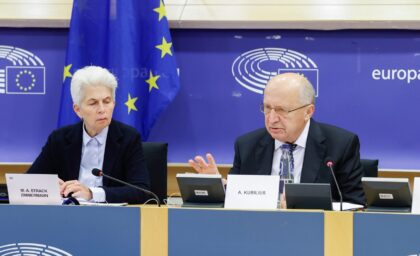
A question at Thursday’s press briefing in Berlaymont cut straight to a growing problem. Journalists cited reports that EU border officials are turning away Ukrainian women in medical professions under a rule written for men. Officials admit the requirements shift from one member state to the next. A follow-up question sharpened the point further: Ukraine’s verification system flags some women whose professions carry a registration obligation as possibly serving in the army, even when they are not. Officials reportedly reject these women outright.
That distinction rests on a rule in force since 5 August. New arrivals from Ukraine seeking protection in the EU must now show they satisfy any military obligations they hold in Ukraine. Alternatively, they must show they left the country legally. The rule applies only to those actually subject to such obligations. It comes from a Council decision extending temporary protection for Ukrainians until March 2028. The rule applies only to people who arrive from 31 July onwards. It does not affect the 4.38 million Ukrainians already under protection.
The measure targets men of fighting age. Under Ukrainian law, most men aged 18 to 60 cannot leave the country and face mobilisation. But Ukraine’s rules on who must register as “liable for military service” reach further than the battlefield. Since 2023, Ukrainian women with a medical or pharmaceutical degree have had to register with military authorities too. Registration does not mean mobilisation. Unlike men, these women serve only if they volunteer.
Brussels insists the rule is neutral
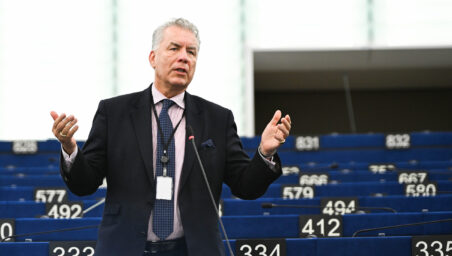
The Commission’s spokesperson, Markus Lammert, was direct on one point. “The Council decision does not differentiate between men and women in the application,” he told reporters. Brussels has shared a document answering frequently asked questions with member states. More detailed operational guidance is coming “in the coming weeks,” he added.
That gap between the letter of the rule and its effect is not accidental. The Commission’s own proposal for the decision acknowledges that exemptions can apply to “men (and women) who voluntarily decided to join military forces.” Officials wrote the rule to be gender neutral. The evidence required to prove military status is not.
Verification runs through Reserve+, a Ukrainian government app that confirms a person’s status. For men of conscription age, a clear record in the system usually settles the question. For women on the medical registration list, the system can return an ambiguous entry instead. The entry shows only that they are formally registered. It does not show whether they are currently serving. The applicant then carries the burden of explaining the difference.
Guidance still pending
Germany hosts the largest number of Ukrainians under protection, 1.25 million people. It applies the new documentation requirement to men aged 23 to 60. Poland and Czechia, the next largest hosts, have issued similar rules for men. Implementation across the bloc’s 27 member states remains inconsistent. The reported cases involving women point to gaps that a Commission FAQ document has not yet resolved.
The council decision does not differentiate between men and women.
— Markus Lammert, European Commission spokesperson
Brussels has promised operational guidance but has not yet delivered it. Until it does, women applying for protection in different countries risk facing inconsistent standards. Individual border officials set those standards at their own discretion, often working from incomplete instructions.