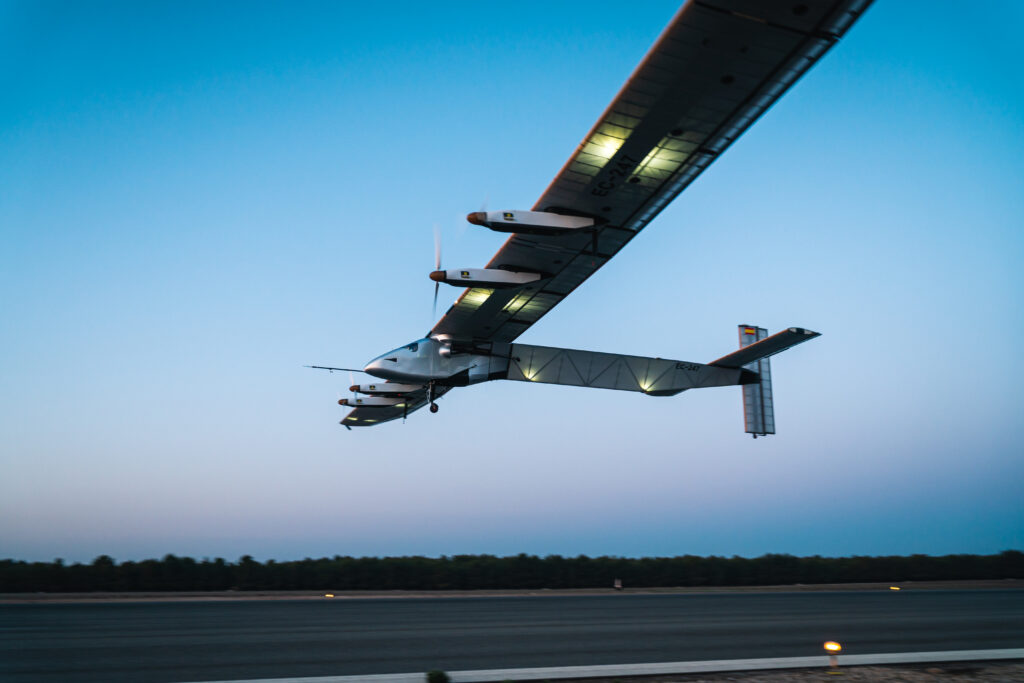
Two headline deals and a flood of defence money are reshaping European drone manufacturing, even as the continent still punches well below its weight.
The names are familiar. Leonardo is Italy’s champion defence giant; Baykar is the Turkish maker of the Bayraktar TB2 that became a symbol of Ukraine’s resistance. Both companies have announced that they began integrating their first jointly produced aircraft at Leonardo’s plant in Ronchi dei Legionari. The first deliveries to customers are due before the end of 2026.
Lorenzo Mariani, Leonardo’s chief executive, said during the company’s second-quarter earnings call that all regulatory requirements, both Italian and European, had been safely in place. Mr Mariani was straightforward about the strategic logic. Partnerships, he said, “can also support sovereignty requirements and give the group access to capabilities that would take longer to develop independently”. Speed, he added, has become central to Leonardo’s industrial strategy.
New partnerships, old ambitions
Days later, a second deal pointed in a similar direction. Patria, the Finnish defence company, and General Cherry, a Ukrainian manufacturer of strike first-person-view drones, fibre-optic systems and fixed-wing unmanned aircraft, signed a letter of intent on 23 August covering drone production in Finland for Western European defence customers. The agreement would marry General Cherry’s battlefield experience with Patria’s production infrastructure.
Mikko Leino, executive vice president of Patria’s Defence and Weapon Systems business, told Defence Industry Europe: “Unmanned defence systems are central to the future of defence, which is why we have invested in development of unmanned systems for years as part of our operations.”
Stanislav Hryshyn, co-founder of General Cherry, told the same publication: “We believe that our unique battlefield experience, combined with Patria’s technological capabilities, can help drive a fundamental transformation of the European and global security architecture.”
That is a large claim for a letter of intent. But the underlying point—that Ukraine’s drone industry has accumulated hard-won knowledge that European manufacturers want—is difficult to dispute. The war has compressed years of unmanned-systems development into months, producing battlefield-tested designs and operational doctrines that no exercise or simulation could have generated.
A market on the move
The two deals land at a propitious moment. The global drone market was worth an estimated $91.9bn in 2025 and is on course to pass $100bn in 2026, according to Fortune Business Insights. A consensus of forecasters sees a compound annual growth rate of 17–20 per cent through 2030, lifting the industry toward $200bn before 2035.
Europe’s share of that market is growing fast, if from a modest base. The continent’s drone industry was worth $5.6bn in 2025 and is projected to reach $7bn in 2026, according to MarketDataForecast. By 2034 that figure is expected to reach $40.3bn, implying a 24 per cent annual growth rate. More than 1.6 million operators are now registered across EASA member states.
Still, the proportions are sobering. Europe’s $7bn represents roughly seven per cent of a global market dominated, on the civilian side, by a single Chinese company. DJI, headquartered in Shenzhen, commands more than 70 per cent of global civilian drone units. Its 2025 turnover was approximately $11.5bn — more than the entire European market. The company is targeting ¥100bn (almost $15bn) in 2026.
The giants and the challengers
The contrast with European producers is stark. Parrot, the Paris-based firm that is the continent’s most prominent pure-play drone manufacturer, posted consolidated revenue of €79.8 m in 2025. That is less than one per cent of DJI’s turnover. Yet Parrot’s trajectory is striking: first-half 2026 revenue reached €57.3 m, up 71 per cent year on year, with micro-drone sales rising 134 per cent.
We believe that our unique battlefield experience, combined with Patria’s technological capabilities, can help drive a fundamental transformation of the European and global security architecture. — Stanislav Hryshyn, General Cherry
Parrot is targeting breakeven in full-year 2026 and turnover above €100 m by 2027, driven by NATO replenishment contracts and a growing photogrammetry subscription business. AeroVironment, the Virginia-based maker of loitering munitions and small tactical drones, offers a starker benchmark still. Its fiscal-year 2025 revenue was approximately $0.8bn; its fiscal-2026 outlook is $1.95–2.0bn, a near-tripling driven by defence demand.
AeroVironment is reinvesting 12–14 per cent of revenue in capital expenditure to expand its manufacturing lines, with a further ten per cent top-line increase pencilled in for fiscal 2027. The divergence between DJI and its Western rivals captures a structural tension running through the entire industry. One Chinese firm produces more than ten million airframes a year and generates revenues that dwarf every European competitor combined.
Regulation as rocket fuel
Western governments are increasingly reluctant to rely on DJI hardware for sensitive applications, which is creating space for domestic producers. However, filling that space at scale remains a formidable challenge. Europe’s fastest route to closing the gap may run not through factories but through regulation. The EU’s harmonised framework, administered by EASA, has already turned the continent into a prime test-bed for drone services.
The next step is U-space. The digital air-traffic corridors are to allow routine beyond-visual-line-of-sight operations in urban and suburban environments. U-space is expected to unlock last-mile delivery and urban air mobility from 2028 onward, opening revenue streams that do not yet exist at meaningful scale anywhere in the world. The services layer is where margins are highest, and Europe is well placed to capture a disproportionate share.
Unmanned defence systems are central to the future of defence, which is why we have invested in development of unmanned systems for years as part of our operations. — Mikko Leino, Patria
Pure-play hardware valuations are compressing as competition intensifies, but data analytics and subscription services tied to drones command faster growth and fatter margins. Parrot’s photogrammetry subscriptions, sold under the Pix4D brand, grew 11 per cent in 2025 even as the hardware market remained volatile. AeroVironment is bundling counter-UAS services with its airframe sales. The platform, not the device, is where the value accumulates.
Sustain the takeoff speed
The Leonardo-Baykar and Patria-General Cherry deals are bets on the same proposition: that European defence customers will pay a premium for locally produced, sovereignty-compliant unmanned systems, and that demand is durable enough to justify the industrial investment required to meet it. The evidence so far supports that view. NATO members are spending more on defence, and European governments face political pressure to source hardware from within the alliance.
Whether that is enough to shift Europe’s seven per cent share in any fundamental way is a different question. Reaching even 15 per cent of a $200bn market by 2034 would require European producers to generate revenues of $30bn, more than four times today’s level. The 24 per cent annual growth rate that forecasters project would, if sustained, get Europe well beyond that target.
The operative word is sustained. After all, this is an industry under pressure from battlefield innovation, regulatory change, Chinese industrial scale, and the unpredictable pace of autonomous-systems technology. Europe is moving; but it will be moving fast enough only if it can sustain its takeoff speed.