Czech prime minister backs the EU’s new priorities but rejects farm cuts. Companies linked to his former holding still receive millions in EU funds.
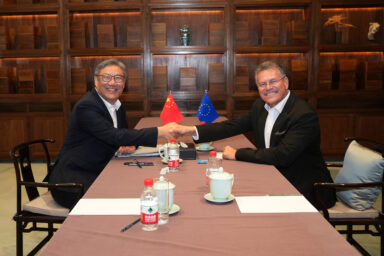
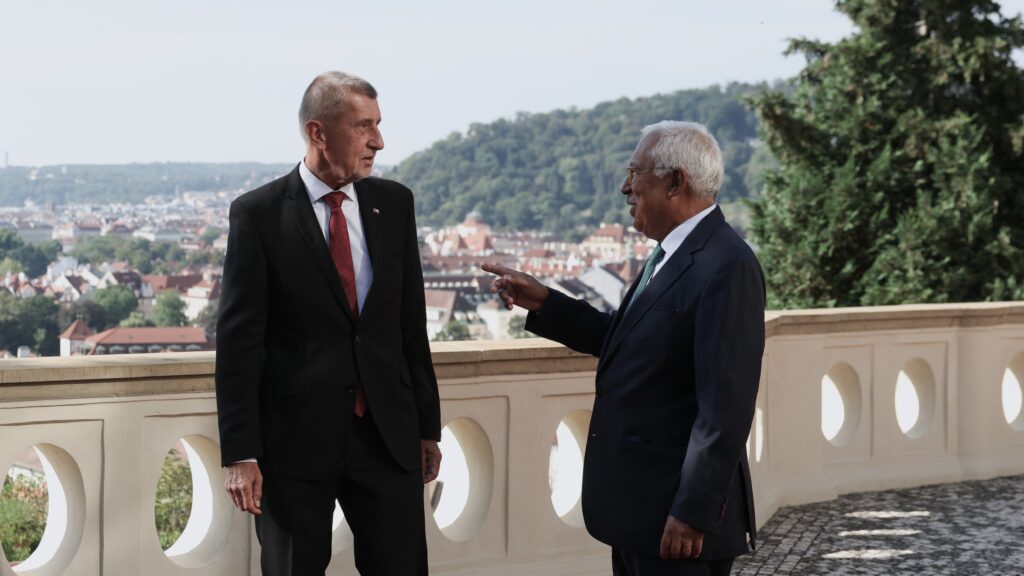
The Czech Republic supports higher EU investment in defence and competitiveness, but rejects cuts to agriculture and cohesion. Prime Minister Andrej Babiš told European Council President António Costa this during his visit to Prague. The next EU budget, he said, must not weaken countries already shouldering the high costs of Europe’s economic and security transformation.
The roughly two-hour meeting focused mainly on the EU’s 2028–2034 multiannual financial framework. Mr Costa wants member states to agree on the budget by the end of this year.
„For us, what is crucial is to make sure that the Czech Republic reaches the best possible result,“ Mr Babiš said. He stressed the need to strike a balance between the EU’s new priorities and traditional policies that help less developed economies catch up with the rest of the bloc.
Defence yes, cohesion cuts no
Mr Babiš told Mr Costa that Czechia supports higher investment in security, defence and competitiveness. But this must not come at the expense of cohesion or the Common Agricultural Policy (CAP). „Cuts in this area are unacceptable for us.“
The Czech PM also said Czechia does not want the new budget to benefit mainly the bloc’s biggest economies. „Of course, we support investment in security and competitiveness, but it must not be at the cost of other sectors. European states have to stay equal. The new budget must not be at the cost of weaker economies.“
He wants the same principle to apply to new centrally managed programmes, including those targeting competitiveness. Funding must be accessible to all member states, not just the wealthiest and largest. The Czech position comes as the EU looks for money for new priorities without significantly increasing national contributions.
Row over farm money
Mr Babiš’s opposition to farm cuts might also have a personal dimension. Companies belonging to the Agrofert group receive millions of euros each year from the Common Agricultural Policy.
In 2024, the figure was around €16.6 million. It included direct payments and other CAP funding. An analysis of beneficiaries ranked Agrofert among the biggest individual recipients of EU farm money in Czechia.
Andrej Babiš founded Agrofert in the 1990s and transferred it to a trust fund after becoming prime minister. The European Commission is still examining whether the arrangement adequately addresses his potential conflict of interest.
In June, the Commission also confirmed that its scrutiny covers CAP funding. Czech authorities must report payments linked to Agrofert to the Commission until the conflict-of-interest issue is resolved.
Allowances at €80 instead of €30
The competitiveness of European industry, particularly the price of emissions allowances, was another major issue. Mr Babiš recalled that he had called for an overhaul of the EU ETS as early as September 2021. At the time, he proposed capping the price of an allowance at €30.
„Back then I said that the ceiling had to be 30 euros. The European Commission predicted that in 2030 we would have 26.50, but now we have 80,“ he noted.
Mr Babiš said high allowance prices had cost Czech industry CZK 159 billion (approx. €6.6 billion). Europe, he argued, must stop high costs from pushing industrial production outside the EU. „High emissions around allowance prices destroy our industry, and Europe has to make sure that industry does not leave Europe.“
He also objected to the proposed distribution of emissions allowance revenues. He wants the money to stay with member states. „We need to make sure that the revenues from allowances stay in the hands of member states.“ He suggested higher customs revenues as one possible source of funding for the EU budget instead.
Costa: New budget must do more with limited money
In Prague, as on previous stops of his Tour des Capitales, the Council president stressed that the new budget must reflect Europe’s radically changed circumstances. The EU needs to invest more in defence and security, competitiveness, innovation and strategic resilience. At the same time, he does not want to weaken cohesion or agricultural policy.
The problem is money. Most of the EU budget comes from member-state contributions, and Mr Costa does not want them to rise beyond reasonable limits. New own resources will therefore be crucial to the deal, he said.
„That is why new own resources will also be a crucial element of the overall package. They will help reducing national contributions and at the same time, to support ambitious investment,“ he said.
Mr Costa also repeated his main deadline: member states must reach a deal by the end of this year. The reason is not only political. A delay could put EU programmes at risk.
„It is essential that we reach an agreement by the end of this year. Why? Because we cannot allow any interruption in European funding to vital projects and policies in 2028.“
Cheap energy as a condition for competitiveness
Mr Costa also picked up on Mr Babiš’s criticism of high energy costs. He described Czechia as one of Europe’s industrial leaders and stressed that affordable energy matters not only to businesses but to European competitiveness as a whole.
The EU must speed up efforts to bring energy costs down while continuing its push to decarbonise, he said. That transition must remain technologically neutral. „Nuclear or renewables,“ he said.
Protecting European industry is also a matter of security, Mr Costa argued. He linked it to the „One Europe, One Market“ agenda, which aims to complete the single market.
Eastern Europe voices similar concerns
Prague is not the only capital where the Council president has heard calls for the new budget to reflect the costs faced by Europe’s eastern flank. Before visiting Prague, Mr Costa met Latvian Prime Minister Andris Kulbergs in Riga.
Mr Kulbergs pointed to the war in Ukraine’s concrete economic costs for eastern member states. He said the war’s impact had shaved around 1.8 per cent off Latvia’s GDP. The country is also facing higher inflation and interest rates, as well as population outflows from border regions.
Latvia will need €7 billion over the next seven years, Mr Kulbergs said, including for railways, ports and stronger border protection. Around €1 billion would go towards protecting the EU’s external border.
Like the Czech PM, he does not want new security needs to automatically crowd out traditional European investment. Riga, for example, remains committed to Rail Baltica but wants to make the project cheaper and streamline it. Similar concerns have also emerged from Latvia’s Baltic neighbours in Vilnius and Tallinn.
Czechia wants its share of the new programmes
Mr Babiš also highlighted another concern. If the EU shifts more money into centrally managed programmes, it must not flow mainly to the biggest economies. „The centrally managed programs, for example those supporting competitiveness, must benefit all countries, not only the wealthiest and largest countries.“
His argument is therefore not simply about the size of Czechia’s share of the next budget. Prague also wants a say in how the new European money will be distributed.
Mr Babiš and Mr Costa also discussed further EU enlargement. The European Council president praised Czech support for Ukraine, Moldova and the Western Balkans. Enlargement, he said, must continue through a fair, transparent and merit-based process.
Ukraine also ties directly into his security argument. Supporting its European perspective is not just a foreign-policy issue, Mr Costa said, but an investment in the EU’s own security and prosperity.
Frugals unite behind deeper budget cuts
Meanwhile, German Chancellor Friedrich Merz brought together the EU’s six “frugal” net contributors in Berlin on Thursday — Austria, Denmark, Finland, the Netherlands and Sweden. The six agreed on a common position calling for the Commission’s nearly €2 trillion proposal for 2028–2034 budget to be cut by several hundred billion euros.
They also want to redirect spending towards defence, competitiveness, migration and European sovereignty. The group opposes new joint EU borrowing and wants stricter rule-of-law conditions attached to EU funding. It also says EU institutions should handle their workload with existing staff rather than expanding further.
The six countries account for around 40 per cent of the EU’s budget contributions, giving their common front considerable weight. But their call for deep cuts puts them on a collision course with countries that want to protect cohesion and agricultural spending.
Gathering red lines ahead of autumn negotiations
Czechia was the latest stop of the first leg of Mr Costa’s Tour des Capitales which will continue through mid-September. He visits member states to gather their priorities ahead of crucial autumn negotiations. After Slovakia and Estonia, he travelled to Lithuania and Latvia before arriving in Prague.
Each capital brings its own mix of demands. But money, security and competitiveness keep emerging as common themes. In Prague, Costa received a fairly clear answer: Czechia is ready to support the EU’s new priorities. But it does not want to pay for them by weakening cohesion, agriculture or industry.
Costa remains optimistic nonetheless. „And like seven years ago, we will reach a good agreement [on the next long term budget] at the end of this process.“