Lawmakers approve faster permits for defence factories, simpler cross-border transfers of weapons and equipment, and streamlined procurement rules.
The European Parliament completed the first reading of its Omnibus V defence package on Wednesday. The bundle of three files now goes to the Council for formal endorsement.
One wrinkle emerged. On the intra-EU transfers and procurement file, the hard-right Europe of Sovereign Nations group inserted an amendment to the opening recital — a preamble clause that courts use to interpret the law.
The Council will now endorse a text that differs slightly from what the two institutions agreed in trilogue. Whether that complicates or delays final adoption remains to be seen.
The debate the day before, on 15 September, told a more complicated story. Speakers across the mainstream were simultaneously proud of what they had achieved and frustrated by what member states would not allow.
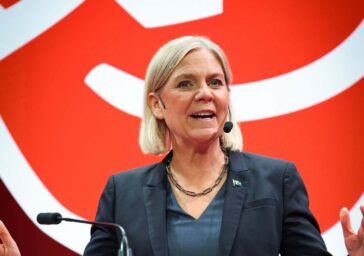
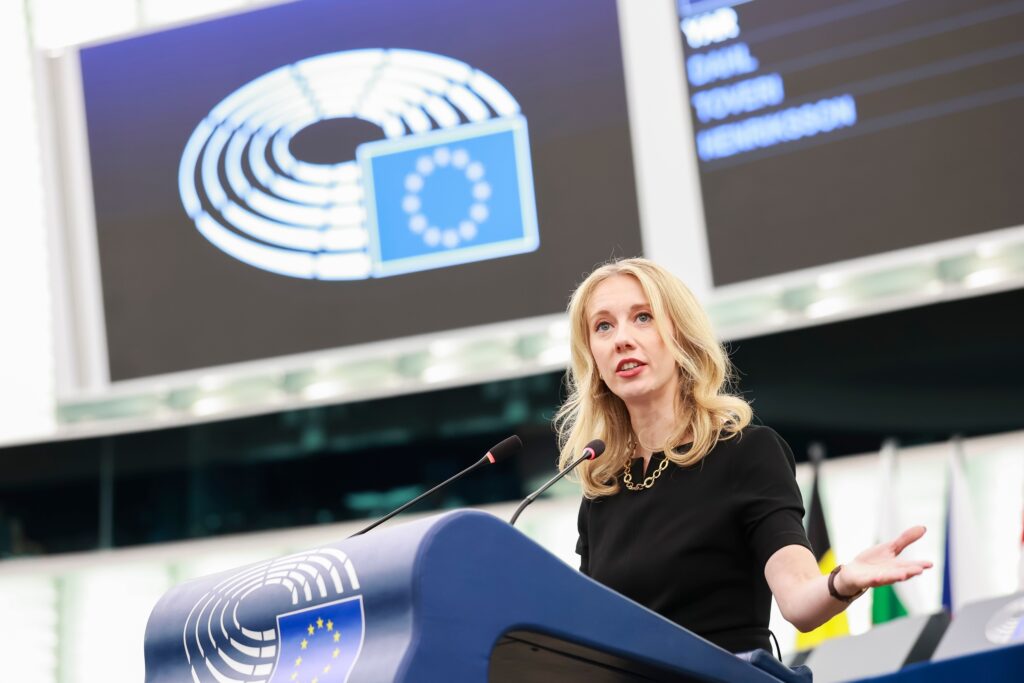
MEP Lucia Yar (Renew/SVK), one of the rapporteurs, set the tone early. “Without this package, we will continue to scramble to raise money and then spending it at pace of peacetime,” she said.
Permits, paperwork, and four-year waits
The core problem the package addresses is time. In some member states, a company seeking a permit to build an ammunition production line or a repair facility has waited up to four years.
Commissioner Andrius Kubilius, who oversees defence industry policy, was blunt: “If you ask for the permit now, you can maybe start building four years from now. That undermines our defence readiness.”
The problem is clearly not our Parliament, but member states who don’t see the big picture and stick to their narrow national interest. — MEP Pekka Toveri (EPP/FIN)
The new rules impose a maximum deadline of 42 working days for permit decisions, extendable to 102 in complex cases. They also introduce tacit approval: if an authority misses its deadline without responding, the permit is automatically granted.
New general transfer licences speed up the movement of defence products across borders. Framework agreements for defence companies extend to up to ten years. Procurement thresholds rise to reduce paperwork on smaller contracts.
MEP Henrik Dahl (EPP/DNK) put the logic plainly. “Europe can’t just act as if the situation is serious and then still administer as if we have all eternity to finalise these projects,” he said. Bureaucracy and security policy, he argued, are closer than they appear. Like electricity from a socket, you only notice it when it stops working.
National governments in the dock
If one theme united mainstream speakers, it was disappointment with member states. The Commission’s original proposals were more ambitious. Governments, negotiating through the Council, watered them down.
Ms Yar was direct: “The Commission has introduced a very ambitious defence omnibus package, but member states watered it down — maybe not in the size of permits that much, but certainly in the area of intra-EU transfer licences.” No real European defence union was possible, she added, “if the protectionism of member states, including the biggest ones, is not dismantled.”
It is a mixed success. — MEP Sven Mikser (S&D/EST)
MEP Pierfrancesco Maran (S&D/ITA) was equally blunt. “Two member states frequently develop the same capabilities and the same equipment,” he said. “The result is simple. We’re spending more and we are getting less.” He called for joint procurement to become the rule rather than the exception, and for every provision to carry a European preference clause to prevent new industrial dependencies on third countries.
MEP Sven Mikser (S&D/EST) acknowledged the negotiations were “a mixed success”. Easing the regulatory burden, he warned, was “the relatively straightforward and easy part of a much bigger picture.” Creating a genuine defence single market was “somewhat more difficult”; finding the necessary financial resources, at both European and national levels, was “quite a challenge”.
Weariness in the ranks
MEP Pekka Toveri (EPP/FIN)—a retired Finnish general and one of the rapporteurs—was among the most pointed. “The problem is clearly not our Parliament, but member states who don’t see the big picture and stick to their narrow national interest,” he said. He called on colleagues to carry the message back to their national capitals.
Without this package, we will continue to scramble to raise money and then spending it at pace of peace time. — MEP Lucia Yar (Renew/SVK)
MEP Anna-Maja Henriksson (Renew/FIN) grounded the debate in personal terms. Her father fought in Finland’s Winter War. “We are not merely defending our borders,” she said. “We are defending our people, our safety and our democracy.” MEP Radan Kanev (EPP/BGR) voiced a weariness shared by several colleagues. “Over two years after we started talking actively about defence, I feel a bit disheartened,” he said. “I see national jealousy; common interest is a bit lost.”
MEP Reinier van Lanschot (Greens-EFA/NLD) was more caustic. National leaders, he said, “make big promises in public and then block ambitious European action behind closed doors like ostriches”. His conclusion: “They hide their heads in national soil and hope the danger will go away.”
Dissent from left and right
Not everyone shared the prevailing urgency. MEP Marc Botenga (The Left/BEL) attacked the package’s exemptions for toxic chemicals (including PFAS, so-called forever chemicals) used in explosives and ammunition production. “You’re saying, well, from now on this evaluation is going to be deemed severe, but we can ignore it if it’s in the interest of the profit of the arms business,” he said.
MEP Lynn Boylan (The Left/IRL) called the legislation “warmongering,” accusing the majority of “letting the defence industry make Ukraine their testing ground and paying them to do it.”
Europe can’t just act as if the situation is serious and then still administer as if we have all eternity to finalise these projects. — MEP Henrik Dahl (EPP/DNK)
From the other end of the chamber, MEP Cristian Terheș (ECR/ROU) argued that other EU policies were simultaneously making production more expensive. “How are we going to build more tanks in Europe when iron is going to be more expensive?” he asked.
MEP Jaroslava Pokorná Jermanová (PfE/CZE) insisted that “defence is the responsibility of the member states”. She also said that the “Commission must not replace defence decision-making at national level”.
Speed without scale
Commissioner Kubilius closed by invoking the Roman maxim: if you want peace, prepare for war. He pushed back against those who framed defence investment as a path to conflict. “We race to peace, not to war,” he said. He confirmed that the Commission would present a defence market package before the year’s end.
MEP Aura Salla (EPP/FIN), the final rapporteur to speak, offered the clearest statement of what remains to be done. “Speed, scale and coordination will determine whether that spending actually makes us safer,” she said.
If you ask for the permit now, you can maybe start building four years from now. That undermines our defence readiness. — Andrius Kubilius, defence commissioner
The omnibus delivers on speed, at least in theory. Scale and coordination remain aspirations. Ms Yar’s closing words captured the stakes: “The threat is here, it is deliberate, and it does not pause while we consult or bicker here. Every day we spend deciding is a day when Russia spends producing more drones and missiles.”