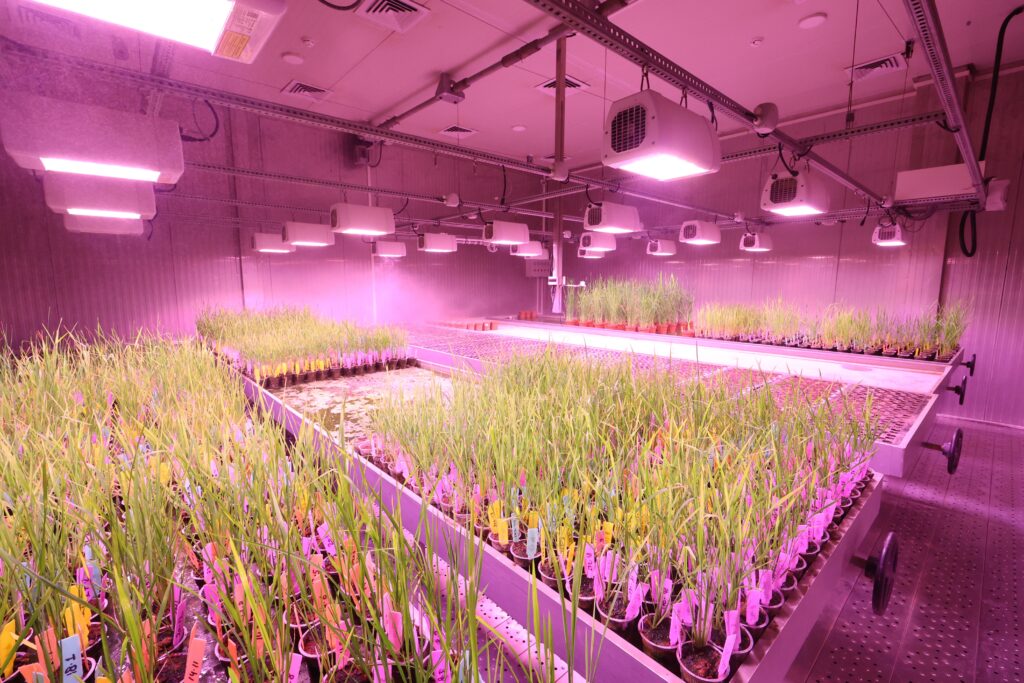
Europe’s laboratories are full of ideas that could help farmers cope with drought, heat, and rising costs. Too few of them ever reach the field. Agriculture Commissioner Christophe Hansen admitted on Thursday that too many promising projects never get past the testing stage.
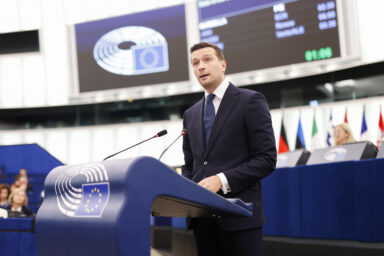
Mr Hansen spoke at the EU AgRI 2040 Conference in Brussels, where researchers, farmers, and policymakers are discussing the future of agricultural innovation. Negotiations on the EU’s next long-term budget are already piling pressure on competing priorities. He made the case for preserving or even increasing funding for agriculture. Mr Hansen said that “there is a lot of pressure on the farming budget” and warned that a cut would send a “detrimental signal”.
He also stressed that agriculture is not an outdated or declining industry. In his view, innovation should reach beyond the farm itself. Future research will cover machinery, food processing, artificial intelligence, water management, and other new technologies that support Europe’s growing agri-food economy.
From EU research to European farms
The European Commission wants to speed up the journey from laboratory to market, Mr Hansen said. On 8 September, it adopted a new strategic approach to agri-food research and innovation. The document brings together two frameworks: AgRI 2040 for agriculture, forestry, and rural areas, and Food 2040 for food systems. Together, they should create a smoother pathway from research funding to testing, start-ups, and eventual commercialisation.
Both frameworks rely on funding the Commission has proposed for the next long-term budget. The next Horizon Europe programme (2028–2034) would keep funding research. The new European Competitiveness Fund would then help promising technologies through testing and demonstration towards start-ups, scale-up, and wider commercial use. For farmers, the goal is straightforward: useful technology should reach the field faster. Mr Hansen added that farmers themselves must help develop and test new solutions, so that they tackle real problems on the ground.
Ekaterina Zaharieva, Commissioner for Startups, Research and Innovation, said Europe must get better at helping innovative companies grow once the research phase is over. Some start-ups have told her they do not want more public grants. “Don’t give me grants,” she quoted them as saying. “Help me find clients.”
The Commission wants national governments, local authorities, and other public bodies to act as early adopters of promising European technologies. It will also fund regulatory ‘sandboxes’, where firms can develop and test new products under regulatory oversight before a wider launch. Slow approvals remain a problem. Companies making bio-based fertilisers told Ms Zaharieva they often start selling outside Europe, as approvals can take nearly 10 years. The Commission also proposes to triple funding for the European Innovation Council compared with the current long-term budget, so that more European companies can commercialise their research.
Too many pilots, too few products
The strategy reflects a wider problem for Europe. One of the Commission’s biggest concerns is what happens after a research project succeeds. Developing new technology is not enough if companies cannot expand and farmers cannot afford or access the resulting products. That matters all the more in agriculture. Extreme weather, scarcer water, an ageing farming population, and rising production costs are already hitting the sector hard and eroding its competitiveness.
Europe starts from strength. We have world-class research, a diverse agriculture sector, but adoption remains uneven, and too many pilots never scale up. — Christophe Hansen, Commissioner for Agriculture and Food
Mr Hansen put the problem bluntly. “Europe starts from strength. We have world-class research, a diverse agriculture sector, but adoption remains uneven, and too many pilots never scale up,” he said. Promising technologies often remain small pilot projects instead of becoming products available across Europe. The Commission therefore wants to tie research funding more closely to investment that helps companies test their technology, find customers, and expand production.
Whether AgRI 2040 and Food 2040 close the gap between research and the farm will depend on the budget talks. Brussels must decide how much more it can invest in agricultural technology without starving other priorities. The real test is whether the EU can turn laboratory research into practical, affordable tools for every European farmer. Otherwise, too many projects will stay ‘promising’ and never leave the lab.