The European Parliament is sending Maroš Šefčovič to Beijing with a clear message: come back with results. Lawmakers demand stronger protection for European businesses and critical infrastructure as the EU trade commissioner prepares for talks in China.
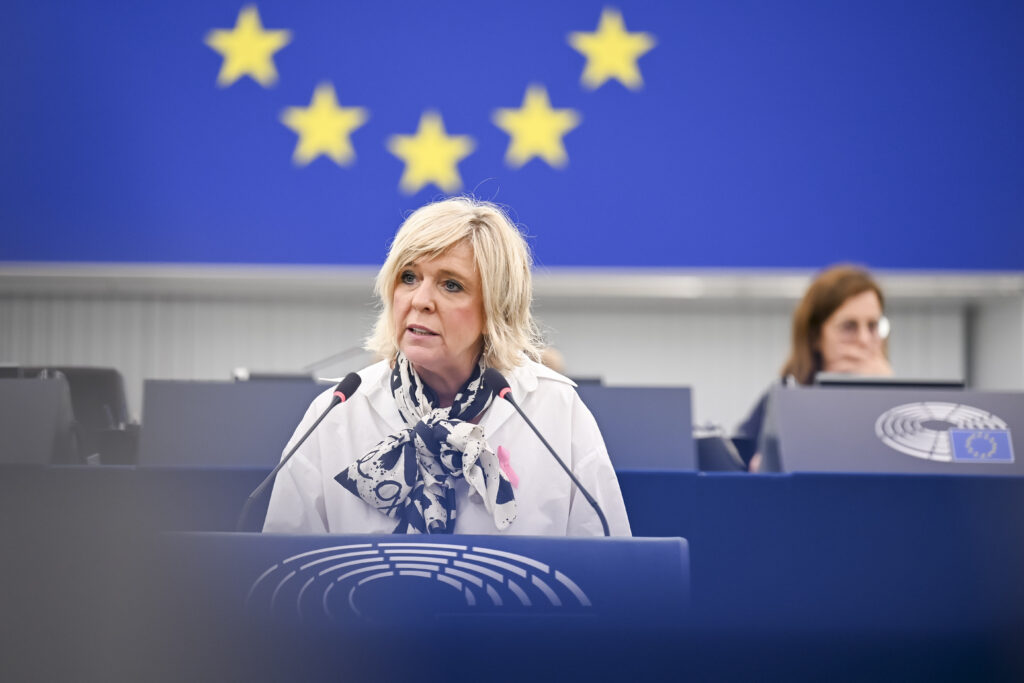
“Don’t come back without concrete results,” Belgian MEP Hilde Vautmans (RE/BE) urged EU trade commissioner Maroš Šefčovič ahead of his Beijing visit. Her warning came as the Strasbourg plenary passed a report on EU-China relations that she had led as rapporteur.
The recommendation passed with 454 votes in favour, 86 against and 110 abstentions. It calls for closer scrutiny of Chinese investment, protection of sensitive technologies and action against companies supporting Russia’s war. It sets Parliament’s political position without itself introducing tariffs or sanctions.
“No dumping, no spying, and a real economic level playing field,” Vautmans said, summarising the message she wanted European officials to take to Beijing. She added she had urged Šefčovič to take Parliament’s recommendations with him: “Put them under your pillow and don’t come back without concrete results.”
Results expected before leaders meet
Vautmans put the EU’s trade deficit with China at almost €1 billion a day. The figure reflects the gap between goods the EU imports from China and those it exports. She argued that the imbalance, alongside unfair competition, was putting European companies and jobs under pressure.
“When China dumps electric vehicles, steel or solar panels on our market, Europe must use its trade defence instruments,” she said. Her demands for the Beijing talks include better access for European businesses and reliable supplies of critical raw materials without politically motivated restrictions.
Šefčovič’s visit on 8–9 October comes just before EU leaders discuss China next week. The Commission and Beijing have already established a mechanism to address trade tensions, with a mandate to deliver results this month, according to Parliament’s research briefing. Wednesday’s vote adds parliamentary backing to those negotiations.
Asked what she expected from the summit, Vautmans said she anticipated measures addressing the trade imbalance. She pointed to Commission President Ursula von der Leyen’s calls for action and a Franco-German initiative as signs of momentum. That was her expectation, rather than an announcement of an agreed European response.
Familiar demands gain a parliamentary majority
The question of what was new came up directly at the press conference. Challenged on whether the report repeated longstanding demands, Vautmans argued that the important change was the breadth of support for acting on them. “Europe’s relationship with China cannot continue as it is today,” she said.
No dumping, no spying, and a real economic level playing field.
— MEP Hilde Vautmans (RE/BE)
The recommendation links economic concerns with security. Vautmans called for protecting critical infrastructure against espionage and foreign interference, alongside action against Chinese companies supporting Russia’s war effort. The post-vote statement from her Renew Europe group identifies ports, energy grids and telecommunications as areas requiring investment scrutiny.
She also insisted that commercial interests should not push human rights aside. “Economic interest can never mean silence on human rights,” she said, citing Tibet, Uyghurs, forced labour and Hong Kong. Peace and stability in the Taiwan Strait were also a direct European interest, she argued.
Asked whether the report amounted to lecturing Beijing, Vautmans rejected that description. “We do not seek confrontation with China. We want a real partnership,” she said. The immediate test is whether this week’s talks produce the market access and dependable supplies she is demanding, before leaders decide how much further Europe should go.