A Democratic House would speed up aid and force Trump to bargain. Yet Europeans should expect no particular relief, ranking intelligence committee member cautioned.
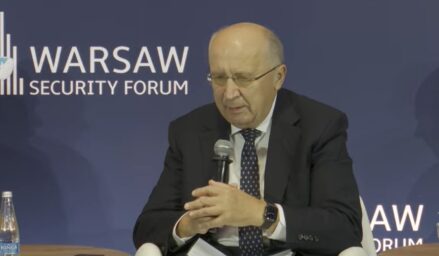
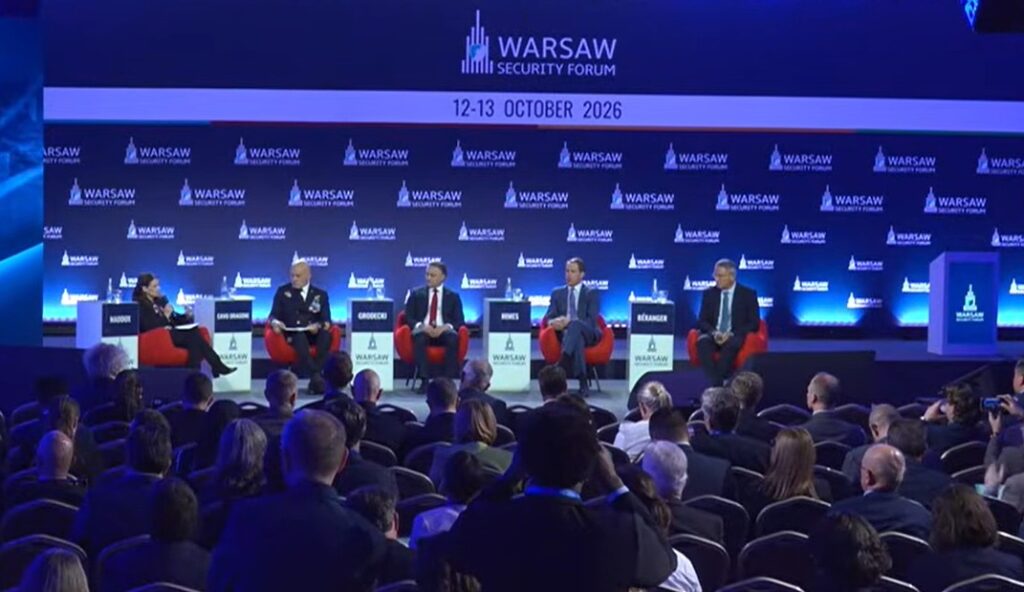
US Representative Jim Himes, a ranking Democrat on the House Permanent Select Committee on Intelligence, expects America’s midterm elections to change Washington’s course on Ukraine. Debating a new European security architecture at the Warsaw Security Forum on 13 October, he said polls and prediction markets point to a “massive repudiation” of US President Donald Trump. He expects the House almost certainly to change hands, and the Senate quite likely.
Mr Himes said the swing will not come from Mr Trump’s stance on Russia. Voters will punish a president who promised no Middle Eastern war and lower costs, and then did the opposite. Congress already backs Ukraine, he said. Votes on aid or on condemning Russia pass with three-quarters majorities in both chambers, even when Republican majorities stall them to avoid irritating the president.
There will be a continuation on the part of Americans to keep pushing the Europeans to assume more of a role.
— Jim Hines, ranking Democrat at US Congress intelligence committee
A Democratic Congress would quicken the pace, he argued. “That actually does change things. It means that aid packages move not in nine months, but in nine days or nine weeks on the outside, and that the message is very different now,” said Mr Himes. He cautioned that the legislative process still takes a while to produce tangible results.
Dampening the optimism
He also sees leverage over a president who is indifferent to Ukraine. “The president is a man of no ideology and if there’s one word that comes out in every statement he makes, it’s deals,” said Mr Himes. A Democratic grip on the budget would force Mr Trump to bargain. “A much more affirmative and consistent policy in support of Ukraine would be one of the things that we would demand in exchange in that deal,” he said.
Mr Himes, however, warned Europeans not to expect a Democratic White House to change everything. The circus will go, he said, but the pressure will stay. “There will be a continuation on the part of Americans to keep pushing the Europeans to assume more of a role,” he said. “Don’t expect the Democratic administration to all of a sudden be a great deal more liberal on trade, either.”
He doubted Europeans will spend five or six per cent of GDP on defence, given their welfare states. Adm Dragone ended the session with a plea for realism — a return to strategic stability must rest on what is strong. “Just forget our nostalgia for the 90s. We have to rebuild it from what is strong right now, whatever it is reliable, which is defence and deterrence,” he said.
The Chinese question
The US Congressman called China a complicated question for America and Europe, and more so for Europe, whose economy is more entwined with China’s. Trade between America and China—once $800bn a year—is lower now, he said. China holds about a trillion dollars of American debt. Its threat to ration rare earths made the Trump administration reverse its tariff policy.
In Russian stratcom they loudly said that ‘we need one more winter to conquer Ukraine’.
— Bartosz Grodecki, head of Poland’s National Security Bureau
He found an opening in China’s need for customers. “There’s just no substitute for the North American market and the European market to the Chinese economy, especially given their demographic problems and their economic problems and the vulnerability of their financial sector,” he said. Beijing therefore wants Western consumers to keep buying its goods.
Beijing would also prefer that the West not act together on trade, the Representative said. Divided buyers give it an advantage. He said America got Huawei more or less right. He argued that Washington erred by keeping out Chinese electric vehicles, which are very good. Europe has not kept them out.
Allies, rivals and a quiet partner
Mr Himes offered one note of optimism. “So Beijing right now has to be saying, oh my God, everything we’ve invested in to get our military and our strategic capabilities to where they are today may not be of relevance,” he said. He called China’s military untested and rife with corruption. A move on Taiwan would mean crossing 100 miles of blue water, whereas the Russians found themselves unable to get that far on land.
Adm Giuseppe Cavo Dragone, Chair of the NATO Military Committee, took a softer line on China. He said NATO should keep the door open to Beijing. China is an important competitor, he said, and competition can sometimes bring benefits. But he warned that China can readily turn civilian, economic, and financial strength into military power.
Bartosz Grodecki, Poland’s secretary of state and head of the National Security Bureau, was blunter. “They support Russia in the war against Ukraine,” he said of China. He called it a Chinese choice and a clear message.
On America, Adm Dragone dismissed talk of drift. He said rumours of a rift had run well ahead of the facts. “From the military point of view, they have never been stronger than this,” he said of ties between Europe and America. Political stress, he added, had met a solid and cohesive military response.
Europe’s own homework
Mr Grodecki also rejected the idea that America has lost interest in Europe. America supplies over two-thirds of NATO’s budget, he said, plus forces, industry, and science. He expects a force posture review in November. Russia remains the threat, he said, with sabotage and attacks on border checkpoints. It is also militarising its youth. Vladimir Putin also wants to disrupt delivery chains at the Polish-Ukrainian border.
Ukraine’s harsh winter is about to hit, too. Adm Dragone visited Kyiv three days before the discussion took place and found the situation hard but operationally under control. Interceptors and air defences are never enough, he said. Mr Grodecki said aid exhausts Europe’s systems. “In Russian stratcom they loudly said that we need one more winter to conquer Ukraine,” he said before adding the obvious — that Europe’s challenge is not to let that happen.
Aid packages (will) move not in nine months, but in nine days or nine weeks.
— Jim Hines
That may be easier said than done. Éric Béranger, chief executive of MBDA, described how the oft-mentioned fragmentation of Europe’s weapon market comes to exist. He said his company will invest €5bn over five years to raise capacity, yet it may be not enough. He argued that Europe’s defence can only be collective. A joint order let MBDA sell the same capability to seven countries, some 2,500 missiles. That is why the company would enjoy a European preference; but not all countries support it.
What is missing
Mr Grodecki wanted more startups able to draw quick lessons form Ukrainian battlefield. He also advocated for keeping the procurement scheme open. “To me, any geographic limitation makes no more sense,” the Polish security chief said.
MBDA’s Mr Béranger stressed a different point, insisting Europe lacks nothing but organisation. “We have the people, we have the competencies, we have the skills, we have the industrial capabilities, we even have the money, 600 billion euros every year go from Europe to the US so let’s not say we don’t have what we need,” he said. The short supply of organisation, however, may prove as fatal as a financial shortage would.