A European company is developing a device that could help doctors better manage heart failure. Yet, US patients will get it first. Its CEO says in an interview that the EU’s reimbursement system is to blame.
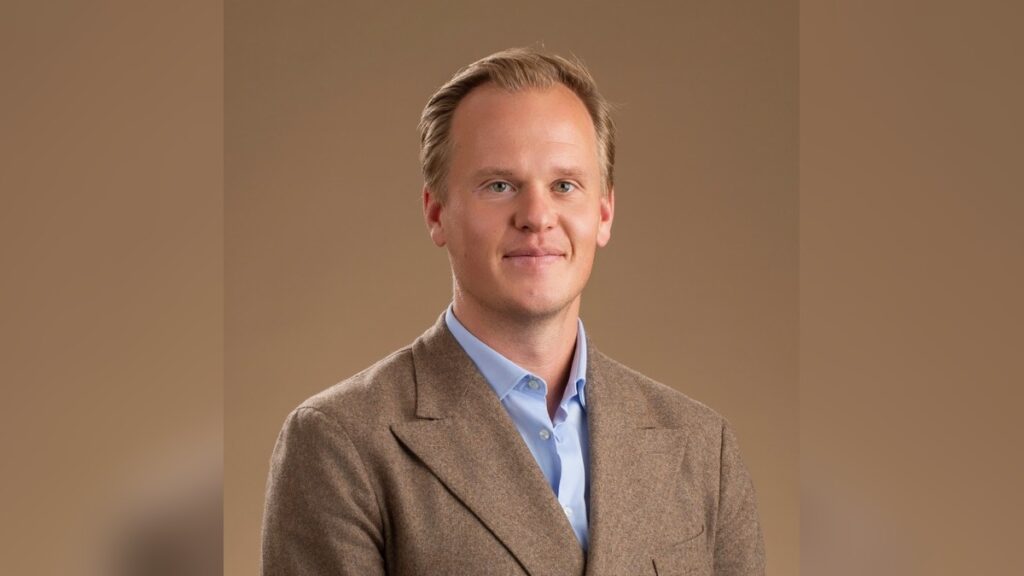
Acorai, a Swedish medical technology start-up, is building a sensor that estimates blood pressure inside the heart without a catheter. Its CEO Filip Peters expects a US launch in the third quarter of 2027, while Europe will have to wait.
The main reason is not the EU’s device rules, Peters said on the sidelines of the Nordic Life Science Days in Stockholm. It is that Europe gives new technologies no clear way to get paid.
A new vital sign for heart failure
What is Acorai developing?
We’re developing a non-invasive sensor device for heart failure patients. The goal is to estimate the cardiac and pulmonary pressures, meaning the blood pressure inside the heart, which today typically requires a catheter.
That’s very invasive. There are ways of approximating the pressures using ultrasound, but the quality of the assessment is very variable, and it’s not always available. We’re bringing back haemodynamic insight into the patient workflow to help healthcare professionals manage and treat patients better.
Could the device help with prevention?
Yes and no. We’re helping health professionals make better decisions around heart failure management. That means detecting patients who have heart failure but might not have been detected otherwise, and then preventing them from being hospitalised. But it also means making sure they get the best possible treatment when they’re in the hospital.
I don’t think there’s a single cardiologist in the world who does not want something like this.
— Filip Peters, CEO of Acorai
Our initial focus is on the hospital workflow: helping make better decisions on admitting patients, but also on who we send home, who needs more therapy and who requires follow-up.
Why did you choose this problem?
It’s the holy grail of cardiology. We’re solving a very obvious problem. I don’t think there’s a single cardiologist in the world who does not want something like this. The reason we can do it now is that sensors have become smaller and cheaper. We also have the machine learning to analyse the data. Those are the three things that have come together to make it possible now.
Cardiovascular disease is the Europe’s biggest killer…
It’s the world’s biggest killer. And heart failure specifically is the last stage of cardiovascular disease. The estimates of how many patients there are vary a lot, but it’s at least 60 million globally; some numbers say 250 million.
When you look at the mortality of these patients, it’s on par with most cancers. Your one-year mortality as a heart failure patient after being diagnosed is 30%. These are really shocking numbers. Unfortunately, historically we’ve treated it somewhat like a lifestyle disease, but it’s a very deadly and costly condition.
How far along are you?
We’re conducting our last clinical studies now. We’ve done studies in about 2,000 patients and we’re enrolling another 2,800 patients this year and next. We’ve demonstrated good accuracy compared with the gold standard, which is the right heart catheterisation procedure.
Next year, most likely in Q3, we will launch in the US.
Where did the idea come from?
We looked at how people had solved similar problems in other industries. We found some very interesting research in the oil and gas industry, engine diagnostics, elevator diagnostics. These are systems where you’re trying to detect a weak signal in a very noisy system, which is effectively what the heart is.
From there, we built the early prototypes. I think we’re now on version four or five of our device, so it’s been an iterative process.
We’re essentially a hardware-enabled software company. We have proprietary hardware, a multimodal sensor platform, and we’ve built the world’s largest dataset to train our machine-learning models.
Why the US comes first
Have you already been through the EU Medical Devices Regulation (MDR) process?
That only comes when you apply for approval. We’re pursuing FDA [Editor’s note: U.S. Food and Drug Administration] approval first, and the MDR process will take us a little bit longer.
The regulatory process is easier in the US. We’ve also received Breakthrough Device designatiion there, in 2023. The programme gives us prioritised access to the FDA and can streamline review times. So it’s really helpful. It also provides access to certain reimbursement pathways.
In the US, we have one big market, one language, very clear economic incentives that we can navigate, and also potential for reimbursement.
— Filip Peters, CEO of Acorai
And Europe comes after that?
Europe will come after that. But there are probably other markets that are more interesting: Asia, for example, the Middle East. The Gulf countries are particularly interesting.
It has more to do with how the markets are structured. Europe is a fragmented market. Every country has its own procurement laws, different languages, different ways of working. Whereas in the US, we have one big market, one language, very clear economic incentives that we can navigate, and also the potential for reimbursement.
So Europe does not offer what you need at the moment?
Regulatory-wise, I think the MDR is too conservative for a device like ours. It asks too much of us, given the low risk. But that’s manageable.
The real issue with Europe is that there is no clarity on how to get paid. I think that’s something Europe needs to fix, especially for breakthrough technologies that have the potential to help.
We’re effectively subsidising US innovation right now. We’re a company doing all the development in Europe, getting all our investments from here, and then we’re helping US patients first, because we have to make money as a company to survive.
In the US, there’s a pathway for transitional coverage of emerging technologies through Medicare. If you have a novel, potentially breakthrough technology that could help many patients, you can apply for temporary reimbursement for two to three years. During that period, you have to demonstrate the device’s health-economic benefit.
Germany has tried similar things with DiGA, its fast-track reimbursement for digital health applications. For investors, this provides clarity. If they invest in a company now, they know it can commercialise in Europe and they generatr revenue for at least two to three years. That de-risks the entire story.
Who’s going to organise and run such a system in Europe? I don’t know.
What the MDR costs
Why do you consider the MDR too conservative for a company like yours?
We are developing a non-invasive tool. There is basically zero risk. But under the MDR, every national medical agency has to form its own opinion about us running clinical studies in that country. And there’s a clause saying that if there is uncertainty about how to interpret regulations, you should follow the MDR.
So in Sweden, we have to provide full documentation as if we were already on the market, even though we’re essentially just running product development studies. In Denmark, everything goes through local ethics approval. Two different worlds in terms of how much we need to provide. And it’s the same for every other European country: they have their own individual opinion.
Streamlining that into one approval should be enough for something that is clearly not going to harm patient safety. There’s no reason for us to spend so much resources deadling with every single country.
There is also a technical issue. In the US, we can do things in parallel. Under the MDR, everything is sequential. You have to do verification, then validation. In the US, you can prove the clinical accuracy in one study and the usability of the product in another study, and they can run in parallel. In Europe, we can’t do that. We need to go step by step, which adds time. It’s going to be at least six months extra for us in Europe, just because of that.
How do other markets, such as China, compare?
FDA approval, like CE marking, can open doors to other markets. For China, we’re going to leverage our US application, although local studies may sometimes be required to demonstrate that a device works.
Another challenge in Europe is the notified-body system. Notified bodies are independent organisations that assess medical devices, but they can’t tell you what you should do. The FDA doesn’t tell you what to do either, but you can request early feedback. You can submit your proposed approach and ask for its views, and receive feedback within 60 days. With the Breakthrough Device programme, you can do that every 45 days, and it’s free. With a notified body, you essentially get an opinion from a consultant, and you pay for it. I don’t know who is going to fix that. The notified-body system is something we may have to live with.
But reimbursement is not manageable as it stands. It depends on the type of technology. If you’re developing a replacement technology, it’s relatively easy to commercialise. There’s already a price, and you’re making an existing product better.
But if you’re creating a new category, as we are, there’s no existing product to replace and no established reimbursement route. Those are precisely the technologies Europe needs.
Looking for money in a small pond
How have you funded the company?
We’ve raised money from different sources. We have major health systems in the US, including Cedars-Sinai and Mayo Clinic, as well as venture capital firms. We have investors here in Europe too, but we need more.
I think companies have been saying that forever. There’s a shortage of medtech investors in Europe, particularly in Sweden. I could probably count them on one hand. It is a tough space to invest in, because it’s high-risk. But I think we need more venture capital in Europe in general.
Have you received European funding?
We’ve received funding from the European Innovation Council’s EIC Accelerator, as well as some smaller grants.
The European Commission’s Safe Hearts Plan includes work on screening and health checks. Is Acorai involved?
No, we’re not. I don’t know why. I think we looked at it, and it didn’t quite fit. But it’s probably time to look at it again. Wherever there are heart failure patients, our device should be there as well.
Is there data on how many lives could be saved?
Studies in this field have shown that patient management guided by intracardiac pressure measurements can reduce rehospitalisation and mortality rates by 30% to 50%. If you think about 60 million patients worldwide, that’s quite a few.
The unfortunate reality with these patients is that there’s no cure, but we can reduce the volatility. Life expectancy after a heart failure diagnosis is about four years, with patients moving in and out of hopsitals. They experience sudden deteriorations, and those episodes make life difficult and healthcare expensive. We’re trying to make their journey more stable and free up hospital capacity.
Heart-failure physicians and nurses are among the most stressed healthcare professionals because the condition is so complex and the suffering is so great. Helping them is also a huge part of our mission.