Bringing Ukraine into the fold, expanding the EU and making energy more affordable. The Commission president joined the four Central European leaders with these three priorities in mind.
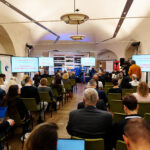
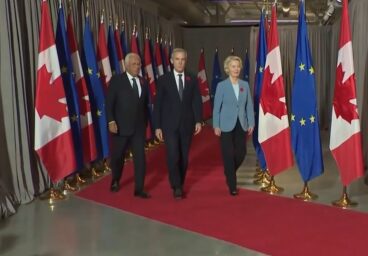
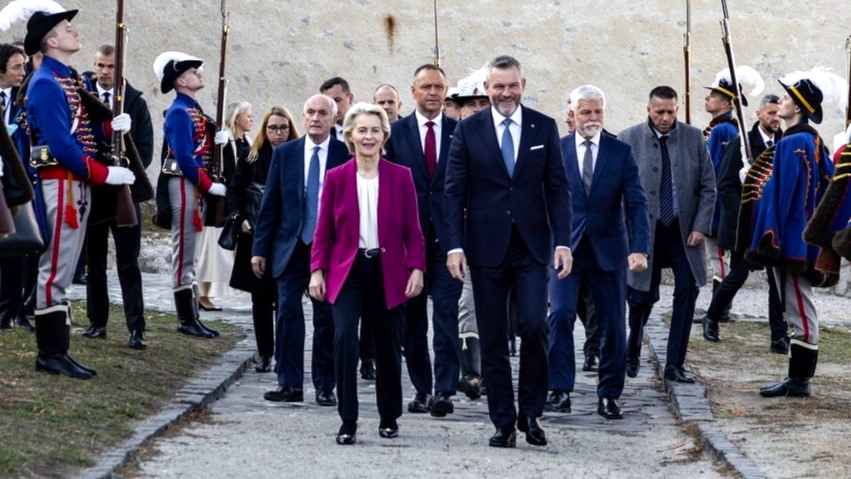
European Commission President Ursula von der Leyen met with the leaders of the Visegrád Group (V4) countries at a summit in Trenčín, Slovakia, on Thursday. She described EU enlargement as a “geostrategic necessity”. The experience of the V4 countries, she argued, shows how enlargement can boost Europe’s influence and prosperity. “It gives Europe more clout. More prosperity,” she wrote on X.
Czech President Petr Pavel, Slovak’s Peter Pellegrini, Poland’s Karol Nawrocki and Hungary’s András Baka also backed further EU enlargement in a joint declaration. They called it a strategic investment in peace, security and Europe’s standing in the world. However, they stressed that accession must remain merit-based, with candidates meeting all the required conditions.
No shortcuts or preferential treatment for one member country at the expense of another. — Peter Pellegrini, President of Slovakia
Mr Pellegrini ruled out any fast-tracking in accession talks. “No shortcuts or preferential treatment for one member country at the expense of another,” he said. He also welcomed the Commission’s announcement that Montenegro could provisionally close all its remaining negotiating chapters by the end of the year.
The EU itself must prepare for enlargement, Mr Pavel stressed. The process cannot depend solely on progress made by candidate countries, he argued. The Union must ensure that admitting new members does not undermine its unity or stability.
Mr Nawrocki called for a stronger voice for Central Europe in shaping the continent’s future. “Central Europe cannot be merely a recipient of decisions made by others,” he said, arguing that closer V4 cooperation would help the region push its interests more effectively.
The current security situation placed particular responsibility on Europe, according to Mr Baka. He underlined the importance of regional cooperation and keeping dialogue open even when their political positions differed.
Europe’s role in ending the war
Russia’s war against Ukraine was the summit’s second major topic. Ms Von der Leyen made clear that Europe stands firmly behind Ukraine. She described continued military support as essential, including Czechia’s ammunition initiative.
“Ukraine must negotiate peace from a position of strength,” the Commission president said. She added that the V4 countries would also play an important role in Ukraine’s future integration into the European Union.
The presidents agreed. In the declaration, they reaffirmed their support for Ukraine’s sovereignty, territorial integrity and right to defend itself against Russian aggression. They called for a just and lasting peace in line with international law. They also stressed the need for continued military, financial, humanitarian and economic assistance.
A lack of coordination undermines Europe’s credibility in the eyes of Russia and other partners. — Petr Pavel, President of Czechia
President Pellegrini, however, warned that European societies were growing tired of the war. “This war is beginning to wear Europe down, both morally and economically,” he said after the meeting. Money spent supporting Ukraine, he argued, was money that member states could no longer invest in hospitals, schools and infrastructure.
Mr Pellegrini therefore called for greater efforts to end the fighting. Europe cannot keep spending up to €100 billion a year on a war of attrition while doing nothing to bring about peace, he argued.
Czech President Petr Pavel, meanwhile, stressed that Europe must speak with a more united voice in any potential peace negotiations. Talks on ending the war are taking place in different formats, he pointed out. “A lack of coordination undermines Europe’s credibility in the eyes of Russia and other partners,” Mr Pavel warned. Europe must play an active part in decisions that directly affect its security, he added.
‘Marshall Plan’ for Ukraine
The Czech president reiterated his earlier proposal for a major post-war reconstruction plan for Ukraine. He compared it to the Marshall Plan, which helped rebuild the European economy after the Second World War.
Such a mechanism could help stabilise Ukraine after the fighting ends, pave the way for its future EU membership and reduce the risk of further waves of migration, Mr Pavel argued. Other democratic countries, including Japan and South Korea, could join European states in financing the initiative.
Mr Pavel also warned of the challenges that could follow the return of hundreds of thousands of Ukrainian soldiers from the front. Europe is focused primarily on ending the war, he said, but remains poorly prepared for the reconstruction and reintegration that must follow.
Energy prices squeeze industry
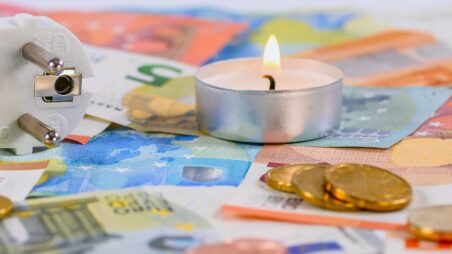
The summit’s third major topic was energy affordability and the competitiveness of the European economy. Ms Von der Leyen identified high energy prices as one of the Commission’s main priorities.
Her plan to bring them down rests on three pillars: accelerating the clean energy transition, diversifying supplies and pooling energy demand.
This war is beginning to wear Europe down, both morally and economically. — Peter Pellegrini, President of Slovakia
In their joint declaration, the V4 presidents called for energy supplies that are affordable, secure and reliable. They also underlined the importance of energy competitiveness for European industry.
Mr Pavel, however, warned that some European measures could have unintended consequences. Restricting domestic production of strategic materials, such as steel, could deepen Europe’s reliance on imports from unreliable partners, he argued.
The presidents agreed that a stronger, more competitive EU also needs more resilient energy infrastructure. Energy security and affordability, they concluded, are shared strategic interests for Central Europe.