Linux powers data centres, Firefox is used by millions of people and WordPress underpins a large share of the internet — open source is no longer a mere alternative. Yet the EU still sends hundreds of billions of euros to foreign providers of such software and services. Brussels now wants to reverse that trend and make open source a cornerstone of Europe’s digital independence.
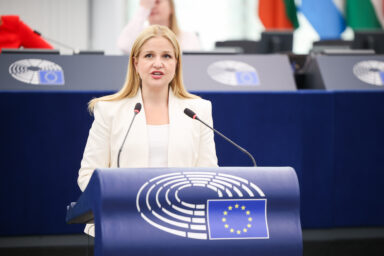
As part of its new Tech Sovereignty Package, Brussels argues that reducing Europe’s dependence on foreign technology companies requires investing on open source. “It is time we harness what we have in Europe to give us control over our digital future. This is the objective EU Open Source Strategy aims to do. And in doing so, it will strengthen the autonomy of users, companies and public administrations,” the European Commission’s Vice-President Henna Virkkunen said when presenting the package.
The Commission will invest €2bn over seven years for the open-source strategy. Europe is already home to more than three million open source contributors and around 500 companies built around open source technologies. Yet every year the EU spends around €264 bn on proprietary digital products and services supplied from outside Europe.
More than free software
Open source software makes its source code publicly available so anyone can inspect, modify and improve it. Unlike proprietary software, whose code is controlled by a single company, open source can be reused, adapted and independently audited for security. Firefox, LibreOffice and WordPress are some of the examples of open source projects. Also Commission initiatives such as the European Digital Identity Wallet and the Age Verification App are built on open source foundations.
For public administrations, this type of models means greater flexibility. Authorities can adapt software to their own needs, collaborate with other governments, share development costs and avoid vendor lock-in. Instead of paying repeatedly for similar proprietary systems, public bodies could reuse software financed with taxpayers’ money.
You might be interested

Yet despite underpinning much of the world’s digital infrastructure, open source has rarely been at the centre of European industrial policy. “For decades, open source software has had to fight for legitimacy”, writes OpenForum Europe. It was often regarded as “too fragile for enterprise use” or “too exposed for security-conscious institutions”. “As an outcome, open source was seen as an alternative, not a foundation.”
Open source first Procurement
The strategy proposes an “open source first” principle for cloud and AI procurement. The goal is encouraging governments to assess open source alternatives. It is accompanied by another principle: “public money, public code.” Software developed with public funding should be published so that other public administrations can reuse it instead of paying to develop similar systems from scratch. The Commission will also publish procurement guidelines to help contracting authorities evaluate open source solutions and lower barriers for European providers competing with established multinational vendors.
The Free Software Foundation Europe welcomed the proposal but warned that principles alone are not enough. Johannes Näder, the organisation’s Senior Policy Project Manager, said the procurement reform would be “a test. “‘Public Money? Public Code!’ must become a mandatory requirement for public tendering. Redirecting even half of Europe’s €264 billion in IT spending from proprietary lock-in to Free Software would boost European tech sovereignty.”
Funding the software
Around €800m has already been allocated to open source projects under the current Multiannual Financial Framework, but Brussels says the funding has lacked long-term strategy. To address this, the Commission proposes an Open Source Maintenance Instrument. It also wants Europe to develop the capacity to fork critical open source projects if governance or security concerns arise.
OpenForum Europe describes the strategy as “the most serious institutional commitment to open source that European policy has produced”, arguing that it finally recognises open source as strategic infrastructure rather than simply another innovation programme.
Welcome, but under test
Some MEPs believe the Commission still needs to go further. “I also regret the lack of ambitious Open Source proposals. Let us remember that Linux powers our data centers. But relying on Open Source technologies whose governance and contributions are dominated by American or Chinese entities is not sovereignty. I call on the Commission to propose additional measures to support European contributions to Open Source technologies”, said Renew MEP Christophe Grudler.
EDRi, together with Access Now and Vrijschrift.org, contributed to the Commission’s consultation. For the organisaions free and open source is “not a niche technical choice, but a strategic foundation for Europe’s resilience, competitiveness and democratic autonomy”. The organisations warn that Europe’s continued dependence on platforms controlled by a handful of mostly US-based companies weakens public sector autonomy, creates vendor lock-in and exposes governments to foreign legal regimes. For them, if public money pays for software, the public sector should be able to reuse it.
More than 1600 contributions from developers, foundations, businesses and public administrations shaped the strategy through the Commission’s consultation process. The Open Source Strategy does not itself create binding obligations. Much of its success will depend on how governments implement it.