Cancelled flights, missed connections, and refunds that never come. EU traveller rights have long existed on paper but proved hard to enforce. A new deal between the Council and the Parliament is set to change that.
The Council and the European Parliament reached a provisional agreement on Wednesday on new rules to strengthen enforcement of passenger rights across all transport modes. The existing framework has long drawn criticism for its patchy application. A cancelled flight or a delay can land travellers in very different situations depending on which country they are in. The new rules aim to change that, making the system clearer, more coherent, and easier to navigate.
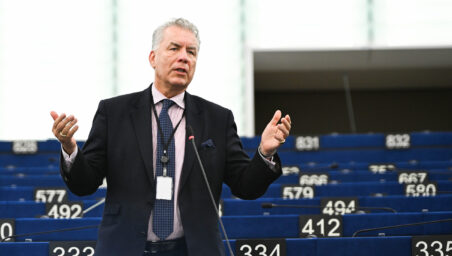
Cyprus’ Minister of Transport Alexis Vafeades welcomed the deal. “Passenger rights are only meaningful if they can be effectively enforced,” he said. The new rules cover all modes of transport and target clearer passenger information, a more efficient complaints process, and stronger enforcement by national authorities.
Refunds through intermediaries
One of the most significant changes concerns tickets bought through intermediaries such as travel agents or online booking platforms. When a flight is cancelled, passengers can claim a full refund, including any booking fee charged by the intermediary. Small travel agents may qualify for an exemption, but only if they inform passengers before the booking process begins.
Airlines must also state publicly whether they work with intermediaries, and intermediaries must communicate refund policies clearly at the time of booking. Passengers must receive refunds within seven days, or within 14 days when the intermediary has already paid out of its own funds.
The agreement also targets screen scraping, a practice where third parties resell tickets while posing as the airline without disclosing this. Under the new rules, airlines bear responsibility for tickets issued via intermediaries.
Standard forms for claims
The agreement introduces European standard forms for reimbursement and compensation claims. Passengers can use these forms or any equivalent provided by the carrier, and can submit claims electronically or by post.
National enforcement bodies gain new powers under the deal. Where passenger rights are breached, authorities can investigate complaints, carry out audits and inspections, and interview those involved. Passengers must have an accessible and efficient way to complain.
The deal also extends existing service quality obligations. Air carriers, bus and coach operators, and terminal managers must now set and publish standards relating to passenger rights, joining airports, ports, and railway stations already bound by similar rules.
Protection for disabled passengers
Passengers with disabilities and reduced mobility retain the right to free assistance throughout their journey. Where a carrier requires a passenger to travel with a companion for health and safety reasons but cannot provide that support itself, the passenger may choose their own companion at no extra charge.
That companion must sit next to the passenger. The deal also extends service quality obligations to air carriers, bus and coach operators, and terminal managers, aligning them with rules already covering airports, ports, and railway stations.
Service standards extended
The new rules seek to align service standards across transport modes while taking account of the specific features of each sector. The Commission will assess the implementation and effectiveness of these standards no later than five years after the new rules begin to apply, covering passenger rights legislation across all modes, including rail.
Passenger rights are only meaningful if they can be effectively enforced. — Alexis Vafeades, Minister of Transport, Communications and Works (Cyprus)
The provisional agreement still needs formal approval by both the Council and the European Parliament. The regulation forms part of the broader revision of EU air passenger rights rules. It will enter into force on the same date as the updated air passenger rights regulation.