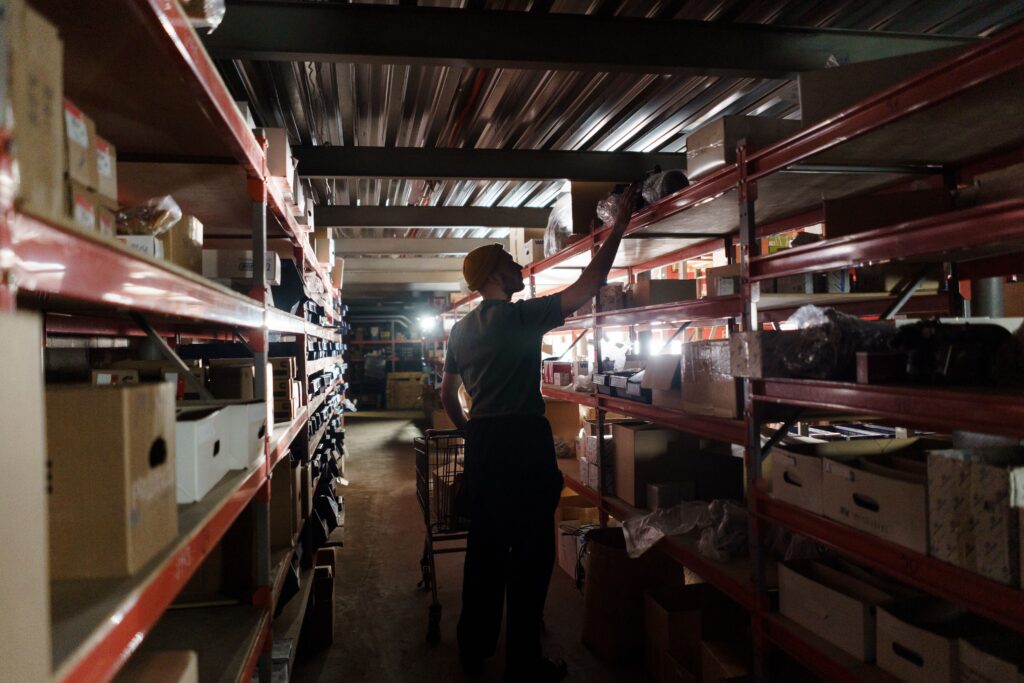
A camera watches every move on a warehouse floor in Bucharest. In Copenhagen, nobody checks how long the coffee break lasted. The technology is the same, but working life looks very different across the EU.
A new EU survey exposes that gap. Researchers questioned more than 70,000 workers across all 27 member states. Workers everywhere reported using a similar toolkit: computers, phones, tracking software, and AI chatbots. The gap opened elsewhere, in how far employers went in using them.
Nine in ten workers rely on some kind of digital device at work. Almost one in three has used AI for a task on the job. Employers automatically track working hours for more than a third of workers. A similar share face monitoring on entry and exit through the building. Around four in ten fall into what researchers call partial platformisation. They face at least one form of digital monitoring, plus at least one form of algorithmic management.
The geography of surveillance
Romania and Bulgaria use workplace cameras at nearly three times the EU rate. Roughly half of their workers report camera surveillance, compared with 14 per cent across the bloc. Poland, the Baltic states, Cyprus, and Malta are not far behind.
Head north or west and the camera almost disappears, even in workplaces that use technology just as heavily. In Denmark, Sweden, and the Netherlands, close to four in ten workers use AI on the job, above the EU average. Yet monitoring stays consistently low. One possible explanation, researchers suggest, is the role of strong trade unions and collective bargaining. Yet the same report finds that workers with formal representation more often report monitoring. The relationship looks less like cause and effect, and more like a pattern researchers are still untangling.
Spain has gone furthest in letting software decide who works which shift and who earns a bonus. In the Netherlands or Greece, that decision still mostly rests with a manager.
In Bulgaria, a fifth of workers use no digital tools at all, more than three times the EU average. Similar gaps show up in Croatia, Cyprus, the Baltic states, Malta, and Romania. Workers there tend to split into two very different groups: digitally invisible, or fully wired in. There is little middle ground.
Drivers behind the divide
Size matters more than almost anything else. Large firms monitor and manage staff with digital tools far more often than small ones do. The pattern holds in nearly every member state.
The risk runs highest for platform workers, people paid task by task through an app rather than employed directly. According to the research, they are more likely to have their movements, behaviour, and even signals such as heart rate and posture monitored than workers in standard jobs. Weaker legal protections for this group, researchers argue, leave more room for pervasive digital control to take hold.
Country positions on the four dimensions do not move in lockstep.
— European Commission working paper
The report’s authors make that point explicitly: “Country positions on the four dimensions do not move in lockstep: a high level of digital tool use does not automatically translate into high monitoring, high algorithmic management or high platformisation.” Two workers can sit behind identical laptops, running identical software. They can still live under two entirely different regimes: one gets trusted to do the job, the other gets tracked at every turn.