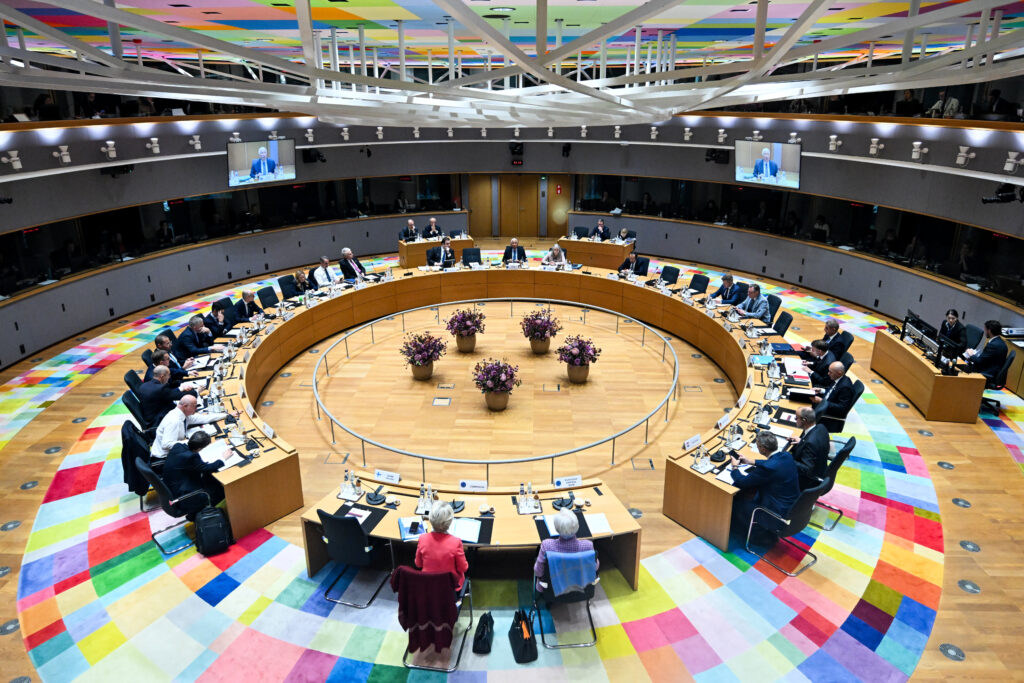
Twenty-seven national interests. One common budget. No agreement in sight. EU leaders cut short their planned two-day summit in Brussels after failing to bridge their differences. Deep divisions over spending and funding for Ukraine threaten to complicate negotiations ahead of 2027, when seven member states hold elections.
“We didn’t reach an agreement,” European Council President António Costa acknowledged in the early hours of Friday (27 November). He nevertheless described the meeting as a necessary step in the negotiating process.
“Everybody knows that we cannot fail Europe,” Mr Costa stressed at the concluding press conference. He emphasised the need to have a new EU budget in place by 1 January 2028. “In order to do this, we need to reach a final agreement by the end of this year,” he added.
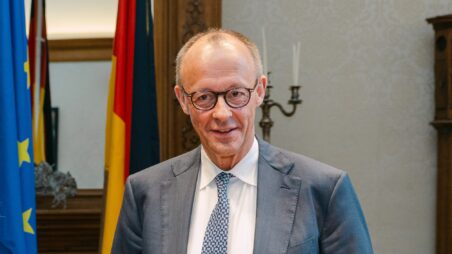
German Chancellor Friedrich Merz also acknowledged that national positions remained far apart. However, he said he had “not given up hope” of reaching an agreement in December.
You might be interested
Despite the deadlock, European Commission President Ursula von der Leyen remained optimistic about finding common ground on new revenue sources. But time is running short. The next test will come on 17–18 December, when EU leaders return to the negotiating table.
How much is Europe willing to spend?
“A cheap Europe could turn out to be a very expensive mistake. Security comes at a price,” Polish Prime Minister Donald Tusk warned. French President Emmanuel Macron voiced similar concerns, describing the proposed cuts as a strategic mistake. He argued that Europe risked falling behind China in public investment.
However, France does not want to increase its national contributions either. Mr Macron instead suggested postponing the repayment of pandemic-era debt.
Germany and several other net contributors (countries that pay more into the EU budget than they get back) are demanding deeper cuts, despite an already substantial reduction in the proposed EU budget. Mr Costa’s compromise proposal of 21 November puts the next seven-year budget at €1.78tn in current prices — around €204bn less than the Commission originally proposed. “The reduction compared to the Commission proposal must be several hundred billion euros,” Mr Merz told reporters late on Thursday.
Tensions escalated to the point where some leaders boycotted part of the summit. According to Euronews, seven countries known as the ‘Frugals’ withdrew from smaller-group discussions.
They favour a smaller budget and greater emphasis on competitiveness and defence. Meanwhile, 17 countries grouped under the ‘Friends of Cohesion’ are resisting further cuts to agriculture and regional development.
What would the cuts mean for citizens?
European Parliament President Roberta Metsola warned against a proposed reduction of more than €46bn in cohesion funding. These funds help finance the modernisation of schools, hospitals, and roads across Europe.
“Ultimately, the success of a budget and its value will be measured by the real difference it makes for our communities, for our families, for our farmers and for our businesses,” Ms Metsola said. She stressed that every euro invested generates around three euros in economic benefits. She also noted that more than two-thirds of Europeans believe the EU needs greater financial resources to address global challenges.
Ukraine deepens the divide
But the divisions go beyond spending within the EU. Financial support for Ukraine has become another sticking point.
The EU is seeking to raise €45bn through joint borrowing to support Ukraine in 2027. International partners are expected to provide another €25bn. The proposed 2028–2034 budget also includes up to €100bn for Ukraine.
For me, there is a link between our support for Ukraine and the European budget. The European Union comprises of 27 member states, not 23 or 24. — Friedrich Merz, German Chancellor
Mr Merz has explicitly linked continued financial support for Ukraine to the budget talks, insisting that all member states should contribute. “For me, there is a link between our support for Ukraine and the European budget. The European Union comprises of 27 member states, not 23 or 24,” he said, as quoted by Reuters.
Czech Prime Minister Andrej Babiš rejected that approach. He argued that funding for Ukraine should remain separate from cohesion funding. Mr Costa confirmed after the summit that 24 member states supported the proposal for an additional loan to Ukraine. Leaders will return to the issue in December.
Could tech giants help foot the bill?
Another question remains unresolved. How can Europe finance its growing ambitions without significantly increasing national contributions?
Mr Costa has proposed five new revenue streams. Among them is a three per cent levy on revenues from certain digital services, including online advertising. The levy would target large companies with global annual turnover exceeding €750m and meeting a €50m threshold for digital activities in the EU.
Other proposed sources include contributions linked to electronic waste, tobacco products, and carbon pricing. Together with existing revenue streams, these measures could generate around €60bn annually.
Ms von der Leyen pointed to broad support for a digital services tax, despite strong opposition from Ireland. The additional revenue would also help repay pandemic-era debt. Around €140bn of the proposed budget is earmarked for this purpose.
A budget race against the ballot box
Seven member states are due to hold elections in 2027, according to Reuters. They are France, Italy, Poland, Greece, Estonia, Finland, and Slovakia.
In France, far-right leader Marine Le Pen has pledged to end financial support for Ukraine and reduce French contributions to the EU budget. Mr Macron has therefore set a clear political deadline: 31 December 2026.
After 31 December, I will no longer be in a position, politically or democratically, to reopen discussions on the budget and bring them to a conclusion. — Emmanuel Macron, French President
“After 31 December, I will no longer be in a position, politically or democratically, to reopen discussions on the budget and bring them to a conclusion,” the French president said. He cited the approaching presidential election.
However, not everyone shares his sense of urgency. Dutch Prime Minister Rob Jetten questioned whether there was a genuine deadline. Hungarian Prime Minister Péter Magyar expressed doubts that leaders could reach an agreement even by Christmas.
A long road to a final deal
The Commission presented its original proposal for the 2028–2034 long-term budget, known as the multiannual financial framework, in July 2025. Under Mr Costa’s revised proposal, funding for competitiveness would increase by 120 per cent and defence funding by 232 per cent compared with the current 2021–2027 budget. Funding for migration management and border control would double. Agriculture and cohesion would remain the largest spending category.
Even if national leaders reach an agreement in December, another hurdle remains. The next long-term budget requires unanimous approval in the Council of the EU and the consent of the European Parliament.