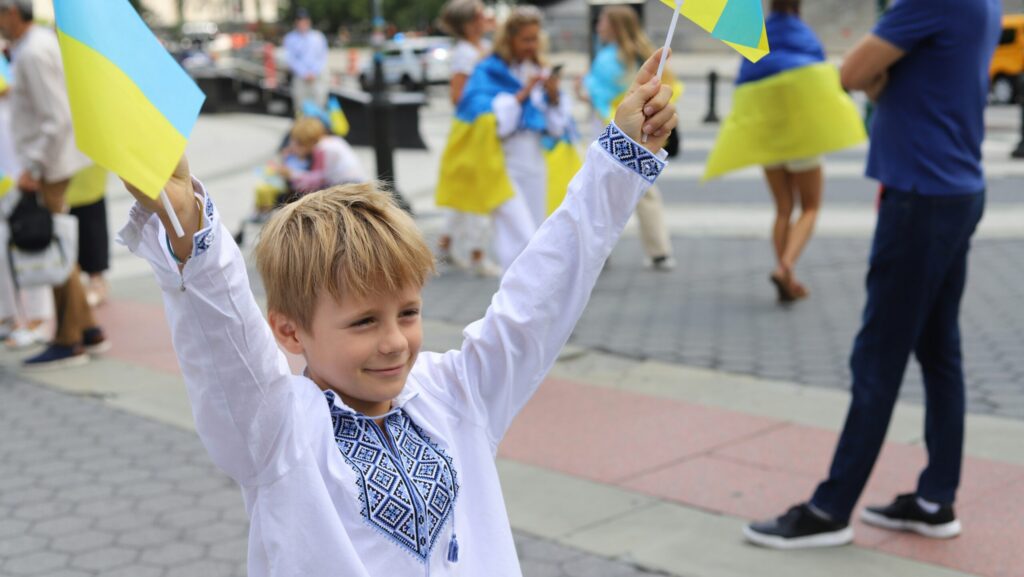
Any peace deal between Kyiv and Moscow must also bring abducted Ukrainian children home, European lawmakers said on Wednesday. They called for those behind the deportations to be held accountable. Thousands of children still remain in Russia, separated from their families.
EU foreign-policy chief Kaja Kallas told the European Parliament that more than 20,500 children had been illegally deported. As of this month, 2,790 had returned. Luka was among 13 children and teenagers brought back last week. He had just turned 18 and received a Russian military draft notice.
“The ultimate goal, of course, is to bring the kids home,” she said. She accused Russia of pursuing a state-directed policy of deportation, indoctrination and illegal adoption designed to erase Ukrainian identity. The call comes as peace talks between Ukraine, Russia and the US took place in Abu Dhabi, with the return of abducted children among the issues at stake.
Returning home must be part of any settlement
Speakers across Parliament’s political groups condemned the deportations, although they differed over how Europe should respond. “There cannot be any genuine peace without the safe return of every Ukrainian child and accountability for those responsible,” Thijs Reuten (S&D/NLD) said.
You might be interested
Ewa Kopacz (EPP/POL) described the impact of forced separation on families. Children receive new names and nationalities and are prevented from speaking their own language. They are brought up as though their previous lives had never existed. “You do not know where your child is, you don’t know if they’re safe,” she said.
Others pressed for greater diplomatic engagement. Viktória Ferenc (PfE/HUN) condemned Russia’s actions while stressing the importance of negotiations. Özlem Demirel (The Left/DEU) argued that resolutions alone were insufficient and demanded a clearer EU strategy to end the war.
There cannot be any genuine peace without the safe return of every Ukrainian child and accountability for those responsible. — MEP Thijs Reuten (S&D/NLD)
Ms Kallas said the EU supported diplomatic efforts but challenged Moscow to demonstrate its intentions through concrete action. She urged Russia to allow safe, regular contact between children and their parents, relatives or legal guardians.
Calls to target the people running the system
Rihards Kols (ECR/LVA) argued that sanctions should reach further down the network responsible for taking children and changing their identities. “(Russian President Vladimir) Putin does not forge birth certificates himself,” he said, calling for action against the officials and institutions enabling the system.
Ms Kallas said the EU had already sanctioned people and organisations involved. It also continues to fund children’s recovery, education and efforts to hold those responsible accountable. She recalled the International Criminal Court’s arrest warrants for Vladimir Putin and Russia’s children’s rights commissioner, Maria Lvova-Belova. Both face allegations of unlawful deportation and transfer of children.
Closing the debate, Ms Kallas called for humanitarian corridors and access for the UN, UNICEF, the International Committee of the Red Cross and other independent bodies to locations where Ukrainian children are held. She also urged Russia to stop attacking schools and other places children use. “Children have the right to their home, for their parents and also for peace, to live and grow up in peace,” she said.