Families flying between Spain and Italy this month are hitting checks that did not exist a week ago. Rome imposed them after tens of thousands of migrants crossed into Ceuta from Morocco. Madrid says its patience is gone, and Rome has until Sunday to lift the controls.
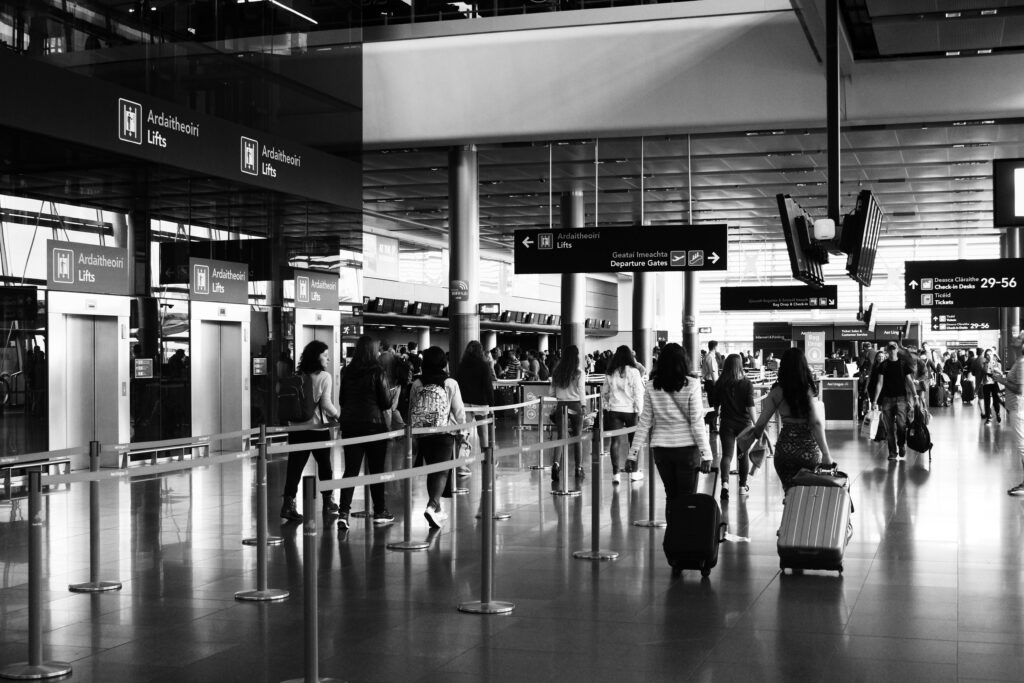
At Turin airport this week, passengers arriving from Spain queued through document checks that were not there before 1 August. Italy’s government ordered spot checks on flights and ferries from Spanish ports, citing the need to protect its borders after migrants crossed into Ceuta, Spain’s North African enclave, on 30 July.
Madrid wants the checks gone. In a statement on Friday, the Spanish government called the move unjust, discriminatory and contrary to the EU’s own interests, and gave Rome until Sunday to scrap it. If Italy refuses, Spain says it will respond with proportional measures of its own.
A crossing that never reached Italy
The dispute traces back to events in Ceuta, where close to 72,000 people arrived within two days, according to Spain’s interior ministry. Nearly all of them turned back to Morocco by 31 July, many because they had run out of food and water.
Not everyone survived. Moroccan and Spanish human rights groups, including the AMDH, put the death toll on both sides of the border fence at 141 or more, based on their own investigations. Spanish authorities officially confirm a lower number, between 72 and 88, as they do not yet have access to figures from the Moroccan side. One migrant drowned as recently as Friday morning, after his paraglider crashed into the sea near Ceuta as he tried to fly over the frontier.
Among those who reached Ceuta were more than 1,300 unaccompanied minors, according to Spain’s youth and childhood minister, Sira Rego, who visited the enclave on Friday. Many more have not come forward for registration, officials say, because they fear being sent back to Morocco. Queues of teenagers have been forming outside the local police station all week, waiting to be identified.
None of this migration has reached mainland Europe, EU officials insist. Ceuta sits outside the Schengen area’s free movement rules for third country nationals, so anyone who crossed there could not simply travel on to France or Italy. Brussels rejected Rome’s call to suspend Spain from Schengen altogether, pointing out that no such mechanism exists in EU law.
Legal grey zone, political signal
Italy’s checks rest on a narrow legal provision. Under Article 25a of the Schengen Borders Code, a member state facing an unforeseeable, serious threat can reintroduce border checks for one month without giving prior notice. Rome says the Ceuta crossings qualify. Madrid disagrees.
Analysts see the move as more symbolic than practical. Because Italy and Spain share no land border, the checks apply only to flights and ferries, cutting off a route migrants from Ceuta were never going to take anyway. Researchers at the Centre for European Policy Studies call it a signal to other capitals rather than a genuine security measure.
Echoes of past stand-offs
It is not the first time a Schengen country has turned on a neighbour rather than wait for Brussels to act. Germany reimposed checks on its border with Poland, and Italy already screens arrivals from Slovenia. The Commission urged nine states with long running controls to phase them out back in June, guidance that has changed little on the ground.
Solidarity and empathy are optional. Respect for European treaties and data is not.
— Pedro Sánchez, Prime Minister of Spain
For now, the clock is ticking toward Sunday. Spanish Prime Minister Pedro Sánchez struck a defiant tone once Italy’s checks took effect. “Solidarity and empathy are optional. Respect for European treaties and data is not,” he wrote on social media. If Rome keeps its checks in place, Madrid has promised to respond in kind, a prospect that could turn a dispute over one African enclave into a headache for millions of ordinary travellers this summer.