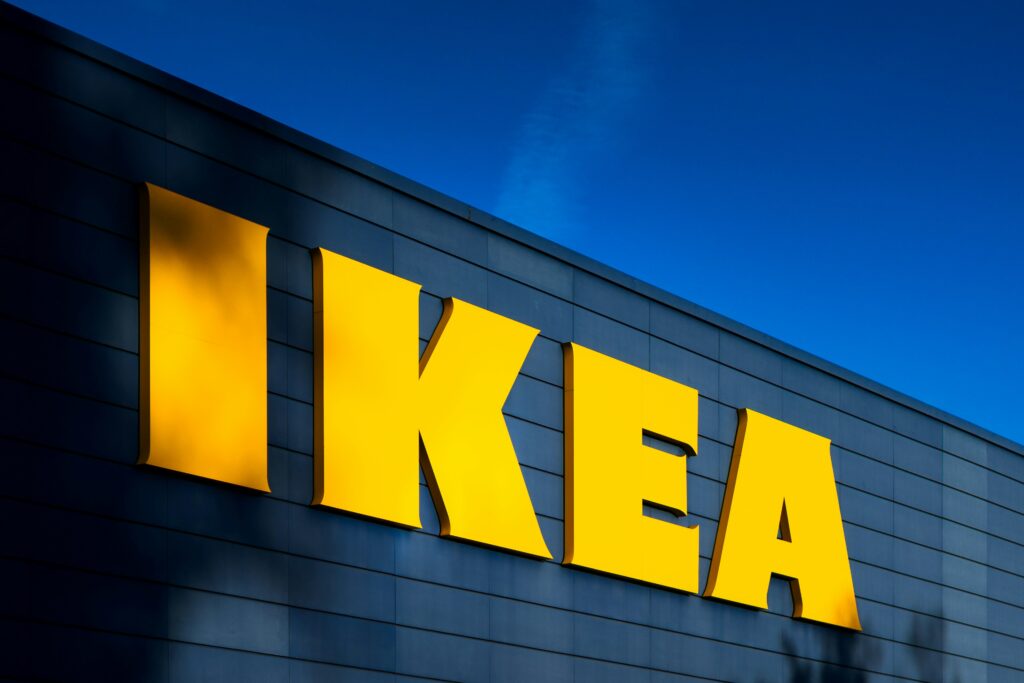
The EU’s highest court has strengthened IKEA’s position against a Belgian political party that turned its immigration programme into a furniture-style assembly manual. Judges found that political expression does not automatically allow parties to use a company’s trademarks without permission.
The Court of Justice ruled on Tuesday that Vlaams Belang’s campaign could significantly damage IKEA’s reputation and commercial interests. The judgment gives the furniture company the upper hand, although a Belgian court must still decide whether its trademark rights were infringed.
The dispute centres on the 2022 “IKEA-PLAN” launched by Vlaams Belang, a far-right Flemish nationalist party in Belgium. The name was itself a play on IKEA, standing for Immigratie Kan Echt Anders, or “Immigration Really Can Be Different”. The party packaged 15 proposals for reforming Belgian asylum and migration policy as “ready-to-assemble” measures.
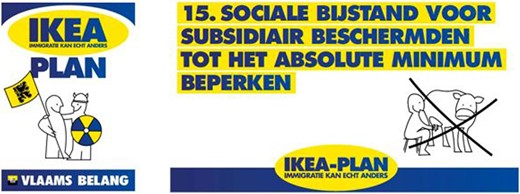
The campaign borrowed IKEA’s name, blue-and-yellow branding and simplified illustrated characters. Images of the material show politicians and migration proposals depicted in diagrams resembling the company’s furniture assembly instructions.
IKEA rejects political association
Vlaams Belang described the campaign as a playful parody inspired by Sweden’s stricter approach to migration. It presented the plan at a press conference and circulated the recording on social media.
IKEA quickly demanded that the party stop using its branding. “We try to take a position of political neutrality and we do not wish our brand to be used to suggest that we support certain positions,” the company said at the time, according to The Brussels Times.
The company subsequently brought proceedings against Vrijheidsfonds, the association behind the campaign. It argued that the material exploited its reputation and risked associating IKEA with political positions it had not endorsed.
Vlaams Belang acknowledged using the trademarks without permission. However, it argued that political parody and freedom of expression provided a legitimate justification under EU law.
Political expression does not automatically prevail
The Court accepted that freedom of expression could justify using a trademark in some circumstances. However, national courts must balance it against the owner’s property rights, reputation and commercial interests. Neither side holds an absolute right.
The link between the brand and the political message was central to the Court’s reasoning. Vlaams Belang’s campaign did not criticise IKEA, its products or its conduct. Instead, the party borrowed the company’s branding to make an unrelated immigration programme more recognisable and easier to promote.
“We try to take a position of political neutrality and we do not wish our brand to be used to suggest that we support certain positions.”
— IKEA, Official statement (2022)
Judges therefore found that there was no apparent basis for Vlaams Belang’s interests to take precedence over IKEA’s rights. The Belgian court must now make the final assessment and decide what remedy should follow.
An academic analysis of the case described it as a wider test of how EU trademark protection should coexist with political speech and satire. The ruling does not prohibit every political parody involving a commercial brand. However, borrowing a famous identity mainly to attract attention to an unrelated campaign will be considerably harder to justify.