Four heroes of Kosovo’s independence war left a Hague courtroom convicted of murdering 96 people. Hashim Thaçi, the country’s former president, got 25 years; his three comrades got 13 to 25. Kosovo must now weigh its liberation myth against the atrocities carried out in its name.
Judges found the four men responsible for arbitrary detention of 385 people. They also convicted them of torturing 303 people, mistreating 49, and murdering 96. Among the victims was Behajdin Allaqi. Thaçi personally took part in his arrest, detention, transfer and killing. Kadri Veseli, the former parliament speaker, received 18 years for his part. Rexhep Selimi got 13. Jakup Krasniqi, once the KLA’s spokesman, was handed 25 years alongside Thaçi.
Judges acquitted the four of six counts of crimes against humanity. Prosecutors, they ruled, had failed to prove a widespread or systematic attack on civilians. Presiding Judge Charles Smith stressed that the trial never questioned the legitimacy of Kosovo’s fight for independence. It only weighed the criminal means some KLA members used to pursue it. Serbian forces, he noted, committed crimes of their own against Kosovo Albanians. Judging those, he said, lay outside this case.
A court under outside pressure
The Kosovo Specialist Chambers were created in 2015 under heavy international pressure. For years, critics had argued that Kosovo’s own courts would never convict former guerrilla commanders turned political leaders. The court sits formally within Kosovo’s judicial system. Yet it operates from The Hague, staffed by international judges and prosecutors. The arrangement was meant to shield witnesses and verdicts alike from pressure at home.
That divide has followed the court since its creation. To KLA veterans and much of Kosovo, the four men are not war criminals. They are liberators who freed the country from Serbian rule. To victims and their families, the same men bear responsibility for crimes committed in the name of that freedom. Wednesday’s verdict does not resolve that tension. It sharpens it.
Anger among supporters
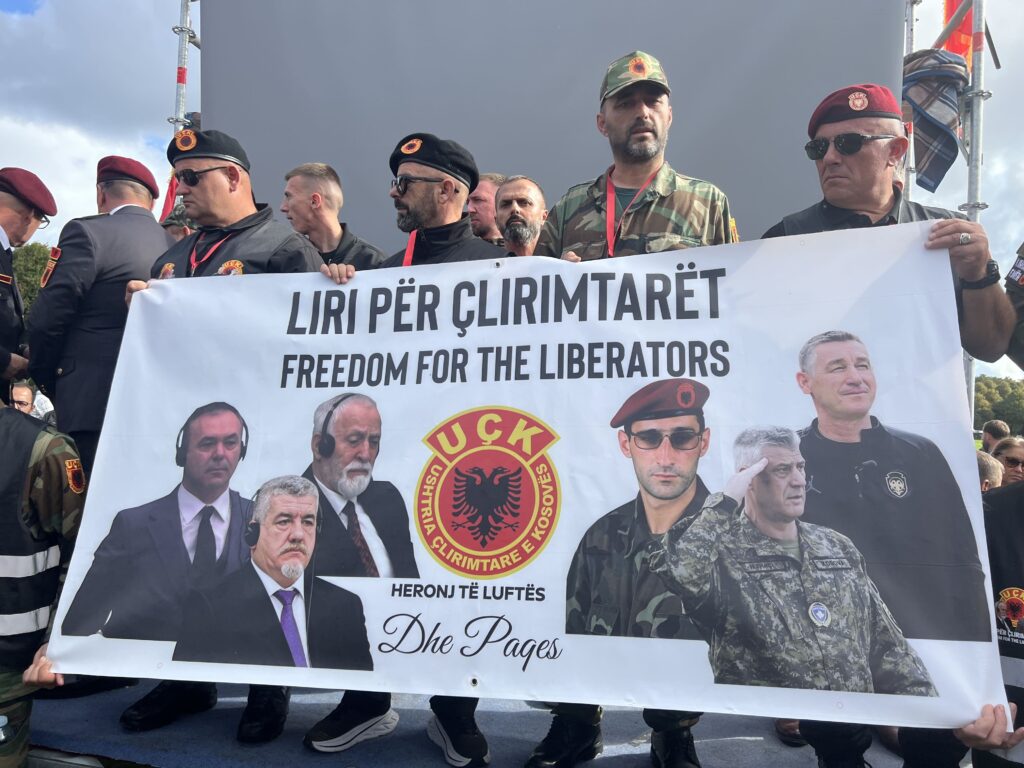
Outside the Hague courthouse on Wednesday, hundreds of demonstrators gathered waving KLA flags. They chanted “UÇK”, the Albanian acronym for the Kosovo Liberation Army. Brief scuffles broke out with police, who deployed a water cannon to clear the area.
In Pristina, thousands had rallied over the weekend in support of the four men. Portraits of them hung across the city beneath a giant digital clock counting down to the verdict. One banner read: “In the name of the people, declare them innocent.” The central square emptied within minutes once it became clear the former president would remain in detention.
Kosovo’s Foreign Minister Glauk Konjufca called the ruling “a sad, unjust, undeserved decision” for a war fought for liberation. Albania’s Prime Minister posted a single word on social media in response: “Marre”, meaning shame.
A long trial with many witnesses
The trial opened on 3 April 2023. That was two and a half years after Thaçi, Veseli, Selimi and Krasniqi were transferred to the court’s detention facilities in The Hague. Over the following three years, judges heard 273 witnesses. They admitted 5,467 exhibits into evidence. The transcript alone runs to 29,238 pages. Counsel for 156 participating victims presented their case in the summer of 2025. The panel closed proceedings in December and heard closing statements in February 2026.
Judges noted the trial unfolded against a persistent climate of witness intimidation. Several witnesses recanted past statements or recited what the panel called “a learned set of lines”. Yet most who testified did so with courage and determination, the judges said. Some did so in the face of direct attempts to discourage them.
The verdict is not the conclusion
The ruling is not final. As a first-instance judgment, both the defence and the prosecution can appeal. The legal battle could stretch on for years before Kosovo gets a definitive answer.
Throughout my life, I stood with the people of Kosovo defending freedom, life and dignity. — Hashim Thaçi, former President of Kosovo
Thaçi never accepted the charges against him. Closing his defence in February, he told judges: “Throughout my life, I stood with the people of Kosovo defending freedom, life and dignity.” Many in Kosovo still agree with him, verdict or not.
Wednesday’s judgment settles the law but not the memory. For Kosovo, the case will keep testing how a nation squares the men who won its independence with what a court has now found they did to keep it.