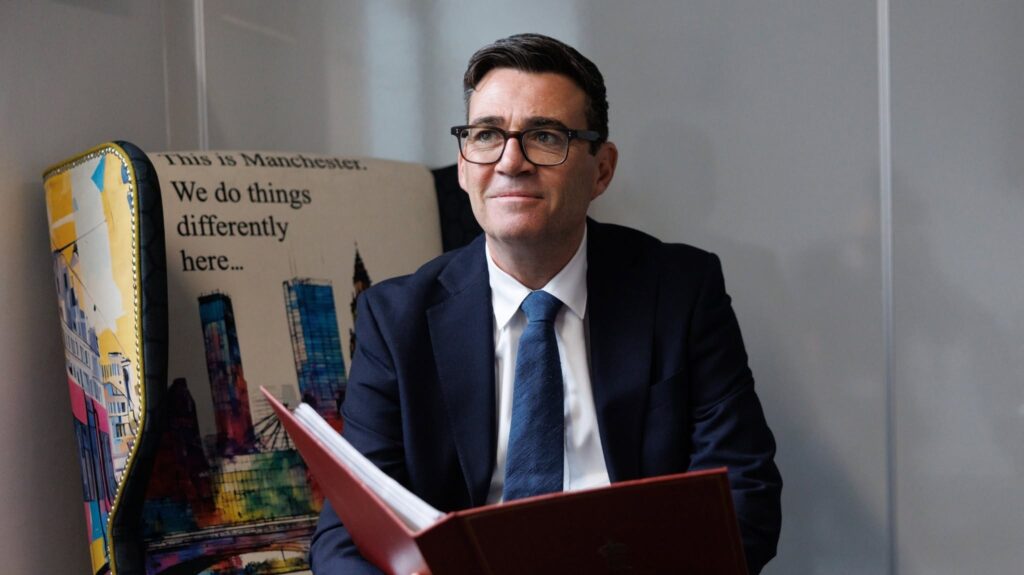
British manufacturers risk losing European incentives and public contracts under an EU policy designed to reduce dependence on China. Prime Minister Andy Burnham argues that excluding the UK would hurt closely connected industries on both sides of the Channel.
“We are not the problem. Made in Europe is dealing with a different problem. We are making the argument that: let’s avoid collateral damage,” Mr Burnham told reporters while travelling to the United Nations General Assembly in New York.
The prime minister wants Britain to receive “trusted partner” status under the EU’s proposed Made in Europe provisions. He argued that the UK and EU faced the same pressure from foreign competition, particularly in the steel industry.
The provisions form part of the proposed Industrial Accelerator Act. They would introduce European-production and low-carbon requirements into public procurement and government support programmes for strategic industries.
British cars could lose incentives and contracts
Because Britain left the EU single market after Brexit, UK products would not automatically qualify as European. The current draft could exclude British-built vehicles from incentives for greener company fleets and regulatory benefits known as CO₂ super credits.
British manufacturers could also lose access to vehicle contracts awarded by public authorities in EU countries. The Society of Motor Manufacturers and Traders warned that the rules could disrupt supply chains that remain closely connected despite Brexit.
Automotive trade across the Channel is worth approximately €80 billion a year. The EU is Britain’s largest market for passenger-car exports, while Britain is the largest export market for EU-made passenger cars.
We are not the problem. Made in Europe is dealing with a different problem. We are making the argument that: let’s avoid collateral damage. — Andy Burnham, UK prime minister
“Excluding the UK from ‘Made in Europe’ would be an own goal,” SMMT Chief Executive Mike Hawes said. The organisation argued that exclusion would weaken competitiveness, reduce production scale and limit consumer choice.
Another test of Britain’s EU reset
Mr Burnham’s request forms part of Britain’s continuing attempt to repair relations with Brussels. His predecessor, Sir Keir Starmer began a UK–EU reset after years of post-Brexit tension. Mr Burnham now wants closer cooperation to move “further and faster” and hopes a postponed summit can still take place this year.
Britain has already failed to secure full participation in the EU’s €150bn SAFE defence-loan programme. Talks broke down after London rejected the financial contribution sought by Brussels.
The Industrial Accelerator Act has not completed the EU legislative process, leaving its eligibility rules open to negotiation. Britain must now persuade Brussels that including UK manufacturers would strengthen European supply chains without undermining a policy intended to support EU production.