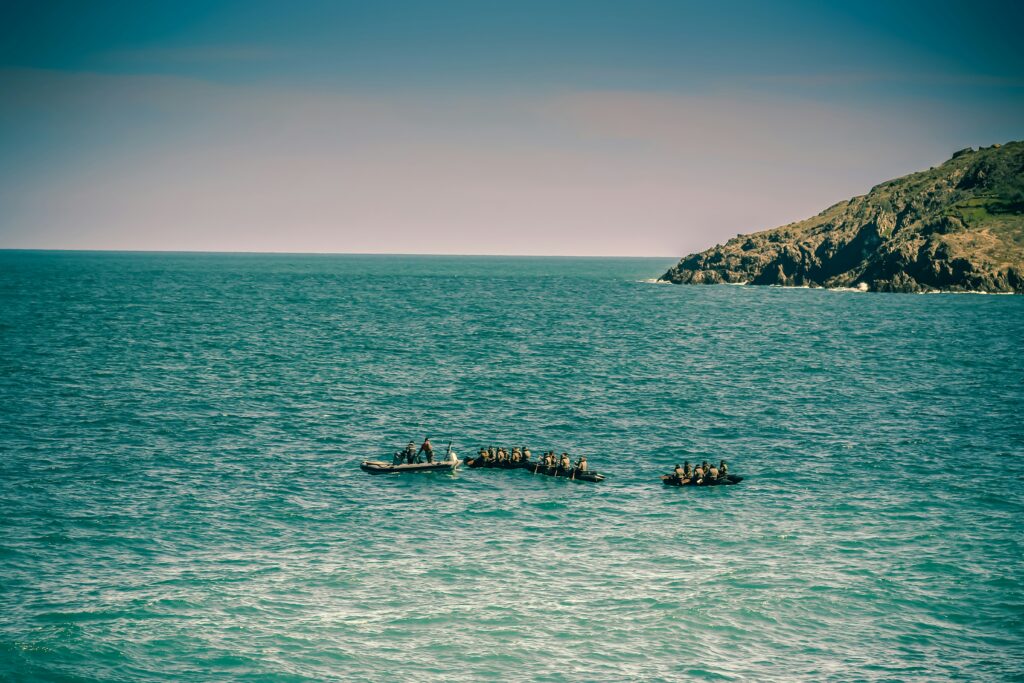
Sea arrivals to Europe have fallen by 39 per cent this year, but the number of people dying or disappearing during the journey has increased. The contrasting trends emerge as the EU introduces stricter screening, asylum and return procedures.
Nearly 60,000 migrants and refugees reached Europe by sea by 15 September, according to the International Organization for Migration. The equivalent figure last year was 98,040.
The figures cover Europe’s main maritime routes and exclude most of the exceptional mass entry into Ceuta in July. More than 72,000 people crossed from Morocco into the Spanish enclave, largely through its land and coastal border, although most later returned. IOM recorded at least 97 deaths during the crisis.
Fewer people are arriving by sea in Europe than at this point last year. But people are still dying and going missing in alarming numbers trying to reach safety. — Amy Pope, IOM Director General
Overall, at least 2,292 people died or disappeared on Mediterranean and Atlantic routes, up from 1,999 during the same period in 2025. The real number is probably higher because entire boats can disappear without authorities recording a shipwreck.
“These figures tell two stories at once,” IOM Director General Amy Pope said. “Fewer people are arriving by sea in Europe than at this point last year. But people are still dying and going missing in alarming numbers trying to reach safety.”
Central Mediterranean becomes more dangerous
The sharpest fall occurred on the Central Mediterranean route, usually connecting Libya and Tunisia with Italy and Malta. Arrivals dropped by 55 per cent, from 48,231 to 21,393. Nevertheless, recorded deaths and disappearances increased from 844 to 996.
The Eastern Mediterranean showed the same pattern. Greece received 20,428 people by sea, approximately 5,000 fewer than last year, while deaths increased by 47 per cent from 284 to 417. Some migrants have reportedly begun taking longer journeys from eastern Libya towards Crete, exposing them to more time at sea.
Nearly every death and disappearance at sea is preventable. — Amy Pope, IOM Director General
A further 16,794 people reached Spain through the Western Mediterranean and Atlantic routes, down from 22,855. At least 879 people died or disappeared attempting those crossings, which include the particularly dangerous journey from West Africa to the Canary Islands.
IOM attributed the deaths to increasingly dangerous routes and the continued use of overcrowded, unseaworthy boats. Reduced transparency from maritime authorities and difficulties documenting “invisible shipwrecks” also mean that official statistics capture only part of the loss of life.
EU tightens migration rules as IOM calls for safer routes
The figures arrive as the EU implements a stricter migration system. The Migration and Asylum Pact took effect in June, introducing mandatory registration and screening alongside faster asylum and return procedures.
The European Parliament and EU governments have also agreed rules allowing member states to establish “return hubs” outside the bloc for people ordered to leave. European governments argue that stronger controls, quicker decisions and more returns will discourage irregular journeys.
The decline in arrivals indicates that fewer people are reaching Europe, but it does not establish that deterrence policies caused the reduction. IOM called for stronger international cooperation on search and rescue, action against smugglers and traffickers, and more safe and regular ways to enter Europe. “Nearly every death and disappearance at sea is preventable,” Ms Pope said.
For the EU, the challenge is increasingly twofold: measuring whether tighter controls are changing migration patterns while accounting for what happens on the routes that remain.