The European Parliament approved the AGILE file on 6 October 2026, backing a €115m one-year pilot designed to channel EU money to small defence-technology firms at speed. The file passed by 536 votes to 101 votes, with 16 abstentions.
The programme is modest in size. At barely 0.07 per cent of the current European Defence Fund, it will not reshape Europe’s economy overnight. But it creates a budget line — and, more importantly, a precedent.
AGILE draws its €115m not from new taxes or borrowing but from unspent margins inside the 2021–2027 EU budget. That fiscal sleight of hand kept the programme politically palatable, though it also underlines its limited ambition for now.
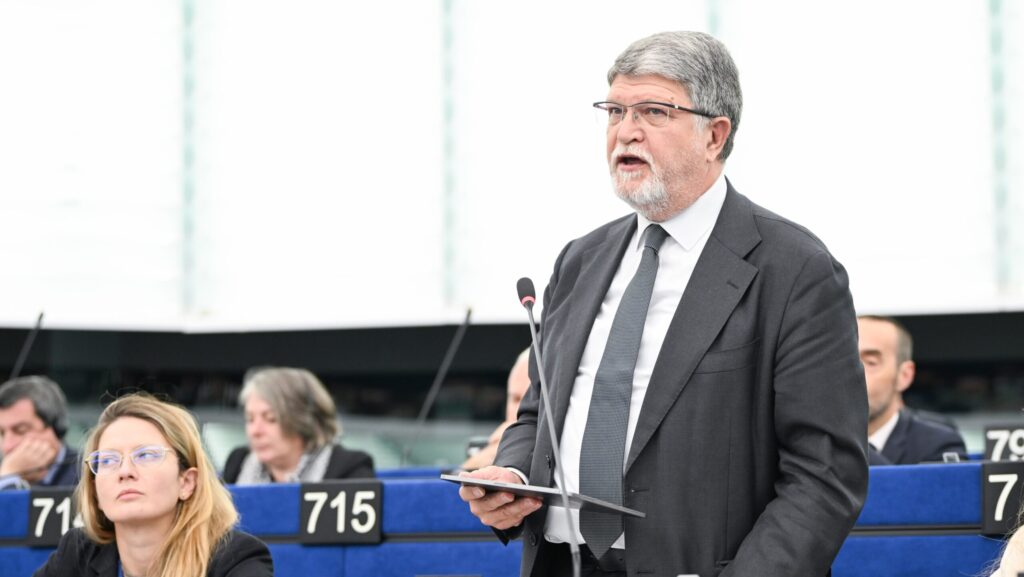
“AGILE is an important pilot programme because it puts Europe’s SMEs, startups and scale-ups at the heart of defence innovation. The agreement maintains 115 million euros budget, SMEs focus and four-month time to grant objective while aligning with member states’ capability needs,“ said rapporteur MEP Tonino Picula (S&D/HRV). He also called on the Commission “to present a single market for defence and communication”.
“Every day of the Russian ongoing aggression in Ukraine shows how urgent the need to boost our own defence industries, especially regarding the innovation and new technologies. That’s why the adoption of the AGILE programme is so timely and necessary,” co-rapporteur MEP Ivars Ijabs (Renew/LAT) said.
From lab bench to battlefield
The programme targets fields where product cycles now run to two or three years, not decades: artificial intelligence, quantum technologies, cyber, robotics, drone swarms, and space systems. It fills a specific gap—rapid prototyping—that sits between early feasibility studies funded by the European Innovation Council and the large collaborative demonstrators supported by the European Defence Fund.
The Commission intends to connect successful AGILE projects to military buyers within weeks or months of completion. Individual grants are capped at between €1m and €5m per project, which forces larger defence firms to partner with smaller, niche suppliers rather than absorb contracts whole.
AGILE is an important pilot programme because it puts Europe’s SMEs, startups and scale ups at the heart of defence innovation. — MEP Tonino Picula (S&D/HRV)
Crucially, AGILE pays up to 100 per cent of eligible costs and reimburses expenses incurred up to three months before a contract is signed. Grant decisions must follow within four months.
For hardware startups accustomed to long waits and partial reimbursement, that combination shortens what practitioners call the valley of death: the period between promising prototype and viable commercial product and lowers their cost of capital.
Relief for the supply chain
Europe’s defence supply chain already employs roughly 1.5 million people. Even a pilot of this scale can seed high-skilled research and development jobs. The trade union IndustriAll Europe supports the concept but has demanded that wage, training, and worker-representation standards be written into project calls.
The programme also carries an explicit geopolitical rationale. The war in Ukraine exposed EU dependence on non-European equipment. AGILE’s stated aim is to deliver “cost-efficient products independent of non-associated third countries”. Countries in the European Economic Area, EFTA, and Ukraine may participate, tightening supply-chain links across the continent.
Parliament inserted provisions on AI ethics, dual-use export controls, and open-call publicity. Those additions addressed concerns about what critics had called a potential “military tech slush fund”. The pilot faces an independent external evaluation in 2028; a poor score on societal and ethical metrics would jeopardise any renewal.
A test of Brussels’ ambition
Civil-society voices, including the European Economic and Social Committee, have warned that any future expansion of AGILE must be additional to—not carved out of—cohesion and social-fund envelopes. They also call for geographic balance, so that innovators from all 27 member states can compete on equal terms.
The first calls are expected to open on 1 January 2027. That is when the four-month promise will face its first real test. SMEs will learn quickly whether Brussels can match its rhetoric with administrative speed.
The mid-2028 evaluation carries the higher political stakes. Its findings will feed directly into negotiations over the next Multi-annual Financial Framework, covering 2028 to 2034. A strong result would strengthen the case for a permanent “rapid window” inside the next European Defence Fund round — shifting procurement culture, as one briefing document put it, from “specify-then-wait” to “iterate-then-field”. A weak result would consign AGILE to a footnote.
Success could also embolden policymakers to redirect parts of Horizon Europe or the Innovation Fund toward security-oriented research, reigniting the tension between social spending and defence spending that the programme’s critics have already flagged.
Beyond the €115m
AGILE’s approval matters less for the money it commits in 2027 than for the model it establishes: a fast, SME-centric, defence-innovation pocket inside the EU budget, funded through reallocation rather than fresh revenue, and governed by ethics and transparency rules designed to broaden political support.
Technologies funded under AGILE—quantum navigation chips, resilient satellite links—carry obvious civilian uses in telecoms, transport, and space data. By funding single-beneficiary projects, the scheme encourages dual-use startups that previously avoided the complexity of defence procurement paperwork.
Whether AGILE becomes a flagship or a footnote depends on what happens between January 2027 and the evaluator’s desk in 2028. The Parliament has cast its vote. The harder work begins now.