How far can the EU simplify business rules without weakening protections for workers, consumers and the environment? Lawmakers are divided, while the European Commission says its proposals could save companies €22.3bn a year.
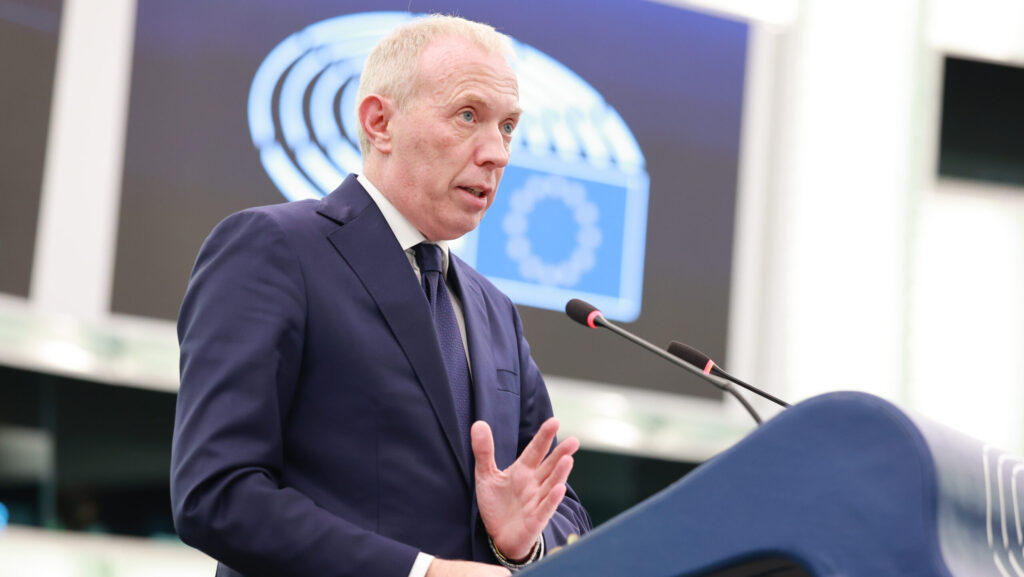
“A potter in Estonia sells a few mugs a month to Italy and Germany. The paperwork now costs more than the mug itself,” MEP Kai Tegethoff (Greens-EFA/DEU) told the plenary. His example illustrated how obligations can become disproportionately expensive for small businesses selling across borders. The intervention came during a topical debate on cutting costs and unnecessary reporting obligations, requested by the European People’s Party.
“Since the start of its mandate, the Commission has proposed measures that would save €22.3bn in administrative costs every year,” said a Commission representative.
The promised reductions come from omnibuses. The first, adopted in February 2026, narrowed corporate sustainability reporting obligations to companies. The Commission estimates it saves businesses €450m annually.
A potter in Estonia sells a few mugs a month to Italy and Germany. The paperwork now costs more than the mug itself. — MEP Kai Tegethoff (Greens-EFA/DEU)
Meanwhile, other packages remain under negotiation. The environmental omnibus is expected to reduce annual administrative costs by €890m. The digital omnibus is projected to save another €1.2bn.
But the European Parliamentary Research Service criticised the Commission’s simplification plans for remaining “silent on the calculation methods and underlying evidence” behind its savings estimates. “None of the omnibus packages put forward to date was underpinned by an impact assessment,“ reads the analysis.
Where simplification should stop?
For some lawmakers, cutting bureaucracy risks weakening workers’ rights. MEP Gabriele Bischoff (S&D/DEU) described the first omnibus as a “Trojan horse” against social protections. “You can actually simplify without attacking social rights,” she argued. The socialist pointed to Parliament’s recent work on electronic declarations for posted workers.
But for MEP Marion Walsmann (EPP/DEU), the priority was removing paperwork that prevents companies from “generating growth and innovation”. She welcomed the proposed European Business Wallet, which would allow companies to exchange documents and communicate with authorities electronically.
But even digitalisation could create new bureaucracy. “We don’t want five digital portals instead of one,” she warned.
The Commission estimates that adoption of the wallets could save businesses up to €160bn annually. Alongside is the proposal EU Inc., which would allow entrepreneurs to establish a company online within 48 hours for less than €100. Therefore, it would avoid separate national registration procedures.
Environmental and digital protection
But less administration is particularly contentious over environmental and digital rules.
The EU’s Packaging and Packaging Waste Regulation, which began applying in August, requires businesses selling packaged products across borders to appoint a representative in each destination country to handle recycling obligations. Even small exporters face the requirement.
You can actually simplify without attacking social rights. — MEP Gabriele Bischoff (S&D/DEU)
Parliament backed a narrower exemption just the day before to suspend the requirement for EU-based companies with fewer than 50 employees and turnover below €10m.
MEP Tegethoff argued that relief should target smaller businesses, rather than benefiting giants such as Amazon, Temu and Shein. “That’s just a gift to companies that never needed it. We need relief for micro and small businesses, and keep the rules unchanged for the giants,” he said, calling for a single EU-wide registration point.
A similar argument is emerging over digital rules, where the Commission wants to reduce reporting and compliance requirements under the Digital Omnibus. But European Consumer Organisation research estimates that data breaches and phishing attacks associated with the absence of data protection officers cost European businesses around €406m annually.
Pressure to deliver before December
Timmy Dooley, who represented the Irish presidency of the Council of the EU, said the six simplification packages had made progress, with several already in force and others nearing completion. Ireland wants negotiations on the remaining digital, environmental, automotive and food and feed safety packages concluded before the end of 2026.
“The key concept here is simplicity by design,” Mr Dooley told lawmakers, while stressing that reducing bureaucracy must preserve “the EU’s high standards of social, consumer, and environmental protection”.