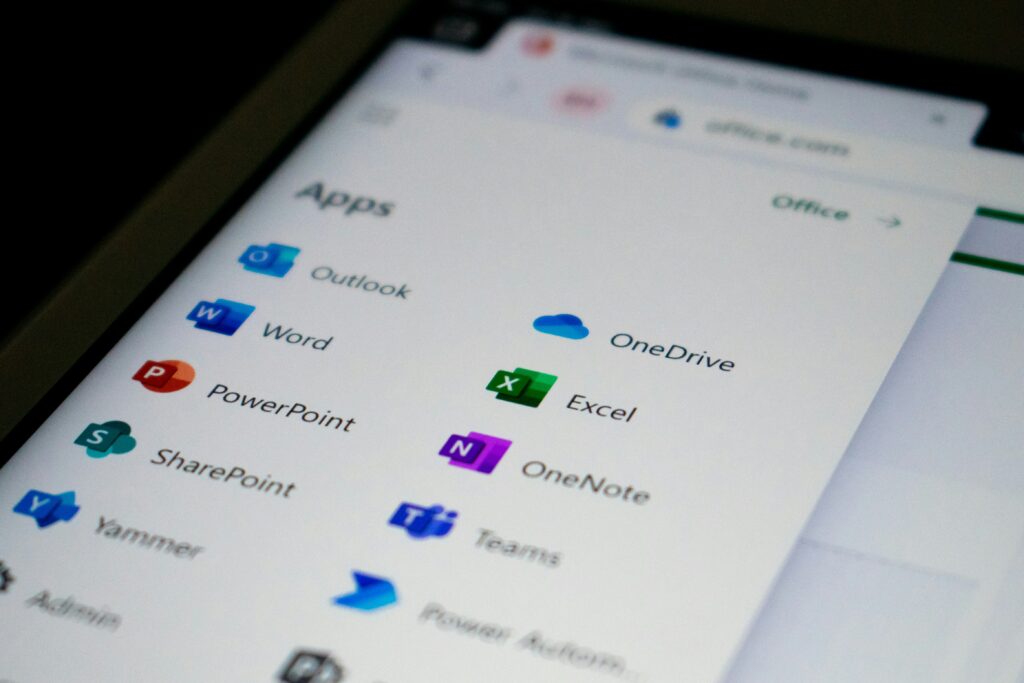
European businesses and government offices struggled with email and other everyday tools on Friday as a global Microsoft outage disrupted services. Germany warned of a substantial impact on companies, putting Europe’s reliance on a handful of technology providers under renewed scrutiny.
The problems had begun on Thursday evening and affected Outlook, Teams, Copilot and other Microsoft 365 services. Microsoft said it had found no evidence of malicious activity, but its initial recovery efforts failed to restore services as expected.
“Email communication with the Ministry of Finance is currently unavailable,” the Czech ministry announced on Friday. Other ministries reported delayed messages and intermittent access to cloud services.
Businesses turn to phones as email fails
European stock exchange operator Euronext asked listed companies to telephone important corporate information on Friday after the Outlook outage disrupted email communication. The request showed how businesses were reverting to alternative channels to keep information flowing.
You might be interested

In the Netherlands, Radboud University warned that several applications were unavailable or working only intermittently. Germany’s digital ministry expected a significant impact on businesses, according to ČTK. However, Deutsche Bahn, Lufthansa and Berlin’s airport reported no significant operational consequences. Commerzbank found workarounds for internal communications, while Deutsche Börse said securities trading remained stable.
Prague Airport similarly reported problems with email, Teams, SharePoint and its intranet, while airport operations and emergency systems continued normally. Its experience illustrated the distinction between disruption to everyday office tools and the separate systems keeping essential services running.
Dependence becomes a practical problem
The outage illustrates the risks behind Europe’s debate about digital independence. When organisations entrust email, calendars and documents to one provider, a single failure can disrupt several parts of their working day.
“One-sided dependencies, regardless of whom they are on, carry risks,” Germany’s digital ministry told WirtschaftsWoche. Green lawmaker Rebecca Lenhard said businesses increasingly described complete dependence on Microsoft Office as a major supply-chain risk.
Some authorities have started changing suppliers. Germany’s Schleswig-Holstein administration has moved towards LibreOffice and Open-Xchange for office work and email. In September, it announced that more than 200 state chancellery staff were using Linux instead of Windows. Around 20 workstations still needed Windows because of technical dependencies, illustrating why switching takes time.
The Commission awarded contracts in April allowing EU institutions and agencies to purchase up to €180m in sovereign cloud services over six years. The initiative predates this outage and aims to give public bodies greater control over their infrastructure. Changing suppliers, however, does not remove the need for backup systems when services fail.