From Iskander missiles to military satellites, the EU is targeting the people behind the technology powering Russia’s war effort.
On Friday, 7 August, the Council of the EU added five Russian nationals who head companies in Russia’s defence and military technology sectors to its sanctions list. Brussels says they support Russia’s military-industrial complex. According to the Council decision, their companies develop, produce or supply military technology and equipment used by Russia’s armed forces in the war against Ukraine.
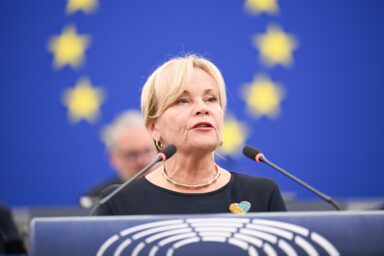
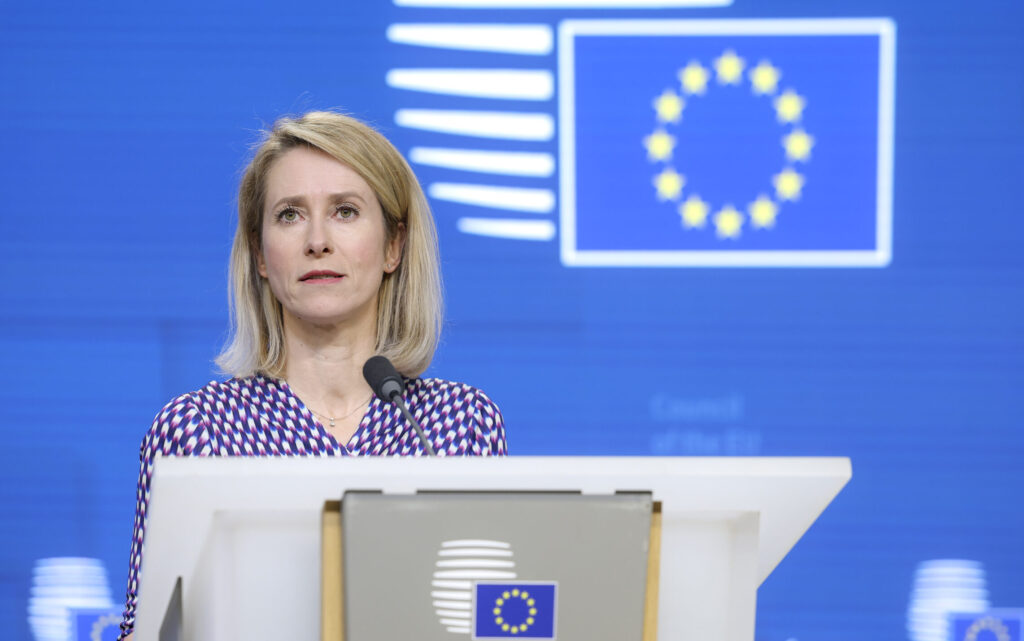
“Each new attack on Ukraine is another reason for Europe to tighten the screws on Russia,” EU foreign policy chief Kaja Kallas wrote on X. “With its army stalled on the battlefield, Moscow is further escalating its campaign of terror against civilians. The EU must continue to intensify pressure on Russia until Moscow ends its war.”
The sanctioned executives include the heads of companies making components for ballistic missiles, communications and navigation systems, software and drones, as well as technology for Russia’s military space programme.
From Iskander to Sarmat: Who made the list?
The EU sees the strongest direct link to Russian weaponry in the case of Ramil Nailevich Badgutdinov, CEO of Serpukhov Plant Metallist. The company makes precision electromechanical components, gyromotors and sensors, among other products. According to the EU, it also helps produce the navigation system for the 9M723 Iskander-M missile.
The Iskander-M is one of the Russian ballistic missiles used in the war against Ukraine. The EU therefore says Badgutdinov materially supports Russia’s military-industrial complex through his position at the company.
Also on the list is Aleksandr Yurevich Dyukarev, CEO of Krasnoyarsk Machine-Building Plant. The company makes ballistic missiles and components for launch vehicles. According to the EU, it also produces the RS-28 Sarmat, Russia’s intercontinental ballistic missile.
Another sanctioned executive is Sergey Aleksandrovich Bashkov, director of Irz-Svyaz. The company makes communications systems and navigation receivers and holds licences to manufacture and repair military equipment.
According to the EU, its products are used in Russian Orlan-10 and Tachion drones, among others. The company also supplies components to other businesses in Russia’s military-industrial complex, including a company linked to the production of Iskander-M missiles.
The fourth name is Sergey Nikolaevich Bessonov, CEO of AEROMAKS. The company develops drone software and makes several types of helicopter-style drones. According to the EU decision, it also develops technology for air and space operations and has previously secured a number of state contracts.
And the last but not least: Viktor Evgenevich Ivanov, head of the Research Institute of Precision Instruments, part of Russia’s state-owned Roscosmos corporation. The institute supplies specialised equipment and services to Russia’s Defence Ministry and works on space projects. According to the EU, it is involved in the Kasatka-R satellite system, which uses radar imaging to gather detailed information about terrain and objects.
What do the sanctions mean?
Being placed on the EU sanctions list comes with concrete consequences for all five men. Their assets and economic resources in the EU are frozen. EU individuals and companies are also barred from providing them with funds or other economic resources, either directly or indirectly.
They are also subject to an EU travel ban, which prevents them from entering or transiting through EU territory.
The new measure took effect when the decision was published in the EU’s Official Journal on 7 August. It is not a standalone new package of Russia sanctions. Instead, the Council has expanded an existing list under a sanctions regime first created in 2014, in response to Russia’s actions against Ukraine.
The EU adopted its latest, 21st sanctions package on 23 July.
Over 6,000 people and entities under sanctions
The EU sanctions regime has grown significantly since Russia launched its full-scale invasion of Ukraine in 2022. It now covers more than 6,000 individuals and entities.
The list includes Russian politicians, military officials, businesspeople and propagandists. The EU also targets companies in the defence, energy, transport and technology sectors, as well as businesses involved in drone production and sanctions evasion.
The wider pressure campaign also includes measures targeting Russia’s financial and energy sectors, alongside export restrictions on technologies that could strengthen Russia’s defence capabilities.
The EU has also blocked around €210 billion in assets belonging to Russia’s central bank within the bloc. It uses the proceeds generated by those assets to support Ukraine.
The latest decision follows the European Council’s conclusions of 18 and 19 June. EU leaders condemned the escalation of Russian attacks, including large-scale missile and drone strikes against civilians and civilian infrastructure.
The European Council also called for further pressure on Russia through new sanctions.