Ireland’s Council presidency has placed its own climate record under scrutiny as it attempts to broker agreement on contested EU environmental legislation. Lawmakers questioned whether a country with a rapidly expanding, energy-intensive data-centre industry could credibly push others to meet their commitments.
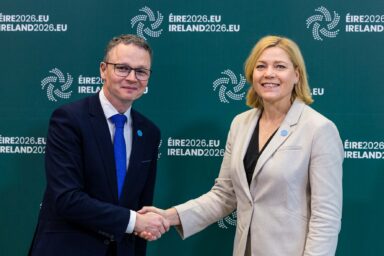
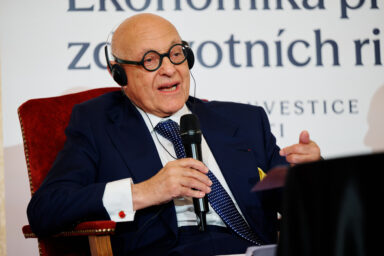
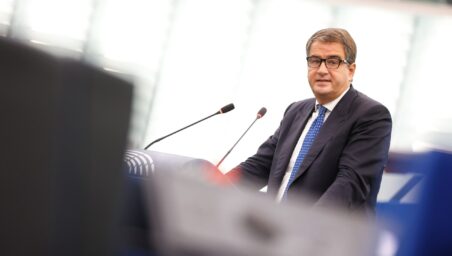
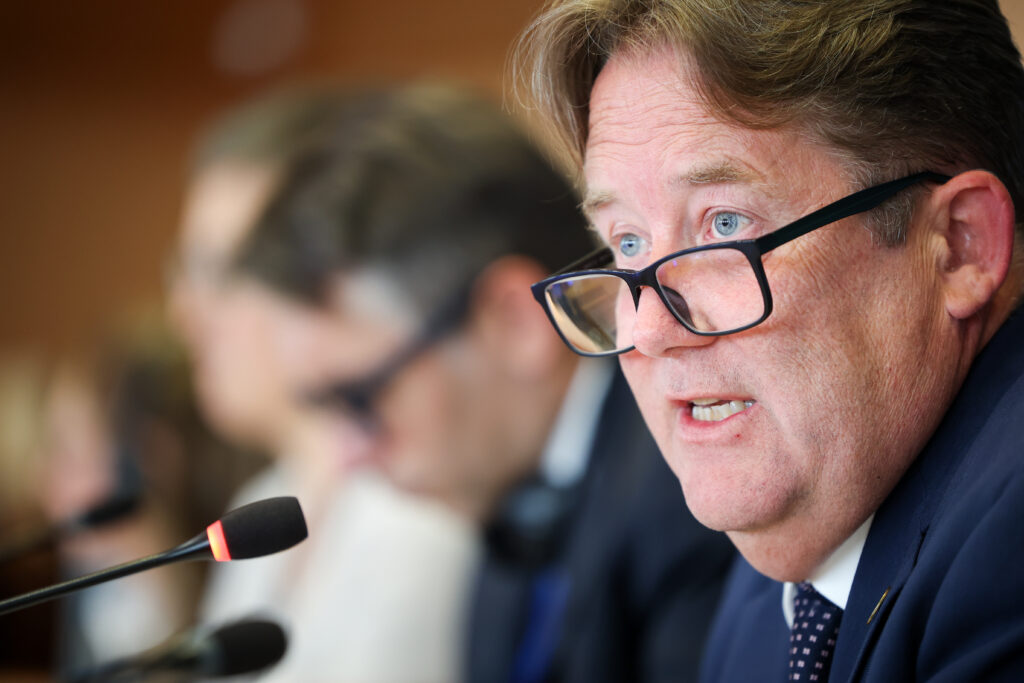
Presenting Ireland’s presidency priorities to the European Parliament’s Environment Committee on Tuesday, Climate Minister Darragh O’Brien faced an immediate challenge over that role. MEP Lynn Boylan (The Left/IRL) asked whether Ireland could be considered an “honest broker” while data centres were placing growing pressure on its electricity network and contributed to higher costs. Tiemo Wölken (S&D/DEU) questioned how it could press other countries to meet their climate commitments when it remained off track itself.
Mr O’Brien argued that strengthening Europe’s electricity infrastructure was essential to accommodate rising demand while reducing dependence on imported energy. “Grid packages are absolutely critical because, for Europe’s own energy security, we need to make sure we have resilient grids,” he told EU Perspectives.
ICT is at the forefront of driving the Irish economy forward. — Darragh O’Brien, Climate Minister of Ireland
Data centres consumed 23 per cent of Ireland’s metered electricity in 2025, up from five per cent a decade earlier. Their consumption increased by ten per cent in a single year, while demand from all other users grew by two per cent. Ireland’s Environmental Protection Agency also expects existing and planned policies to deliver an emissions reduction of no more than 25 per cent by 2030, only half the country’s legally established target of 51 per cent.
O’Brien defends technology sector
Mr O’Brien rejected the suggestion that Ireland’s reliance on data centres undermined its ability to lead negotiations. He argued that European economies used electricity in different ways and that Ireland did not have the large manufacturing or automotive industries found in some other member states.
“ICT (information and communication technology) is at the forefront of driving the Irish economy forward,” he said, putting employment across the wider sector at approximately 200,000. “What we need to do is manage the distribution of energy across all our energy users.”
Under Ireland’s new connection policy, future data centres must meet at least 80 per cent of their annual electricity demand through additional renewable-energy projects. Companies have six years to meet the requirement.
Mr O’Brien said Europe needed to expand its electricity grids and renewable generation quickly enough to accommodate data centres, artificial intelligence and the wider electrification of transport and industry. Closing Europe’s doors to new technologies would also carry economic and strategic costs, he argued.
Climate and competitiveness divide MEPs
The exchange exposed broader divisions over the direction of EU environmental policy. Centre-right and conservative MEPs pressed Mr O’Brien on regulatory costs, industrial job losses and whether climate targets should allow greater technological flexibility.
Peter Liese (EPP/DEU) asked whether the Commission’s proposals would be treated only as a starting point for negotiations. Other MEPs pointed to pressure on the automotive sector and argued that environmental regulation was pushing production and employment outside Europe.
Climate change is the most important issue in the world, ever, and we have to do everything we can to stop it. — Darragh O’Brien, Climate Minister of Ireland
MEPs from the left and centre-left instead highlighted deaths associated with heatwaves and air pollution, the costs of extreme weather and the continued use of fossil fuels. They urged Ireland to resist a wider slowdown in European climate action.
Mr O’Brien said industrial competitiveness and decarbonisation were not conflicting objectives. He described EU carbon-dioxide standards for cars and vans as a fundamental part of climate policy but acknowledged the pressure facing manufacturers. “We are not deaf to it,” he said, adding that Ireland would seek a balanced agreement capable of protecting industrial employment while maintaining Europe’s decarbonisation trajectory.
Presidency faces difficult negotiations
Ireland holds the rotating Council presidency until the end of December. It must represent member states in negotiations with Parliament while attempting to build compromises among governments with sharply different energy systems and industrial interests.
Mr O’Brien identified the revision of the EU Emissions Trading System, carbon-dioxide rules for cars and vans, electrification, water resilience and a new climate-risk framework among the presidency’s priorities. Ireland will also coordinate the EU’s preparations for COP31.
He said the presidency would act as an honest broker in the forthcoming negotiations and acknowledged that some conflicts were unavoidable. “Climate change is the most important issue in the world, ever, and we have to do everything we can to stop it,” he said.
The debate over Ireland’s data centres illustrates the difficulty behind that promise. The presidency must reconcile economic growth and rising electricity demand with environmental commitments, not only among 27 different member states, but within Ireland itself.