The concept of aerial dominance across the entire battlefield, for as long as needed, has been around since 1943. But it makes little sense now, says Lieutenant General Rolf Folland, Norway’s military representative to NATO.
Western air forces have planned for command of the skies for the past 80 years, and refined it since Desert Storm in 1991. Times, however, have changed. “The model of such air superiority is challenged now,” General Folland said.
Mr Folland was speaking on Monday at the Warsaw Security Forum, in a panel on the future of air power. Four other speakers joined him: a Polish general and executives from Airbus, Pratt & Whitney, and Lockheed Martin. All five spoke about the same problem.
The Norwegian general said planners should ask a different set of questions. Which geography? Which layers? When, and for how long? Air forces must repeat the effect again and again. “So we can’t just use all our ammunitions in one blast,” he said. NATO, he added, is heading in the right direction, notably in its integrated air and missile defence.
Major General Ireneusz Nowak, Poland’s operational commander, described the pressure at the front. Air defence takes 80 per cent of his attention. Land and sea are stable and predictable. In the air, he has seconds to react. “So actually we scramble fighters every night,” said Mr Nowak.
Poland’s gaps
Poland’s integrated air defence is only about 30 per cent complete, he said. The new systems will be ready in three or four years. He called that a period of vulnerability. On 30 July, an AS-23 Kodiak cruise missile flew in Polish airspace for about six minutes. He said it was deliberate, with a carefully picked impact point.
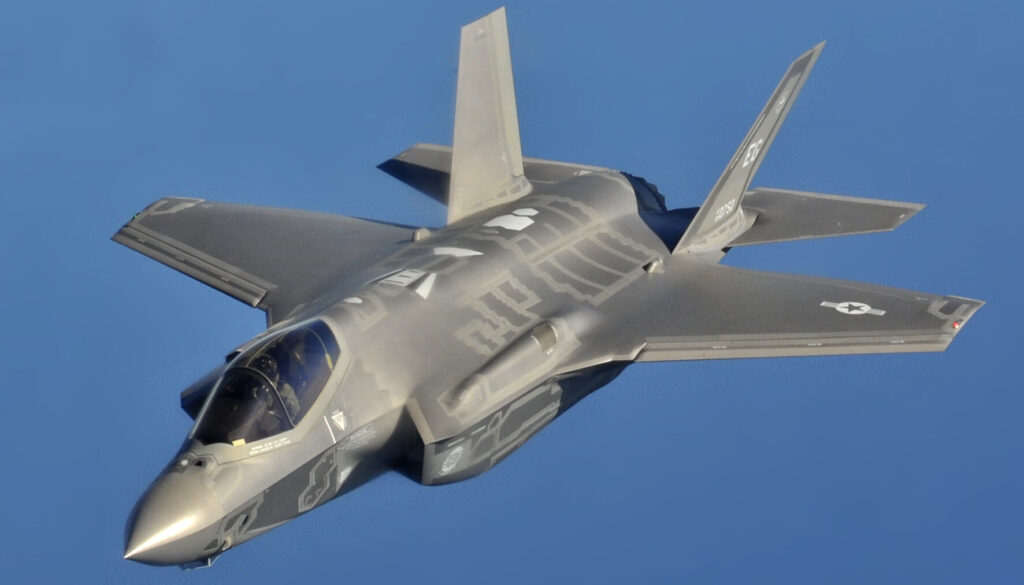
Poland is not waiting, said General Nowak. It will put its F-35s on alert duty before they reach full capability. The country is moving ground-based air defences eastward. It has also adopted positive identification procedures for its fighters. Prohibited airspace for civilian traffic will be published.
Parts is always the easy thing to cut from the budget when you’ve got a lot of other needs. — Steve Shepro, Vice-President, Pratt & Whitney
He praised NATO’s response. After the Ankara summit, a new standing defence plan lets NATO’s air commander move assets more flexibly. General Nowak said he can call on Swedish or Czech fighters. He then turned on industry and his own side. Lead times are too long, he said, and peacetime acquisition rules hurt. “This is not peacetime anymore,” he said.
A cheap anti-drone rocket shows the problem. The integration with Poland’s F-16s is done, he said, but Poland cannot get the fuses because of business restrictions. It expected the system six months ago. Patriot missile deliveries will also slip. The Korean FA-50 may become a good drone hunter, but only in about two years. “I wish I had more. I wish I had more and quicker,” he said.
Engines, parts, and a shared jet
Johan Pelissier, Airbus’s president for Europe, turned to the enablers that Europe lacks. Europe builds tankers and airlifters, he said, but not enough of them. He said Airbus now produces 800 or 900 commercial aircraft a year, which nobody expected 20 years ago. “So if we have a scale, if we have joint procurement coming up, we will be in a position to deliver whatever we need for European nations and our allies,” he said.
Mr Pelissier praised the pooled tanker fleet, which lets small nations share aircraft. The Ankara summit announced the same idea for tactical and strategic airlifters, in a multinational asset force. He also backed local control. Of funding from the EU’s Security Action for Europe (SAFE) loan scheme, he said 85 or 90 per cent of Polish procurement builds the Polish ecosystem. “You are becoming the master of your platform when possible,” he said.
Steve Shepro, vice-president for integrated customer solutions at Pratt & Whitney, RTX, is a former fighter pilot. Today, he said, the F-35 engine must exceed 96 per cent readiness. Tomorrow, the fight will depend on electrical power. Advanced sensors and weapons need more kilowatts. An engine core upgrade at overhaul will supply them.
The F-35, practically European
Mr Shepro said sustainment decides the fight. Pilots must go out, return, and go out again. “You just can’t launch a sortie of planes and have them punch once,” he said. Governments must pay for spare parts. “Parts is always the easy thing to cut from the budget when you’ve got a lot of other needs,” he said. RTX has more than 9,000 employees in Poland.
He said drone makers now ask for engines fast. Pratt & Whitney is turning business jet engines of 3,000 to 6,000 pounds of thrust into military versions. They push up the throttle. They last less long but give more thrust. He wants industry invited to every joint exercise, so it can discuss capabilities, not products.
If we have a scale, joint procurement coming up, we will be in a position to deliver whatever we need for European nations and our allies. — Johan Pelissier, President of Region Europe, Airbus
Rob Wilkerson, director of global pursuits, strategy and business development Europe at Lockheed Martin Aeronautics, said the F-35 is already European. About 25 per cent of it is built there. A forward fuselage comes from Finland, a centre from Germany, an aft from Britain, and a wing from Italy. Repairs happen at regional depots in Europe. Finland has assembled its first F135 engine.
One tool is never enough
Asked about suppressing enemy air defences, Mr Wilkerson refused a single answer. The F-35 has some inherent capability, he said, and other aircraft help. A force needs sensors, a kill chain, and both kinetic and non-kinetic options. “There’s not one thing that’s going to solve everybody’s problems,” he said.
His main appeal was for interoperability. Solving real gaps in the generals’ war plans matters more than talk of integration, he said. Industry must also focus on availability and maintenance. High readiness rates give allies a strategic deterrent. “We want to deter,” said Mr Wilkerson.
The Norwegian strategist agreed that Europe needs a mix of tools. Allies must also stop thinking about platforms. “It’s a mix of affordable mass and high end capabilities,” he said. Since the Cold War, he said, Europe has underinvested in electronic warfare, anti-radiation missiles, and decoys. Russia, he added, synchronises its fires poorly. NATO should not.
Contracts, bureaucracy, and trust
He also asked allies to specialise. Not everyone should buy the same capabilities, he said, especially under NATO 3.0. That may test national sovereignty. On drones, Mr Pelissier said Europe has not invested enough. Airbus announced a partnership with Kratos on the Valkyrie and is testing Ukrainian counter-drone systems. General Nowak said unmanned aircraft are the future. For Poland, he said, there is no choice.
Industry wants long contracts, and governments still debate them. General Folland said governments should offer more of them. Mr Pelissier noted that SAFE requires delivery by 2030, even for long-lead assets. Planning must stretch further, he said. Airbus already supports commercial aircraft for 10, 15, or 20 years. He asked why armaments should differ.
There’s not one thing that’s going to solve everybody’s problems [in suppressing enemy air defences]. — Rob Wilkerson, Director of Global Pursuits Europe, Lockheed Martin Aeronautics
General Folland said industry and the military must be closer partners. Russia targets Ukrainian factories every day, so producers have a stake. Ukraine first changed its bureaucratic acquisition rules, he said, and Europe could start there. General Nowak was less hopeful about exercises. His air force is fully engaged, he said, with no capacity to spare.