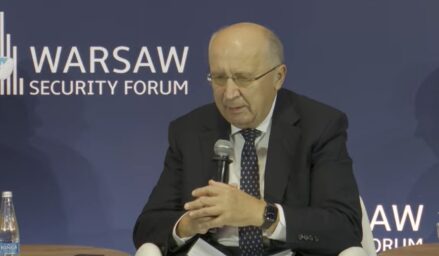
Temporary asylum restrictions risk becoming the new normal, warns Mariana Gkliati, an asylum law expert at Tilburg University. In an interview with EU Perspectives, she explains how expanding emergency powers could undermine one of Europe’s fundamental rights.
The European Commission has proposed allowing member states to temporarily suspend access to asylum in situations of “exceptional” arrivals. The proposal follows pressure from several countries, particularly Greece, after the Ceuta migration crisis.
Coming only months after the EU Pact on Migration and Asylum entered into force, the move reignites concerns over the future of international protection in Europe. Could the asylum becoming a conditional right?
Dr Mariana Gkliati, Assistant Professor of Asylum and Migration Law at Tilburg University, warns that temporary restrictions could become permanent tools of border control.
Are we witnessing a fundamental shift in how the EU treats the right to asylum? Is it moving from being a basic human right to something that can be suspended whenever there is political or migratory pressures?
We are certainly witnessing an attempt towards such a shift, but I would like to add two important nuances. First of all, such shifts in law do not simply happen because politics so decided. The right to asylum and the right not be sent back to a country where you face grave danger are among the most important rights safeguarded in numerous international treaties.
I read the statements of the Dutch Migration Minister Bart van den Brink. I need to stress that this is not a matter of choice. In the EU, border management must always comply with fundamental rights.
Second, I would also be hesitant to describe what we are experiencing now as a shift. It is rather the continuation and intensification of a securitisation trend that has characterised EU migration policy for the past four decades.
For years migration is being framed as a security threat, a narrative deliberately engineered to justify exceptional responses and levels of violence that would otherwise be difficult to defend in a democratic society governed by the rule of law.
This politics of fear shifts the focus away from the individual seeking protection towards the citizen that needs to be protected against the perceived threat.
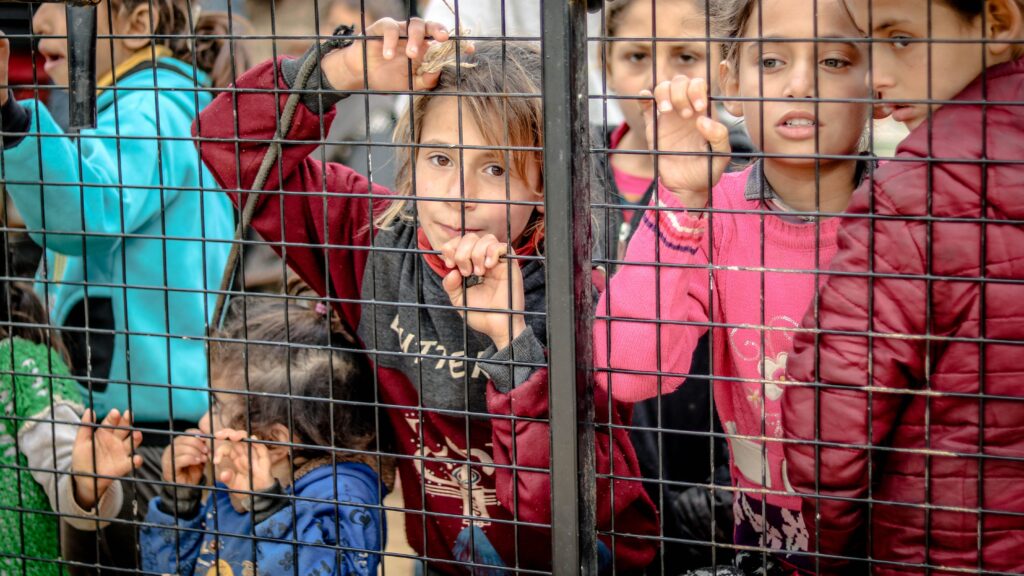
It dehumanises migrants by reducing them to instruments of geopolitical conflict instead of seeing them as people with rights and potential to contribute in their host countries.
With such intense and continuous focus on “emergencies”, the danger is that asylum gradually becomes conditional on the political circumstances. The right itself may formally remain in place, but its practical exercise is restricted whenever states declare an emergency. That would represent a profound change in the way the EU understands its own fundamental rights commitments.
We saw that with the unilateral suspension of asylum registrations by Greece in 2020 and with the Crisis Regulation: it provides considerable scope for derogations while failing to establish sufficiently robust safeguards for people seeking protection.
It risks allowing states to close borders to asylum seekers, obstruct the registration of asylum claims, restrict judicial remedies and accelerate returns without adequately examining individual protection needs.
What are the risks of creating legal precedents that allow member states to derogate from fundamental protections?
The principal risk is that emergency measures create a permanent state of exception, that the exception becomes the rule. We have seen how arguments about exceptional circumstances, hybrid threats and the instrumentalisation of migrants are increasingly used to present severe border restrictions as a necessary and unavoidable response to a disproportionate threat to national security.
The concern is not simply that exceptional measures might be used in a crisis. It is that legislation could legitimise practices that have already taken place at the EU’s external borders, including systematic pushbacks, and make them part of the ordinary EU migration governance.
The result is a gradual transformation of the governance of the EU’s external borders, in which practices that would once have been considered unacceptable become increasingly normalised.
The danger is the creation of a new normal in which extreme border violence becomes an accepted instrument of migration control, undermining the protection of human rights, refugee rights and the rule of law. Preventing this requires much more than assurances that emergency measures will be temporary.
What mechanisms could realistically prevent temporary exceptions from becoming permanent features of the European asylum system?
Firstly, we need clear definitions, objective criteria and strict procedural safeguards governing when exceptional measures may be invoked. Governments should not be able to trigger derogations simply by declaring a situation an emergency or describing the movement of people as a security threat. The circumstances must be genuinely exceptional, subject to independent scrutiny and effective judicial review.
Let us not forget that 2/3 of the world’s refugees are hosted close to their region, by some of the poorest countries in Asia and Africa. Europe only receives a very small number of people in comparison.
We also need to be much more precise about what constitutes an unexpected situation. Large movements of people across the Mediterranean during the summer months, when weather conditions facilitate crossings, are not inherently unforeseeable. Nor can the arrival of people fleeing a major international conflict automatically be treated as an unexpected threat.
The displacement caused by the war in Syria in 2015, for example, should have prompted a coordinated protection response rather than a presumption that the arrival of people seeking safety was itself a security emergency.
Secondly, exceptions also have limits. One important limit is proportionality. Even where a genuine security concern exists, the response must be proportionate to the circumstances.
More importantly, there are some fundamental rights that do not allow for exceptions or derogations. Central among them are the right to asylum and the right to non-refoulement. We need to remember that we are not simply speaking of administrative measures. This is about making decisions over who lives and who dies.
Finally, in a European Union that remains faithful to its values, emergencies should not be dealt with by lowering the standards of protection but with solidarity. We need to remember that Greek and Spanish borders are European borders.
If one member state faces particular pressure at its external borders, the answer should include responsibility-sharing and practical support from other member states, including swift relocation. Let us not forget how effectively the Ukrainian refugee crisis was handled with coordinated action and the activation of the Temporary Protection Directive.