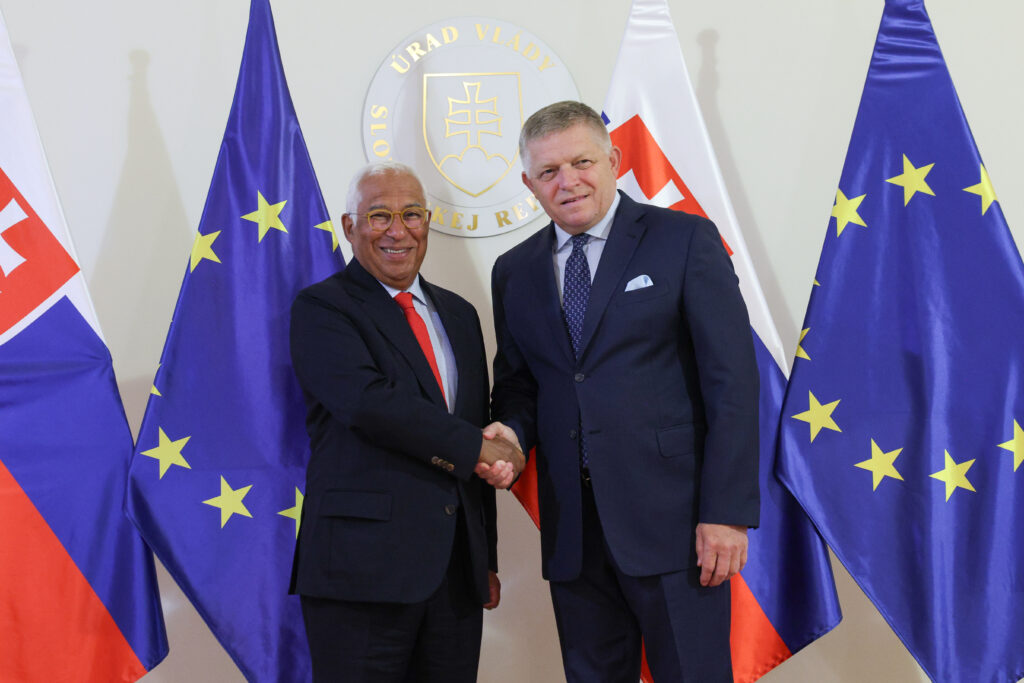
Robert Fico backed António Costa on one thing today: the clock is ticking on the EU’s next long-term budget. On enlargement, though, the Slovak PM drew a hard line, insisting Ukraine cannot “leapfrog” Montenegro in the queue for EU membership. The remark sits awkwardly next to a promise he made to Volodymyr Zelenskyy just months ago.
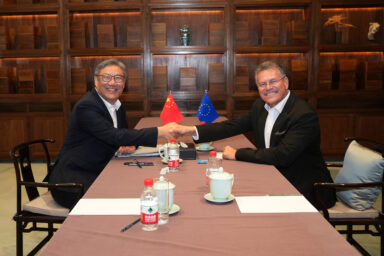
Mr Costa’s first stop, in Bratislava on 25 August, produced quick agreement on one point and a pointed disagreement on another. Both leaders said a deal on the EU’s next long-term budget must be reached by the end of the year, or risk disrupting funding to farmers, businesses, students, and researchers from 2028 onwards. In Slovakia alone, EU money funds close to 80 per cent of public investment in roads, schools, and farming support, one Slovak MEP has noted. “Without EU funds, Slovakia would fall to its knees, no matter which government is in power,” she said earlier this year.
“A budget is not just about numbers,” Mr Costa said afterwards, calling it the “ultimate political choice” about the kind of Europe the bloc wants to build.
On enlargement, the tone shifted. Mr Fico said his government backs any country wishing to join the EU, so long as it meets every condition without exception, Ukraine included. “Ukraine cannot leapfrog Montenegro in the accession process,” he said, adding that he was ready to share Slovakia’s own experience of the process.
A pledge with a strict condition attached
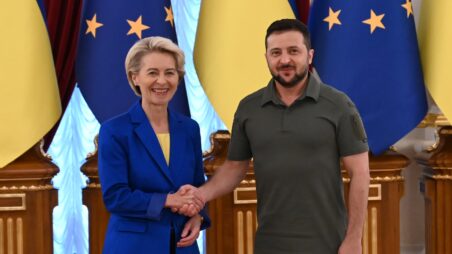
In May, Mr Fico told Ukrainian President Volodymyr Zelenskyy by phone that Slovakia supported Ukraine’s aspiration to join the EU. He would share its own accession experience, according to Mr Zelenskyy. The two agreed to visit each other’s capitals. Tuesday’s remarks do not contradict that. They attach a condition to it. Ukraine can proceed, Mr Fico is saying, but not ahead of countries such as Montenegro that have been queuing longer.
Mr Costa, for his part, has staked much of his mandate on enlargement. He opened his term with a visit to Ukraine. He has also suggested Montenegro could become the bloc’s 28th member by 2028. In his own remarks in Bratislava, he thanked Mr Fico for Slovakia’s “steadfast support” for enlargement. He said candidates should be treated on merit and “respected equally”, a gentler framing than Mr Fico’s own. Montenegro’s president, Jakov Milatović, happened to be visiting Slovakia the same day. He met Slovak President Peter Pellegrini, who said Podgorica’s accession would send “a strong signal” to the wider region.
Beyond Bratislava, Mr Costa faces a wider standoff. According to a senior EU official, the budget negotiations boil down to a “trilemma”. There is the overall size of the package, the level of national contributions, and proposed new EU-wide taxes to fund it directly. All three, the official said, are connected. Reasonable compromises will be needed on each.
On one side sit the so-called “Friends of Cohesion”. This is a coalition of 17 countries, including the first five capitals on Mr Costa’s itinerary. They want to protect funding for agriculture and cohesion. On the other stand wealthier “frugal” states, led informally by Germany. Chancellor Friedrich Merz called the Commission’s opening budget bid “not acceptable” last month. He is hosting a lunch for like-minded leaders on Thursday. The gap between the two camps is wide. Sweden wants a 20 per cent cut to the overall budget. Spain, meanwhile, has floated jointly issued EU debt to help pay for it.
Racing the 2027 elections
The urgency is deliberate. Mr Costa fears that without an agreement this year, national elections due in France, Italy, Poland, and Spain in 2027 will hijack the debate. Progress could stall. That single concern explains a self-imposed deadline. Some diplomats privately doubt he can meet it.
Ukraine cannot leapfrog Montenegro in the accession process. — Robert Fico, Prime Minister of Slovakia
The Commission insists there is no fallback plan. It says it remains focused on meeting the year-end target. It points to preliminary technical agreements on smaller parts of the package as evidence of progress. Other diplomats are less convinced. Persuading capitals to hand Brussels hundreds of billions of euros within four months would be a considerable feat, they note, even in calmer times.
For Mr Fico, at least, Tuesday’s meeting produced no ambiguity. He backed Mr Costa’s deadline without hesitation. On the order in which candidates should join, he left no room for compromise.