Moldova’s union with Romania is back on the table, but it would put Russian soldiers right in both EU and NATO territory. Not everybody is ready, not least the Moldovans themselves.
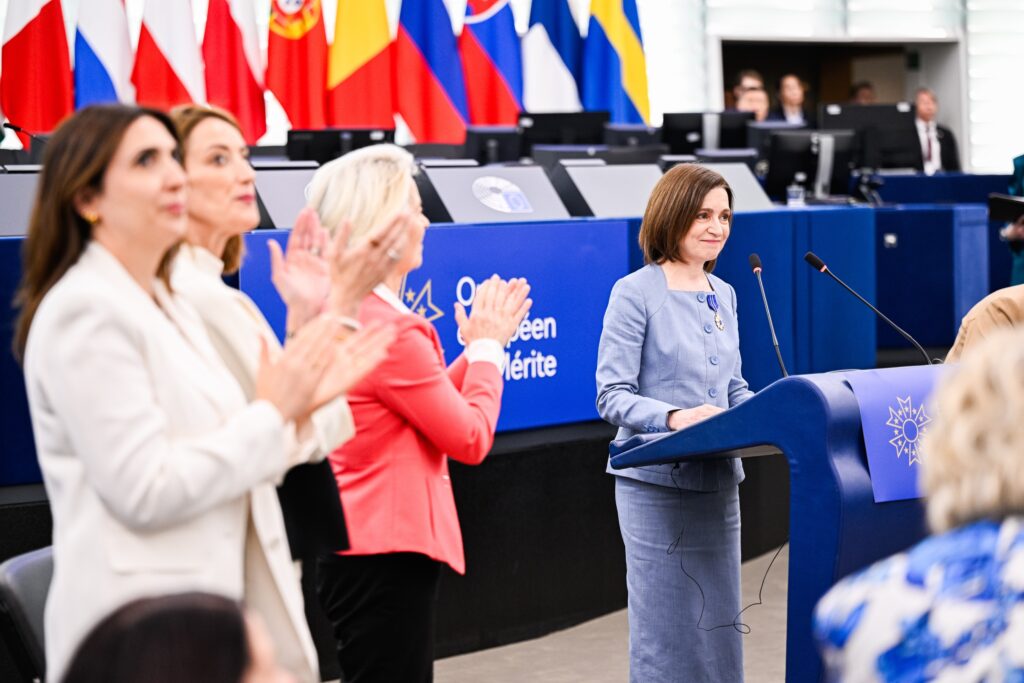
The idea returned to the table after Moldovan President Maia Sandu said in this past January that she would vote for unification if a referendum were held. She framed it as a way to strengthen Moldova’s fragile democracy against Russian influence. Romania’s side has also moved the topic into daylight, with a tacitly adopted bill in the Chamber of Deputies calling for “urgent” negotiations with Chișinău.
That does not make union imminent. It does show that the debate now sits inside a broader strategic frame: Moldova’s vulnerability, Romania’s role as kin-state and EU member, and the institutional pull of accession. Ms Sandu still called EU accession the priority; Romanian President Nicușor Dan said “As far as unification is concerned, we are not there yet.”
No longer fringe
Denis Cenusa, a fellow at the Center for European Policy Analysis (CEPA), argues that the timing of Ms Sandu’s remarks was deliberate. “It is very likely that Chișinău is signalling to Bucharest and Brussels that all options are on the table,” he wrote. The statement came during an interview with British journalists, aimed at an international audience, not a domestic one. That choice of platform matters.
For the EU, the distinction between union and accession matters enormously. Moldova is already in accession talks, and those talks now cover the legal and security fields that would matter most in any unification scenario. The EU and Moldova opened negotiations on the fundamentals cluster in June 2026 and on external relations in July 2026. Chapter 31 of the acquis explicitly covers foreign, security, and defence policy.
The strongest security case for union comes from Russia’s war against Ukraine and the pressure that war puts on Moldova. The CEPA analysis says Russia’s invasion has “intensified the security dimension of the integration question”, while Moldova remains exposed through Transnistria and, to a lesser extent, Gagauzia. The same paper says unification is best understood as one possible end point, not the only route to integration.
That is also why EU law, rather than rhetoric, now shapes the debate. Moldova’s accession path already deepens alignment with the acquis, and the security and defence partnership with the EU adds a formal framework for cooperation. Leaders at the June 2026 EU-Moldova summit discussed “the deepening of security and defence cooperation between the EU and Moldova”, including support for Moldova’s armed forces.
Security, not sentiment
The legal logic is fairly clear. If Moldova converges with EU law while staying sovereign, many of the practical gains of union arrive without the constitutional shock. That is why the European route can weaken the immediate case for reunification, even as it makes the two systems more interoperable. A research paper by Muhammad Ridha Iswardhana of Universitas Teknologi Yogyakarta puts it precisely: “Successful Europeanization can make political union easier to administer while simultaneously making it less necessary as a functional solution.”
The defence content is already visible. The EU has backed Moldova through the European Peace Facility, and the EEAS said the bloc allocated €197m to Moldova between 2021 and 2025 to help modernise its armed forces. Romania has also signalled more direct military help. Romania’s chief of defence said Bucharest would continue to support Moldova militarily and help strengthen its defence capacity.
It is very likely that Chișinău is signalling to Bucharest and Brussels that all options are on the table.
— Denis Cenusa, a fellow at the Center for European Policy Analysis
That is where the EU angle becomes delicate. A union would place Moldova’s unresolved security problems inside the legal and political perimeter of an EU and NATO state, because Romania is both. That would immediately sharpen questions about borders, neutrality, and how to handle Russian forces in Transnistria. Western planners view that prospect with “extreme caution”.
Defence cooperation already points west
The accession track avoids that immediate collision. It lets Brussels support Moldova’s resilience through defence partnerships, civil missions, and alignment on sanctions and foreign-policy positions. Moldova signed a security and defence partnership with the EU in 2024, creating a formal channel for cooperation that stops well short of full alliance membership. That partnership is now being deepened through the accession process itself. Romania, for its part, has announced plans to deepen defence cooperation with Moldova further, including through joint exercises and equipment transfers.
The EU’s defence legislation adds another layer. The military mobility package, the defence procurement directive, and the European Defence Projects of Common Interest framework are all designed to make European defence more integrated and more capable. Moldova’s alignment with those frameworks, even as a candidate state, would bring it closer to the EU’s collective defence posture without requiring a constitutional merger.
The first friction point is public consent. The CEPA paper says only about 29 per cent of Moldovans support ending Moldovan statehood in favour of joining Romania, although other polls cited in the background material put support higher in 2026, around 38–47 per cent, depending on methodology. The Romanian side is far more favourable, with about 72 per cent support reported in May 2026. That asymmetry matters because any union would need a democratic mandate in Moldova, not just enthusiasm in Bucharest.
The real friction points
Mr Iswardhana’s paper delivers the point: “A Moldovan citizen may hold a Romanian passport, work elsewhere in the EU, support Moldova’s EU membership, and still oppose formal reunification”. Dual citizenship, in other words, is not a proxy for political consent. The 2024 constitutional referendum on European integration illustrated the same problem: it passed by only 10,564 votes out of nearly 1.5 million cast. Even the broadly popular European direction was nationally competitive rather than consensual.
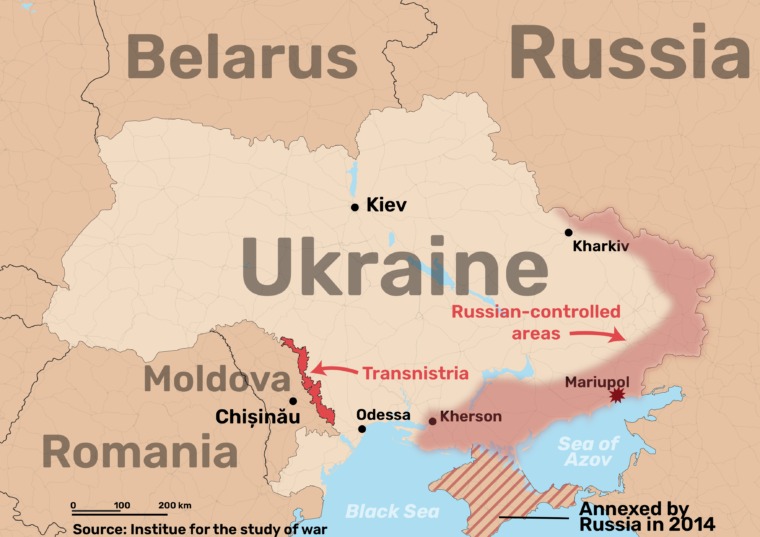
The second friction point is territorial. Transnistria remains the hardest legal and security obstacle. Any unification arrangement would have to address Moldova’s territorial questions, minority autonomy, and international obligations. The background dossier adds that Transnistria and Gagauzia could create Cyprus-style complications if union moved from theory to law.
Gagauzia’s elites, backed by Russian patronage, could trigger legal procedures demanding self-determination if Moldova ceased to exist as a state. That is not a hypothetical: the Gagauz leadership has already used the threat of self-determination as a political lever in previous disputes with Chișinău.
The fiscal quandary
The third friction point is fiscal. Union would not be a symbolic act only. The background dossier estimates convergence costs at roughly US$10bn in early studies, with private estimates much higher at €30–35bn, when infrastructure parity, pensions, and health standards are included. Romania would gain a larger workforce and some demographic relief, but would face major spending obligations in the short and medium term. In EU terms, that means any serious debate would quickly become a debate about cohesion funds, budget discipline, and burden-sharing among member states.
The fourth friction point is timing. Moldova is already moving through accession stages, and the EU has a built-in framework for this. Union talk can complicate that process if it looks like an attempt to leapfrog accession. Yet it can also act as leverage, pushing Brussels to keep Moldova on a fast track.
Successful Europeanization can make political union easier to administer while simultaneously making it less necessary as a functional solution.
— Muhammad Ridha Iswardhana, Universitas Teknologi Yogyakarta
Some European commentary treats union as a strategic Plan B if accession stalls. Mr Cenusa adds a sharper edge: any EU-Russia rapprochement could undermine Chișinău’s foreign policy, which has “almost entirely been based on invoking the very real Russian threat”. If that threat loses its political salience, Moldova needs a new argument for urgency. Union is one.
What Brussels is really watching
Brussels is unlikely to endorse reunification as policy. The CEPA paper says no reaction has followed from Brussels, and the EU still treats this as a bilateral matter. But Brussels will watch the issue closely because the legal consequences would be serious. It would alter the shape of enlargement, the handling of borders, and the treatment of an active security frontier on the EU’s eastern edge.
The Romanian academic community has already moved to formalise the debate. In June 2026, the Romanian Academic Council, meeting in Chișinău at the Academy of Sciences of Moldova, called on the presidents of both countries to examine the prospect of reunification of the Romanian people.
The council proposed a joint strategic commission of experts in history, constitutional and international law, economics, security, public administration, education, culture, and international relations. Its statement also said that possible reunification does not contradict European integration. That is the most revealing line in the whole debate. It shows that union is now being framed less as romance and more as contingency planning.
Urgency, but no roadmap
Russia has not stayed quiet. Moscow frames the union idea as a NATO land-grab. Sergei Shoigu, secretary of the Security Council warned in April 2026 that Russia would “take all necessary steps” to protect its citizens in Transnistria. Russian state media labels Chișinău’s pro-EU leadership “Romanian-fascists” and predicts civil war if unification proceeds. Ms Sandu, for her part, branded the far-right Romanian parliamentary bill a “Kremlin provocation meant to discredit unionism”.
The China-CEE Institute paper by Csongor B. Veress reaches a similar conclusion to CEPA: “Formal union should be treated as a possible long-term constitutional outcome whose legitimacy would have to be demonstrated democratically, not as the organising assumption of present policy.” That is also, in effect, what Brussels favours, even if it has not said so publicly.
As far as unification is concerned, we are not there yet.
— Nicușor Dan, Romania’s president
The practical conclusion is blunt. Moldova’s union with Romania has regained traction because war, enlargement delay, and Russian pressure have made small-state vulnerability impossible to ignore. But the EU’s defence and legal frameworks still point in a different direction: deeper integration first, constitutional union only if and when Moldovans clearly choose it.
The accession process is the instrument Brussels has built for exactly this situation. As things stand, it remains the only one with enough institutional weight to manage the security consequences of whatever comes next.