Ukraine’s €70bn funding gap, the long-term budget, and energy costs remain unresolved as European political bigwigs headed home from a tense summit. Worse is to come.
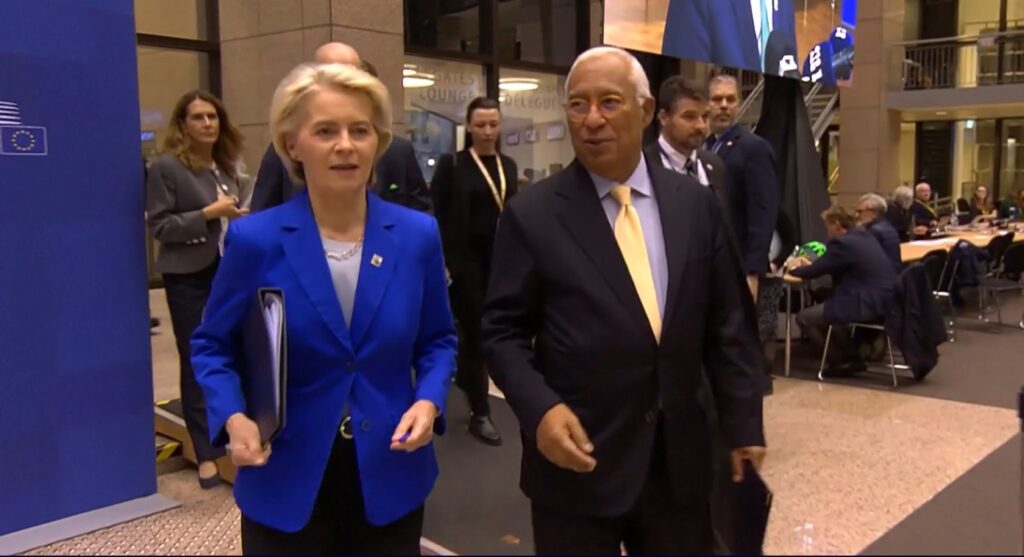
European Council President António Costa and European Commission President Ursula von der Leyen closed a two-day summit in Brussels on Friday evening. Both stressed unity and progress — yet the hardest questions on Ukraine’s funding, the budget, and energy costs stayed open.
Ukraine dominated the agenda and ran through the schedule. Asked why talks took so long, Mr Costa said leaders linked Ukraine to Europe’s own security. He cited attacks in the Black Sea and hybrid threats. “Well, we discussed Ukraine connected with our own security and defence.” Mr Costa added: “And in fact the two issues are interlinked.”
His closing remarks opened on the same theme: “Ukraine remains a central priority for Europe and it was good to have President Zelenskyy around the table.” The Ukrainian president told leaders his country needs another €70bn from Europe next year. The EU has approved a €90bn support loan. Mr Costa said it covers two thirds of Ukraine’s needs, with €45bn due this year and €45bn planned for next.
A €70bn hole in 2027
Leaders spent little time on how to close the gap, Mr Costa said. He went on: “We agreed immediately that we need to address the additional needs of financing Ukraine to 2027.” They asked the Commission for a concrete proposal.
Ms von der Leyen knows that costs will climb. “As long as this war continues, Ukraine’s financing needs will keep growing,” she warned. The EU and its member states already provide 80 per cent of external aid, she said. She wants other partners to step in.
Several leaders—including some who want to mobilise about €300bn of Russian frozen assets—insisted on more aid. The summit gave no sense of where the money would come from. Sweden’s prime minister said nothing had changed on the assets, after Belgium blocked their use last December.
Energy bills bite
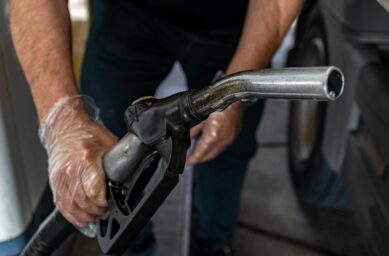
Energy prices weigh on households and industry. Ms von der Leyen said imported fossil fuels have cost €106bn more since the war in the Middle East began. Gas prices have risen about 140 per cent since late February, she said, and diesel prices have doubled. Mr Costa said leaders agreed a coordinated European response with short-term measures. “Given the urgency of the situation, there cannot be business as usual.”
This (Irish presidency budget) proposal puts us in kind of a straitjacket. — Ursula von der Leyen, European Commission president
Ms von der Leyen listed five steps. They include releasing 100 million barrels of oil and diesel over four months, extending the state aid framework, and delaying the methane regulation by one year. A refinery dialogue and a stronger task force that buys energy on global markets complete the list.
“We know there is no silver bullet as a solution,” the Commission president conceded when it came to energy disputes. The Visegrád-four group and Italy tried on the first day to water down the emissions-trading scheme. Its camp grew to 16 members, but it failed to sway the rest of the pack.
Speaking as one on China
Both presidents stressed unity on trade. Mr Costa, however, played his cards close to the chest: “And our discussion yesterday demonstrated total unity among the member states.” He said leaders back the Commission as the EU’s trade negotiator and want it to strengthen the bloc’s defensive trade tools.
Ms von der Leyen put the same emphasis on one word. “We all agree that China is an important trade partner for the European Union.” She wants a partnership that is fair, balanced, and mutually beneficial. The imbalance troubles her. The EU’s trade deficit with China was €1bn a day in 2025, she said, and 2026 will be worse. “And we all agree that it cannot go on like this.”
Dialogue has produced China’s first agreement to moderate its exports of hybrid vehicles. Ms von der Leyen said that cannot fix a structural problem. In December, the Commission will present an instrument called Diversify EU, plus a solidarity mechanism for countries facing coercion.
A fight over the budget
Ms von der Leyen also attacked the latest negotiating proposal on the long-term budget. She said it cuts flexibilities by 50 per cent compared with today. The Commission’s own proposal was €159bn larger. “This proposal puts us in kind of a straitjacket,” she commented dryly.
Her case rests on experience. “I could only act in these crises because of the flexibilities in the budget.” She cited Covid-19, fires, floods, droughts, the energy crisis, and the war in Ukraine.
We agreed immediately that we need to address the additional needs of financing Ukraine to 2027. — António Costa, European Council president
Mr Costa wants a deal by the end of the year, so the new budget can start on 1 January 2028. Asked whether pushing a deal before elections was undemocratic, he dismissed the idea. “There is nothing about elections. Because we are living in 27 democracies, more or less every month we have one election. Then if it is about elections, we never could approve a new budget,” he deflected the debating point skillfully.
Migration drew a more positive tone. Mr Costa said: “Our system based on the pact for asylum and migration is working.” Ms von der Leyen said illegal border crossings fell by over 56 per cent in two years, and by 34 per cent in the first nine months of this year.
The next round
She confirmed the Commission will propose an emergency response framework before the end of the year. It would help countries handle sudden mass movements of people, such as the one that caused chaos in the Spanish exclave of Ceuta over the summer.
“We will always uphold our values and fundamental rights, but we will never compromise on protecting our borders,” the Commission president resorted to a safe line. Asked about a request from Denmark’s prime minister, she answered without addressing it directly. “Decisions to regularise irregular migrants are a national competence.”
So what’s next? If you cannot wait for another uplifting experience of this caliber, please be informed that the leaders will meet twice next month, in Dublin and Brussels, to try again. Hold on to your hats.