Europe risks losing further ground to the US and China in clinical research unless it makes trials faster and easier to run. But improving regulatory timelines will need to go hand in hand with investment in hospitals, better coordination and stronger patient involvement.
The proposed European Biotech Act offers an opportunity to address some of the barriers facing clinical trials in the EU, from fragmented approval procedures to administrative burdens. But participants of a roundtable in the European Parliament cautioned that shortening deadlines on paper will not automatically translate into faster access to innovative treatments.
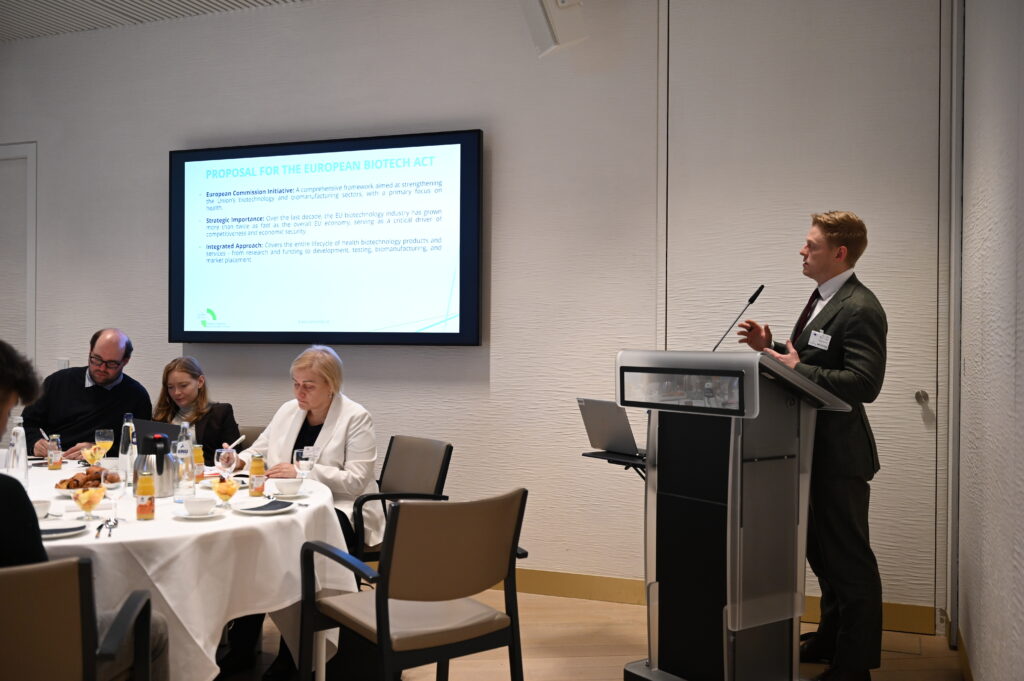
“Clinical trials are a fundamental part of pharmaceutical innovation. They are essential not only for developing new treatments, but also for ensuring that European patients can participate in research and benefit from medical advances,” said MEP Ondřej Krutílek (ECR/CZE), who hosted the discussion together with the Czech Association of the Innovative Pharmaceutical Industry (AIFP).
Europe has been losing ground in the global competition for clinical research, particularly to China. According to data presented by the association’s executive director David Kolář, the EU’s share of global clinical trials has declined. Meanwhile, China has significantly increased its presence. The shift is particularly pronounced in advanced therapy medicinal products (ATMPs), where China now accounts for almost half of new clinical trials, compared with less than ten per cent in Europe, he said.
You might be interested

From the pharmaceutical industry perspective, what is the most important aspect for deciding where clinical trials will be carried out? It’s mainly the speed, the number of patients and the simplification of the processes.
— David Kolář, Executive Director, Association of the Innovative Pharmaceutical Industry
For Mr Kolář, the problem is not a lack of scientific expertise but Europe’s difficulty in translating research into practical applications and attracting investment.
“From the pharmaceutical industry perspective, what is the most important aspect for deciding where clinical trials will be carried out? It’s mainly the speed, the number of patients and the simplification of the processes,” he said.

One market, 27 different systems
The European Biotech Act seeks to address some of these problems by revising the Clinical Trials Regulation, which has applied since 2022. Although the regulation introduced a harmonised framework for submitting clinical trial applications, differences in national requirements and implementation continue to complicate the process.
The Commission’s proposal includes shorter assessment timelines, more coordinated procedures for multinational trials and greater opportunities to reuse data across studies. It also aims to facilitate the use of digital tools and patient data in clinical research.
Mr Krutílek argued that the EU should make better use of its single market rather than allowing national differences to undermine the benefits of European cooperation. “We need to make maximum use of the internal market, which is there, which is a crown jewel of European integration, and we are not using it enough,” he said. However, he also warned that legislative changes would only deliver results if member states properly implement and enforce them.
We need to make maximum use of the internal market, which is there, which is a crown jewel of European integration, and we are not using it enough.
— MEP Ondřej Krutílek (ECR/CZE)
The European Parliament is currently working on its position on the Biotech Act. Mr Krutílek described the draft report as ambitious, with 390 amendments and more than 2,500 additional amendments tabled by individual lawmakers. He said that while the Parliament could push for more ambitious approval deadlines, the final legislation would need to be practical and enforceable.
Regulatory changes alone are not enough
The Czech Ministry of Health broadly welcomes the Commission’s proposal, according to Jana Hlaváčová, the head of its Health Technology Assessment Unit. She stressed that the EU needed to become a more predictable environment for both commercial and non-commercial clinical trial sponsors, while maintaining patient safety and the reliability of research data. “It’s about making the processes simpler, not the evidence,” she said.
Ms Hlaváčová argued that regulatory changes would need to be accompanied by investment in national infrastructure. In many EU countries, public authorities and healthcare institutions lack the resources and personnel needed to meet the proposed deadlines. “If we don’t invest in our infrastructures, even if we have wonderful legislative pieces, we will not be able to use them in real life,” she warned.

Faster, not weaker
The industry pointed to the EU’s FAST-EU pilot project as evidence that more efficient procedures are achievable without compromising scientific standards. The initiative has demonstrated that member states can coordinate their assessments and carry out scientific and ethical reviews in parallel rather than sequentially.
Alexandra Tamas, who co-leads the European Federation of Pharmaceutical Industries and Associations’ (EFPIA) Biotech Advocacy Task Force and is a public affairs director at Novartis, said her company had reduced approval timelines by 48 days compared with the standard procedure through the pilot. “Faster does not mean weaker assessment. It just means organising the process more smartly, more intelligently and more efficiently,” she said.
It’s about making the processes simpler, not the evidence.
— Jana Hlaváčová, Head of the Health Technology Assessment Unit, Ministry of Health of the Czech Republic
According to Ms Tamas, ten out of eleven member states participating in the initiative considered it better or much better than the standard Clinical Trials Regulation procedure.
Hospitals must keep up
Ms Tamas welcomed the European Parliament’s ambition to go further in reducing approval timelines. She also praised its proposals to make the European Medicines Agency (EMA) the default repository for core clinical trial documentation. However, she stressed that approval is only the beginning. Hospitals must be ready to recruit patients, contracts need to be signed and the supply of investigational medicines and accompanying diagnostics must be organised.
“What are six weeks of shorter assessment timelines if actually this doesn’t translate into patient benefit?” she asked, calling for acceleration of the entire process rather than approval procedures alone.
Ms Hlaváčová similarly highlighted the time between a clinical trial’s approval and the recruitment of its first patient as a major challenge in the Czech Republic.

The government introduced a national clinical trials strategy in June, developed together with hospitals, research institutions, pharmaceutical companies, contract research organisations and patient representatives. Among its priorities are establishing a single entry point for clinical trial sponsors, introducing a national contract template and allowing administrative procedures to run in parallel.
The aim is to make the Czech Republic more attractive for clinical research while building on its established network of high-quality research centres.
Patients want more than faster procedures
For patient organisations, improving Europe’s competitiveness should not come at the expense of the people clinical trials are ultimately intended to serve.
Solène Jouan of the European Patients’ Forum (EPF), which represents 82 patient organisations, argued that the debate had focused too heavily on competition with the US and China while overlooking several issues that directly affect patients.
One of the most important is involving patients in the design of clinical trials from the beginning, she said. This would help ensure that studies address patients’ actual needs and generate evidence that can later support health technology assessments and reimbursement decisions.
She also called for stronger patient representation on ethics committees, more understandable informed consent documents and better opportunities for patients to participate in trials across national borders. “If you want to have patients involved in clinical trials, you need them to understand what the clinical trial is,” Ms Jouan said.
She pointed to the difficulties patients face when confronted with highly technical and legalistic documents. These can discourage them from participating or lead them to withdraw.
Every patient should have the same opportunities.
— Solène Jouan, Policy Officer, European Patients’ Forum
Cross-border access is another concern. Patients in countries with few or no clinical trials, such as Malta, should have the opportunity to participate in studies taking place elsewhere in the EU. “Every patient should have the same opportunities,” Jouan said.
She also called for better representation of underserved groups, including women, pregnant women and migrant communities, to ensure that clinical trial data reflects the diversity of European patients.
Shorter deadlines need scrutiny
While the EPF supports the Commission’s proposed reduction of assessment timelines, Ms Jouan expressed reservations about the more ambitious deadlines suggested by the European Parliament.
Without a proper impact assessment, she argued, it is difficult to establish whether further reductions would be realistic for national authorities and ethics committees. She also questioned whether the time was right to centralise ethics committees, given the number of other changes that member states would already need to implement.

Implementation will determine success
Despite differences over some of the details, speakers agreed that the key to success is ensuring that the Biotech Act doesn’t just remain another ambitious piece of EU legislation. Instead, it needs to translate into tangible improvements.
To ensure just that, Ms Hlaváčová called for better coordination between different parts of the pharmaceutical and healthcare regulatory framework. She argued that clinical trials cannot be considered separately from the subsequent assessment and reimbursement of medicines. Ms Tamas, meanwhile, urged policymakers to look beyond traditional political and geographical alliances and build broader cooperation between member states.
Ms Jouan warned against rushing negotiations at the expense of patient-related provisions. “Listen to the patient, but also take the time to discuss the elements that do not seem so political,” she said.
For Krutílek, the priority is to ensure that the final legislation remains focused on the problems it is supposed to solve. Europe needs a framework that is both ambitious and enforceable, he argued, rather than a broad set of provisions that leave too much room for interpretation.
The challenge, therefore, will not simply be to approve clinical trials faster, but to ensure that the entire European research ecosystem is capable of delivering on the promise of reform.